




Vintage Brass Fire Tools
These vintage brass fire tools bring warmth and utility to a hearth, offering sturdy companion sets and irons formed in Victorian and Edwardian workshops.
Vintage Brass Fire Tools
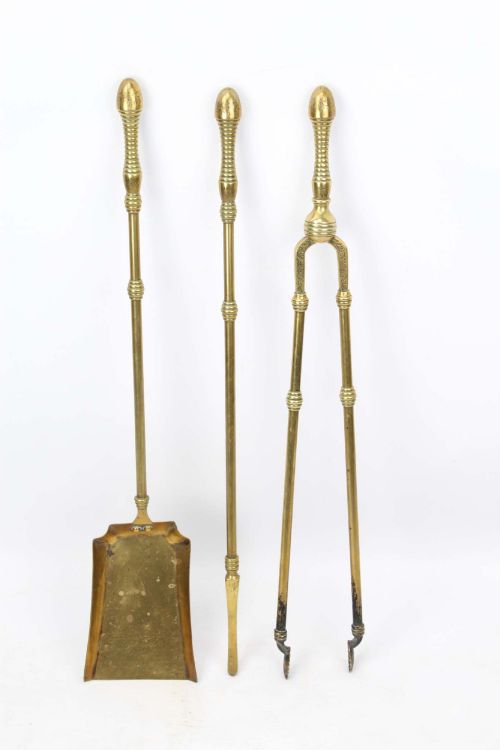
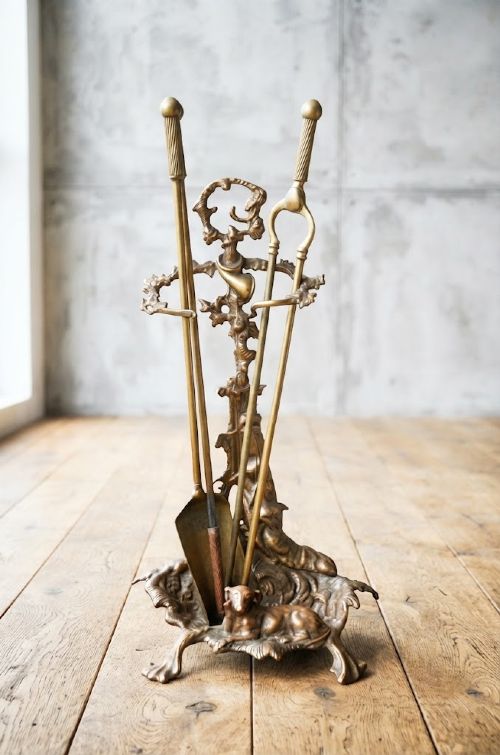
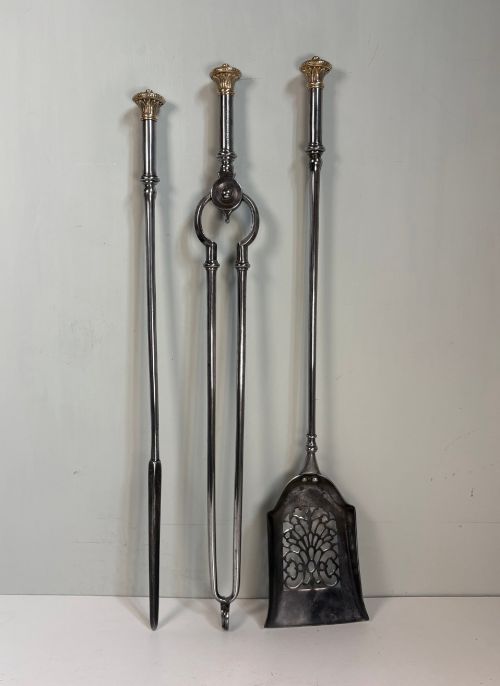
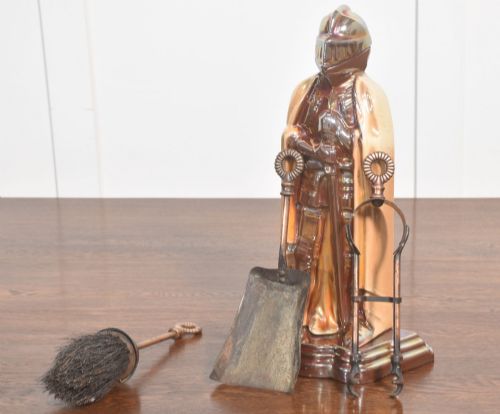
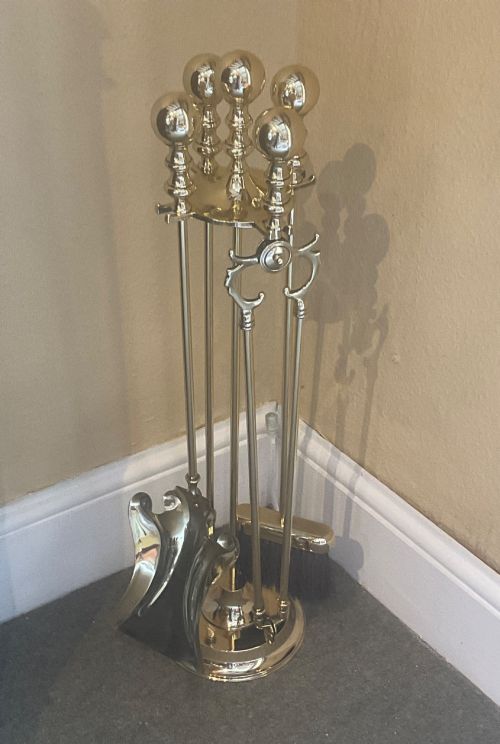
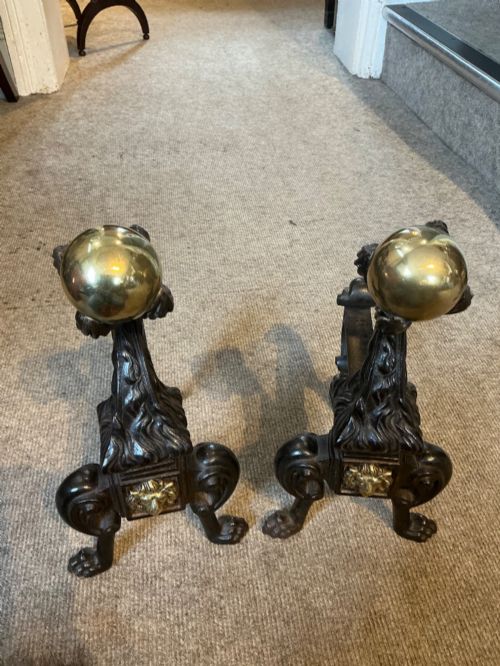
Vintage brass fire tools encompass companion sets, fire irons, and fireplace accessories designed to tend a coal or wood fire. Buyers seeking vintage brass fire tools will encounter sets comprising tongs, pokers, and shovels, frequently accompanied by stands or fire dogs.
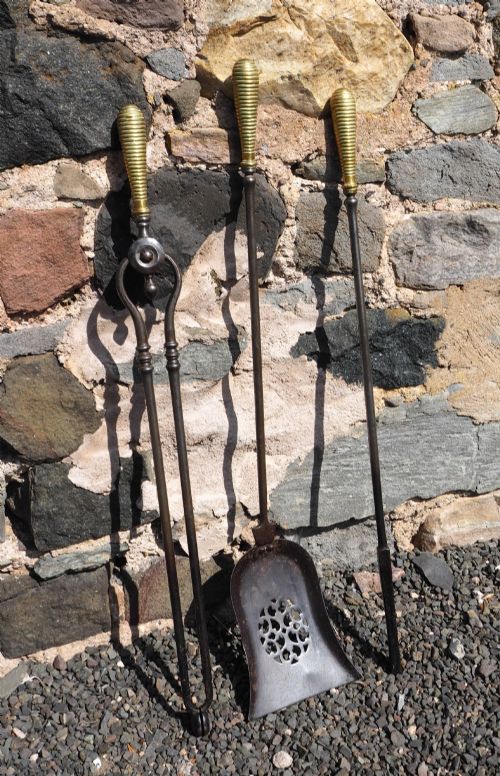
The selections on this page stem predominantly from the nineteenth and early twentieth centuries, spanning Victorian, Edwardian, and Arts and Crafts periods. Pieces range from utilitarian steel shafts fitted with brass handles to ornate Rococo and Gothic Revival designs meant for display.
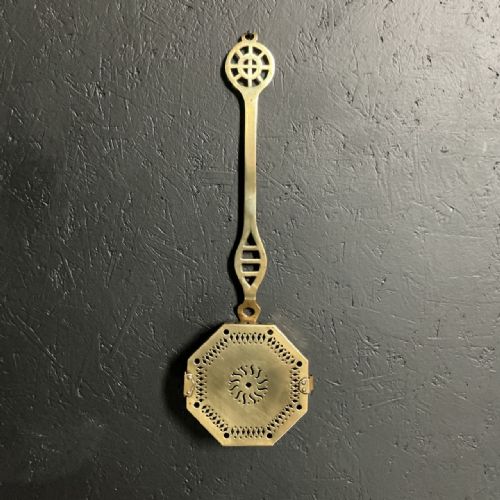
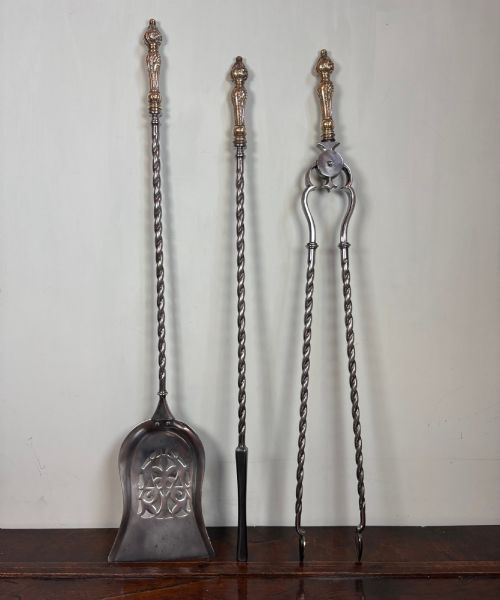
Standard configurations include three-piece companion sets alongside individual items like chestnut roasters, bellows, and tool rests. These items reflect the domestic routines of British and European hearths during the industrial era.
How they were made
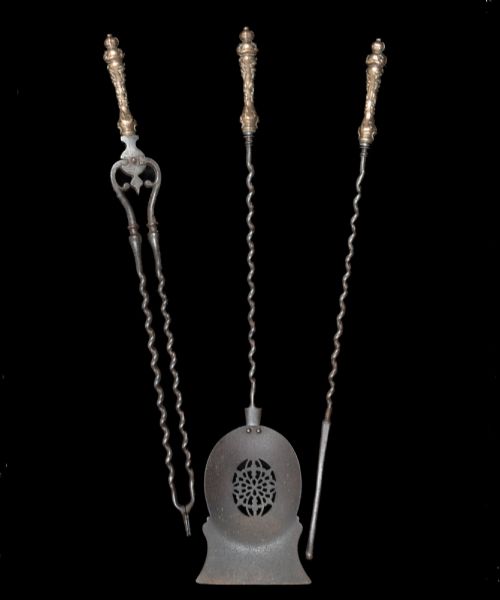
Makers combined cast brass for decorative handles and stands with forged steel or iron for the working shafts of pokers and tongs. Metalworking techniques involved sand casting for handles, turning on lathes for rope-twist grips, and hand-forging for the durable business ends of fire irons.
Secondary materials such as copper, bronze, and leather appeared on bellows, fenders, and companion stands to introduce contrasting textures. Iron and steel provided the necessary strength and resistance to heat, while brass offered a bright, decorative finish for the visible components.
Listings feature brass, steel, iron, and copper across Victorian, Edwardian, and Arts and Crafts periods.
What varies in quality
Quality in these implements rests on the weight of the metal and the integrity of the joins between handles and shafts. Heavier companion sets and thick-gauge steel irons indicate superior craftsmanship designed to withstand daily use at the hearth.
Artistic detail further divides standard production items from finer workshop pieces, seen in crisp casting of rococo motifs, hand-turned rope twists, and balanced proportions on companion stands. Well-preserved surfaces retain their original tactile heft without excessive thinning from over-polishing.
The Vintage Brass Fire Tools Glossary
- Companion set
- A matched group of fireplace tools, usually comprising a poker, tongs, and shovel, often arranged on a dedicated stand. These sets kept hearth maintenance equipment tidy beside the fireplace.
- Fire irons
- Individual tools used for managing a fire, including pokers, shovels, and tongs. They were frequently forged from steel with decorative brass handles.
- Fire dogs
- Support irons placed within a hearth to hold logs or support fire irons. They often matched the decorative style of the companion set.
- Fender
- A low metal guard placed around the hearth to contain ash and rolling embers. Fenders were commonly produced in brass and steel alongside matching tool sets.
- Rope twist
- A decorative spiral pattern cast or carved into handles. This technique added grip and visual texture to brass fire tool shafts.
Vintage Brass Fire Tools: Frequently Asked Questions
What is included in a companion set?
A standard companion set groups three essential fireplace tools together on a shared stand or resting against fire dogs. These typically include a poker for adjusting logs, a shovel for clearing ash, and tongs for moving coal.
Additional items occasionally integrated into these groupings include brushes or specialised holders, providing a complete hearth maintenance kit.
How do I date a brass fire tool?
Dating relies on stylistic clues, manufacturing techniques, and material combinations recorded across Victorian, Edwardian, and Arts and Crafts periods. Heavy cast brass handles combined with hand-forged steel shafts often point to nineteenth-century production.
Design motifs such as Rococo curves or Aesthetic Movement geometry help narrow the manufacturing era further, aligning with prevailing interior fashions of the period.
Were these tools meant for daily use?
Most of these pieces served a practical function in nineteenth and early twentieth-century homes where open fires provided primary heating. Durable steel shafts and robust brass mounts were engineered to withstand the rigours of daily stoking and ash clearance.
Finer decorative sets with intricate casting were also utilised actively, though some ornate examples served primarily as formal parlour display items.
How should I clean antique brass?
Maintaining brass fire tools involves removing dust and soot with a soft dry cloth rather than applying aggressive chemical polishes. Preserving the aged patina ensures the metal retains its historical character and depth of colour.
Avoid abrasive scourers that can wear down delicate cast details on handles or remove historical tool marks from the underlying metal.