

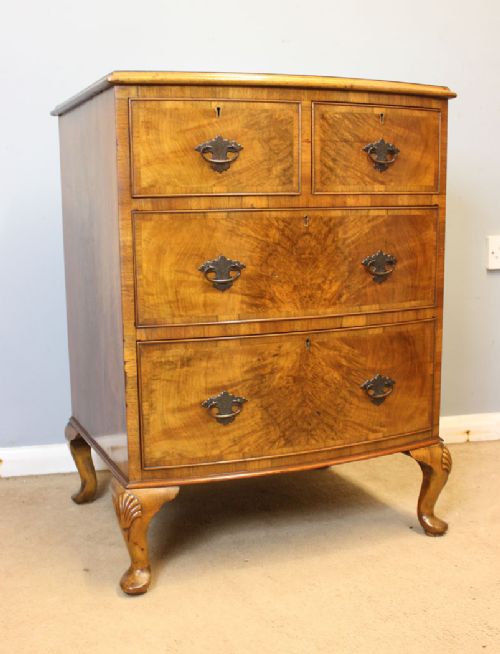
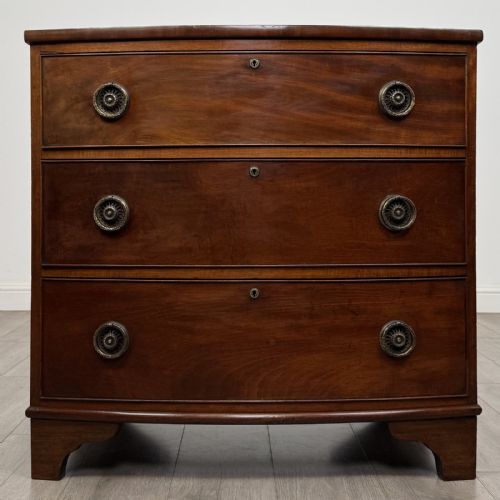
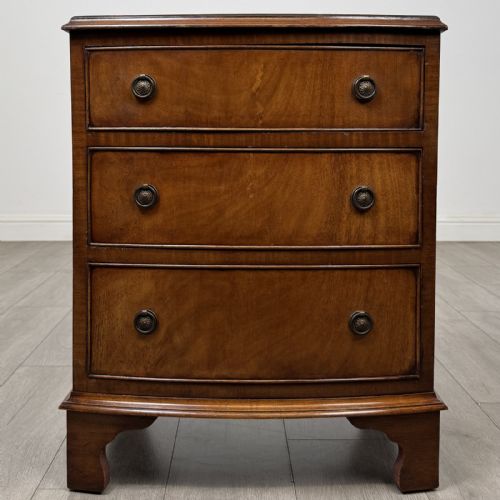
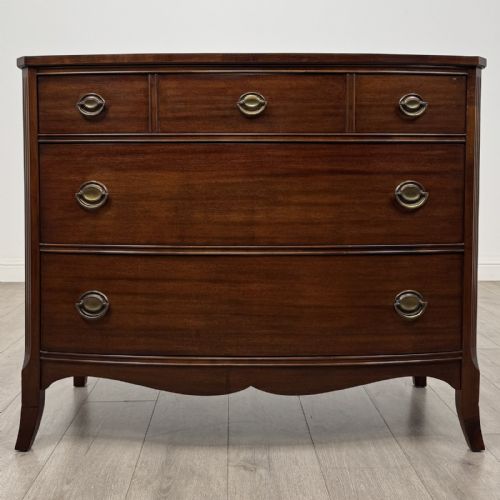
Vintage Bowfront Commode
A vintage bowfront commode brings architectural curves and generous storage to a room through centuries of cabinet-making tradition.
Vintage Bowfront Commode
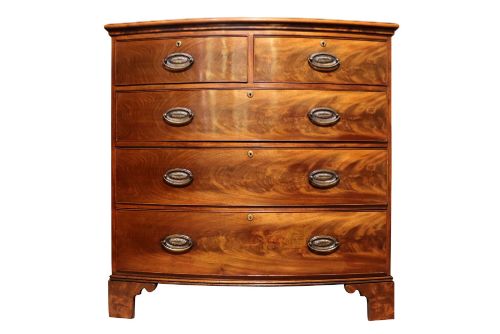
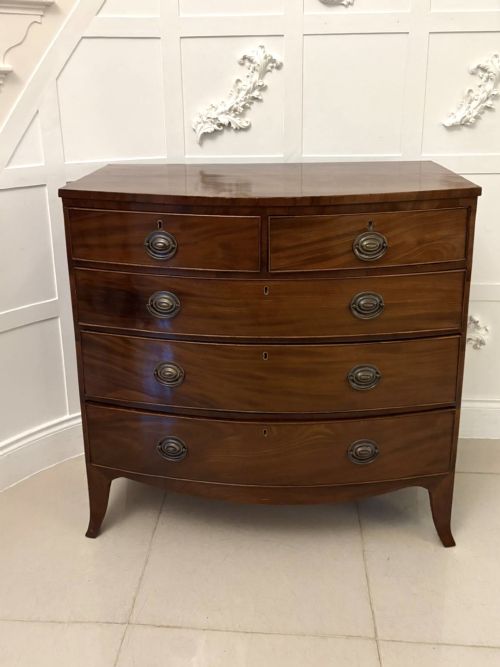
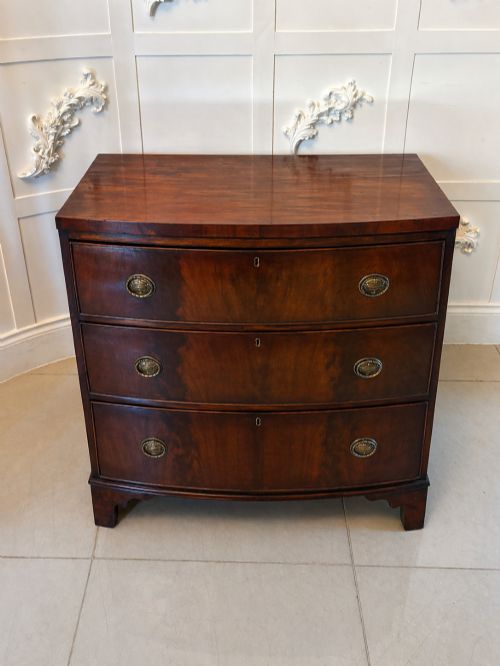
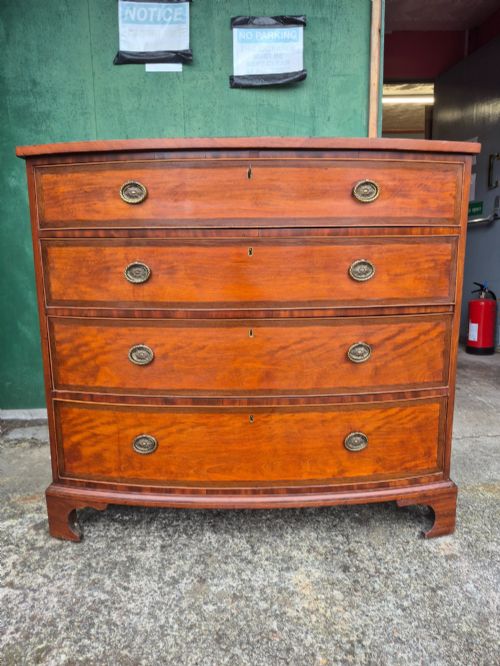
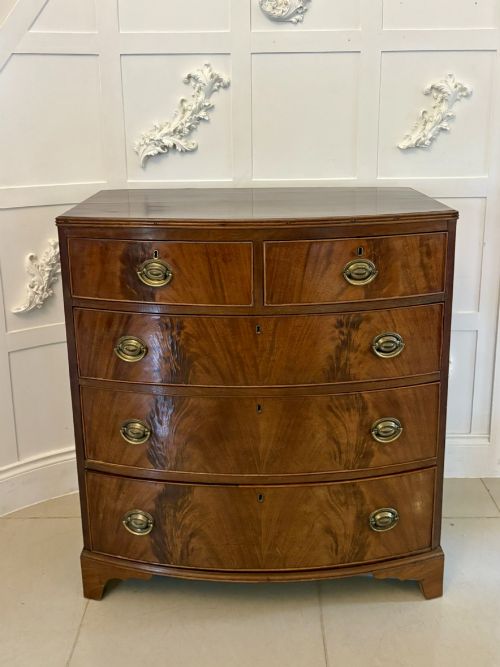
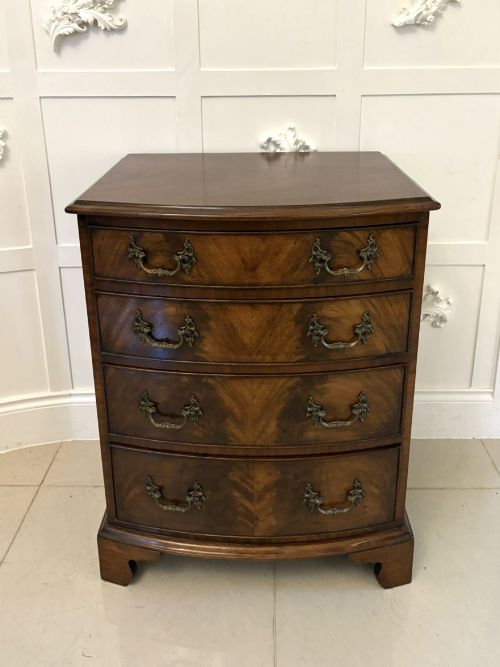
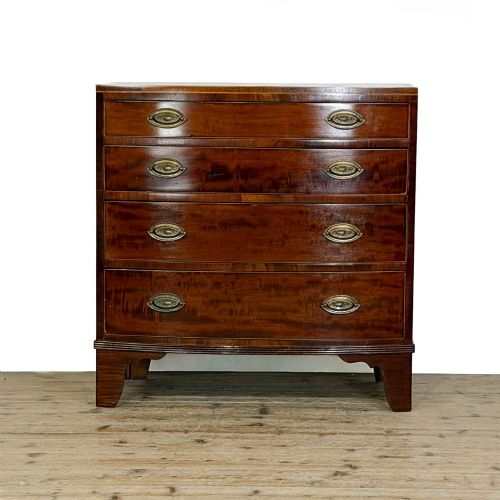
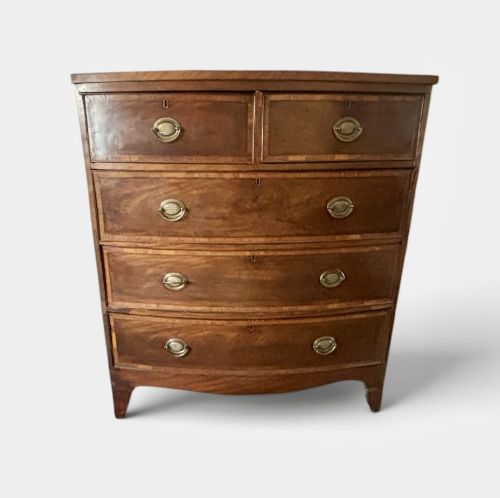
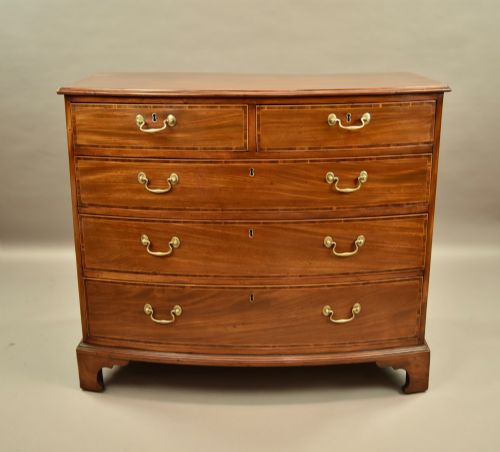
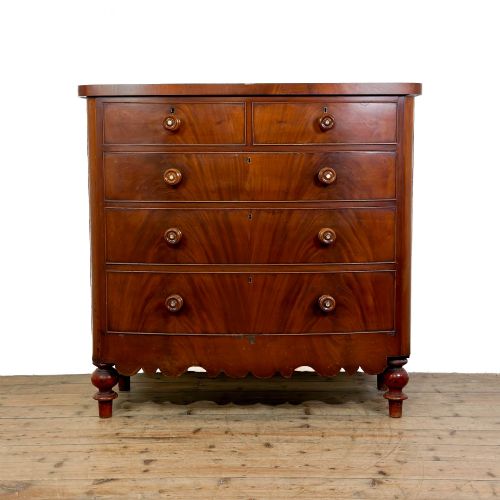
A vintage bowfront commode presents a curved convex front that softens the linear geometry of a traditional chest of drawers. Buyers searching this phrase most frequently encounter mahogany examples spanning the Georgian, Regency, and Victorian periods.
The form typically functions as a bedroom chest of drawers or a statement storage piece in a hallway or living space. Pieces range from compact small proportions to large multi-drawer formats constructed across the eighteenth, nineteenth, and early twentieth centuries.
Materials and construction methods
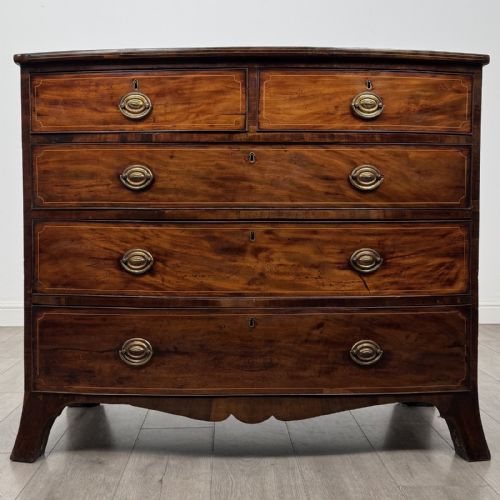
Cabinet-makers relied primarily on solid mahogany and flame mahogany veneers, frequently enhanced with contrasting satinwood banding or walnut crossbanding. Timber selection prioritized rich grain patterns that followed the outward sweep of the curved drawer fronts.
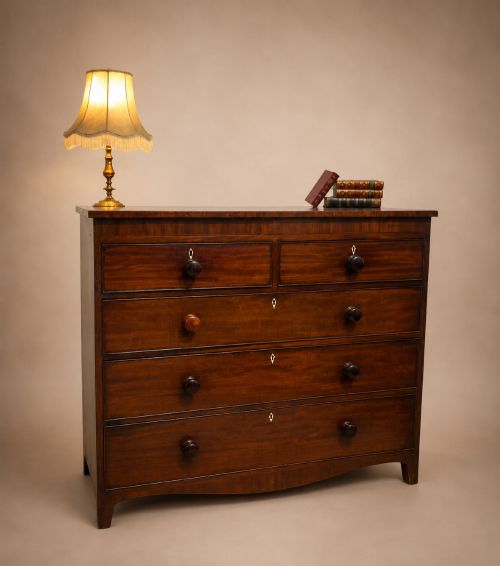
Secondary structural elements incorporated oak and pine for drawer linings and carcases. Metal hardware typically consisted of brass handles, ranging from simple turned knobs to decorative drop handles and backplates.
Vintage Bowfront Commode Retail Price Guide 2026
Typical asking prices for vintage bowfront commode among the pieces listed under this phrase on Sellingantiques today, from the lower quarter to the upper quarter. They describe what is for sale here now, not the wider market.
Listings feature mahogany, walnut, oak, and painted wood across periods spanning from Georgian times through the Edwardian era.
Evaluating craftsmanship and design
Quality rests in the precision of the curved drawer fronts and the alignment of the timber grain across the drawers. Superior examples display carefully selected flame mahogany veneer matched symmetrically from the centre outwards.
Finer pieces exhibit thoughtful secondary details such as graduated drawer depths, finely cut dovetail joints, and original brass hardware. The integration of satinwood banding or crossbanded borders further separates standard production from exceptional cabinet-work.
The Vintage Bowfront Commode Glossary
- Bowfront
- A convex curving front facade that projects outward in a rounded arc. This shape distinguishes these chests from flat-fronted alternatives.
- Flame mahogany
- A distinctive wood veneer cut from branches where the grain creates a flickering, flame-like pattern. Cabinet-makers used this figure to highlight primary surfaces.
- Crossbanding
- A narrow strip of veneer laid perpendicularly to the surrounding grain along the border of a drawer or top. It provides a neat contrasting frame.
- Graduated drawers
- A sequence of drawers that decrease in depth from bottom to top. This arrangement creates pleasing visual proportions on tall chests.
Vintage Bowfront Commode: Frequently Asked Questions
How do I date a bowfront chest?
Dating relies on secondary wood types, handle styles, and construction techniques found inside the drawers. Georgian and Regency pieces often feature hand-cut dovetails and oak linings, whereas later Victorian and Edwardian examples show machine assistance.
Stylistic cues also help narrow the period. Early pieces frequently display delicate bracket feet and satinwood stringing, while nineteenth-century variations introduce turned feet and bolder mahogany veneers.
What is flame mahogany?
Flame mahogany is a highly figured wood veneer harvested from specific cuts of timber that display a rippled, flame-like grain pattern. Makers prized this material for its dramatic visual movement.
Because of its striking appearance, cabinet-makers reserved flame mahogany for the primary drawer fronts and top surfaces of high-status furniture.
Where should I place a commode?
A bowfront commode suits living rooms, hallways, and bedrooms where its curved profile softens rigid corners and saves floor space. The rounded front allows for easier movement around the piece in narrow passages.
These chests provide substantial storage capacity while serving as a surface for lamps, mirrors, or decorative objects.
Are these chests heavy?
Solid timber construction makes these chests substantial and heavy objects, particularly examples built from dense nineteenth-century mahogany. The combination of thick carcases and multiple drawers adds significant weight.
Two people are usually required to move them safely, especially when navigating staircases or tight corners.