





Vintage Book Caddy Table
These vintage book caddy tables offer compact volume for crowded rooms, letting you spin a personal library within arm's reach.
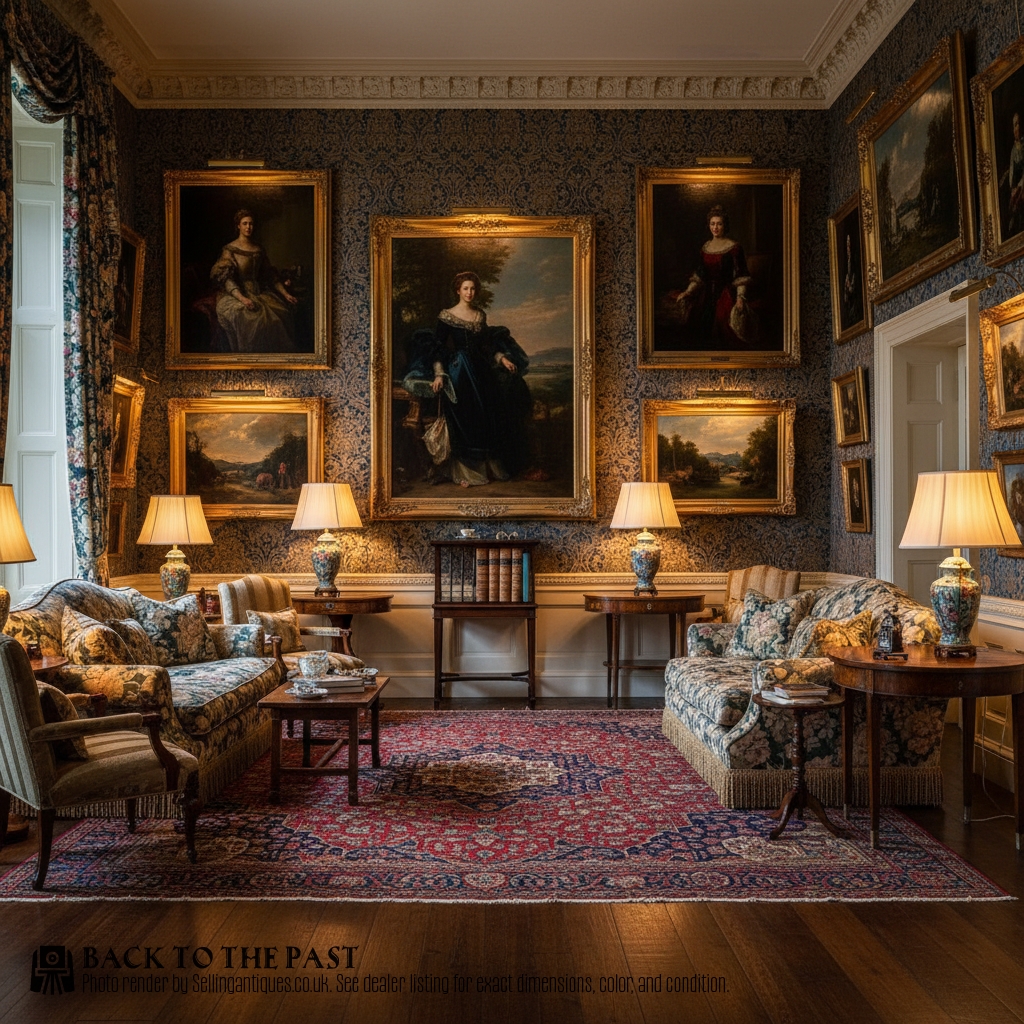
Vintage Book Caddy Table
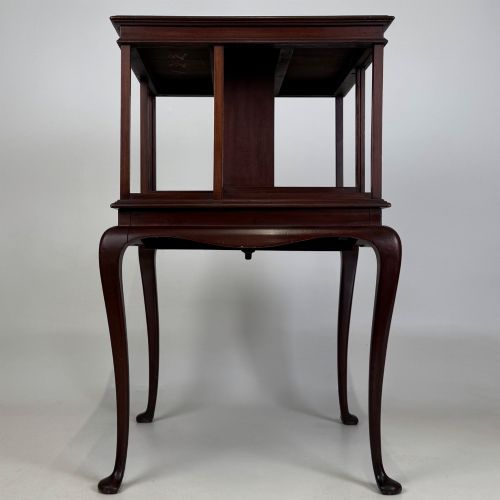
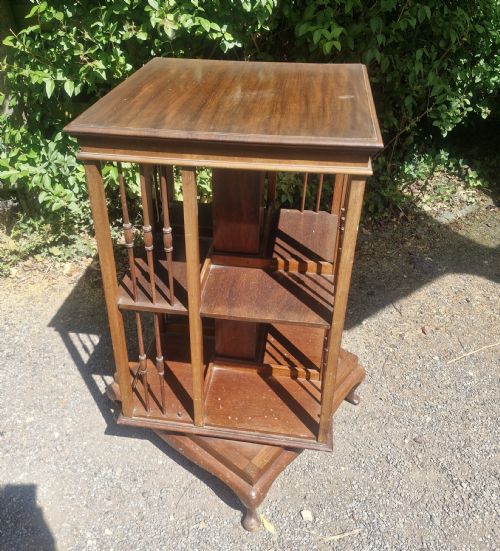
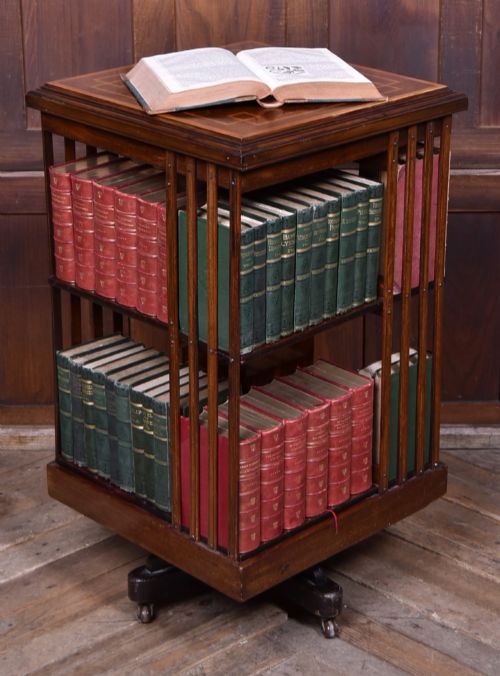
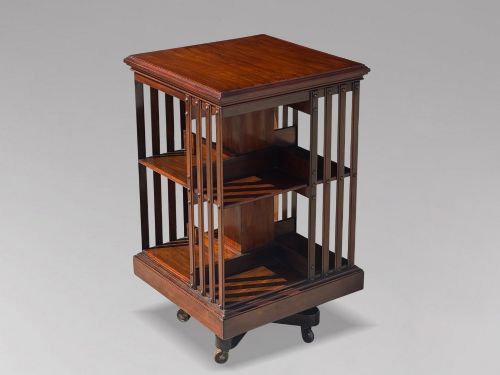
When you search for a vintage book caddy table, you are looking at rotating library stands and desktop bookcases designed to hold small collections of volumes close to a chair or desk. The pieces on this page are dominated by Edwardian and Victorian examples, alongside items from 1900 and 1930.
The most common form you will meet is the freestanding revolving bookcase, alongside smaller desktop book stands and library troughs. Materials range from mahogany and satinwood to oak and walnut, often finished with brass or cast iron hardware.
Origins stretch across the late nineteenth and early twentieth centuries, capturing the period appetite for functional domestic furniture that saved space in smaller drawing rooms and studies. These tables combine the utility of a bookshelf with the convenience of a pivoting mechanism.
How they were made
Makers built these pieces predominantly in solid timber and veneers, using mahogany, oak, satinwood, and walnut. Timber selection dictated the character of the piece, with flame mahogany and inlaid details providing visual depth.
The rotating action relied on internal pivot mechanisms, sometimes strengthened with brass fittings or cast iron components to bear the weight of heavy volumes. Carpenters constructed the slatted sides and upright dividers to withstand the continuous friction of turning.
Vintage Book Caddy Table Retail Price Guide 2026
Typical asking prices for vintage book caddy table among the pieces listed under this phrase on Sellingantiques today, from the lower quarter to the upper quarter. They describe what is for sale here now, not the wider market.
Some desktop revolving book stands were built specifically so scholars could consult multiple dictionaries at once without leaving their writing slope.
What varies in quality
Quality rests primarily on the choice of timber and the crispness of any inlay work. Finer examples display figured mahogany or carefully balanced satinwood veneers rather than plain secondary woods.
The smoothness of the revolving mechanism marks the difference between standard production and superior workshop output. A well-adjusted pivot allows the loaded tiers to turn silently and evenly without listing to one side.
The Vintage Book Caddy Table Glossary
- Revolving bookcase
- A freestanding or desktop bookcase mounted on a hidden pivot so the tiers rotate freely. This allows access to multiple compartments from a single seated position.
- Satinwood
- A pale, hard wood with a natural sheen, frequently used for decorative veneers and stringing on Edwardian furniture. It provides a bright contrast to darker timbers like mahogany.
- Inlay
- Pieces of contrasting timber, shell, or metal fitted flush into the wood surface to form decorative patterns. It signals careful cabinetmaking on tables from the late nineteenth century onward.
- Book trough
- An open-topped container with sloping sides designed to hold books upright on a desk or table. These pieces keep daily reading material within reach without requiring a full bookcase.
Vintage Book Caddy Table: Frequently Asked Questions
How do revolving book stands work?
These tables sit on a concealed central bearing or pivot hidden beneath the base. When you push the slatted tiers, the upper structure turns smoothly on this internal mechanism.
This design lets you browse an entire circle of books from one chair without standing up to walk around a static shelf.
Were these made for desks or floors?
Both formats exist within this tradition. Larger versions stand on the floor by a reading chair, while smaller desktop book stands sit directly on top of writing tables.
Both serve the same purpose of keeping active volumes accessible in studies, libraries, and drawing rooms.
How do I spot an Edwardian example?
Edwardian pieces often feature lighter timbers such as satinwood, subtle string inlay, and clean architectural lines. They reflect a shift away from the heavier dark proportions of earlier decades.
Proportions tend to be compact and balanced, designed for the moderate room sizes of the early twentieth century.
Can these hold heavy hardbacks?
Most solid mahogany and oak versions easily support standard octavo volumes and reference books. The internal framework distributes weight down through the central axis to the heavy base.
However, fragile satinwood veneer models or smaller desktop variants are better suited to lighter collections of novels and poetry.