


Vintage Bohemian Porcelain Figures
These vintage bohemian porcelain figures bring graceful maidens, animals and pastoral workers to life through delicate ceramic modelling.
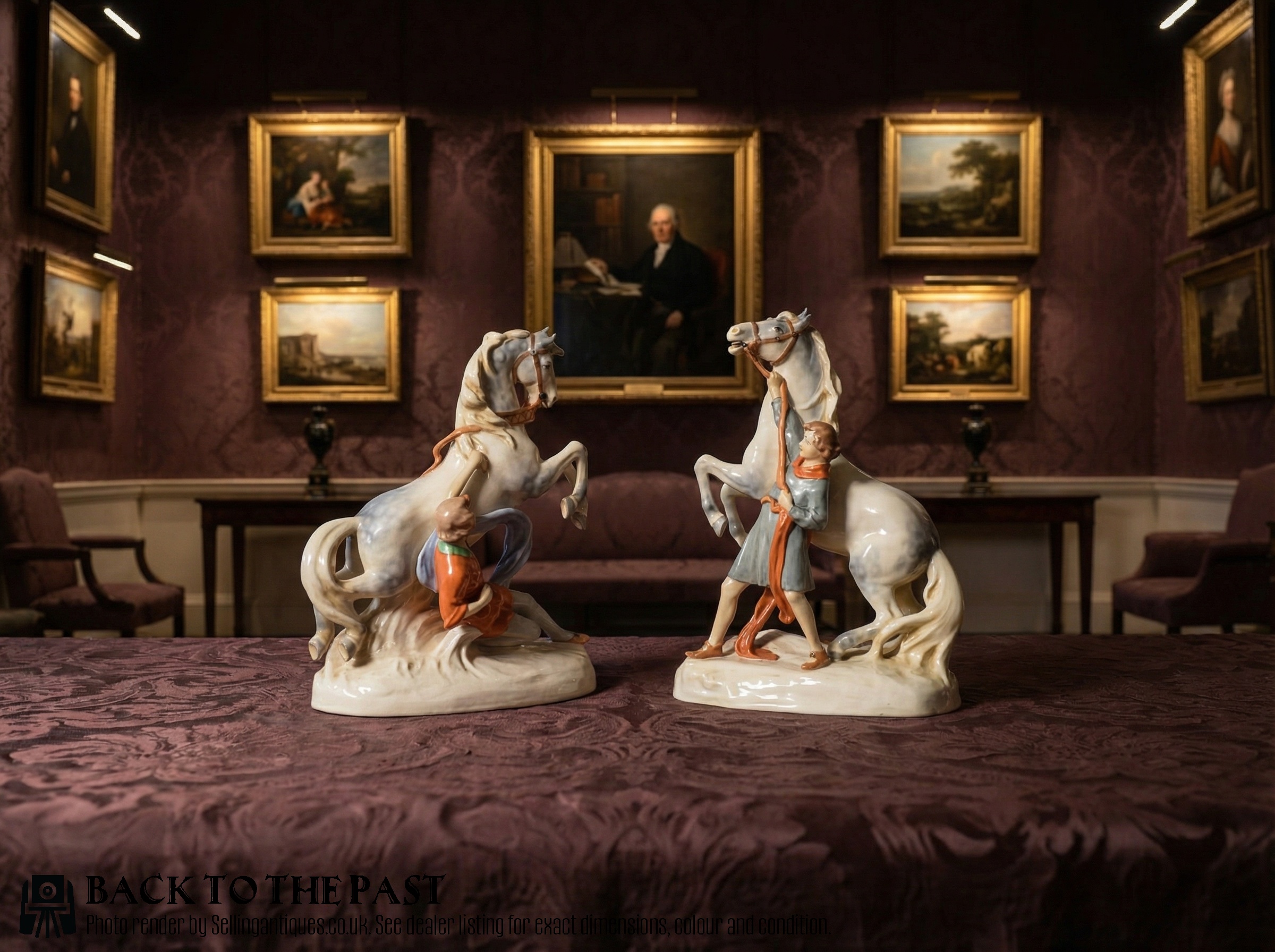
Vintage Bohemian Porcelain Figures
When searching for vintage bohemian porcelain figures, collectors encounter sculptural works originating primarily from central European makers during the late nineteenth and early twentieth centuries. These pieces take the form of decorative figurines, statuettes, busts and large figure groups depicting human subjects alongside animal studies.
The selection on this page centres heavily on productions from the Edwardian era and the 1910 decade, alongside examples from the 1900s, 1920s, 1930s and the nineteenth century. Common human subjects include maidens, fishermen, shepherdesses, water carriers and flapper girls, while animal subjects span hunting dogs, setters, puppies and kittens.
Art Nouveau styling dominates the aesthetic, alongside Art Deco and Victorian Orientalist influences. Buyers find both single display figures and matched pairs designed for symmetrical placement.
How they were made
These figures rely on porcelain and ceramic bodies shaped into detailed sculptural forms, sometimes utilising biscuit porcelain for unglazed matte surfaces. Skilled modellers such as H. Schubert and Alois Hampel shaped these pieces during the early numbered production periods.
Surface decoration combines coloured glazes, enamel work, gilt highlights and applied gold leaf. Many compositions incorporate delicate details like woven baskets, flowing scarves and garments rendered with careful attention to texture.
Vintage Bohemian Porcelain Figures Retail Price Guide 2026
Typical asking prices for vintage bohemian porcelain figures among the pieces listed under this phrase on Sellingantiques today, from the lower quarter to the upper quarter. They describe what is for sale here now, not the wider market.
Listings feature porcelain, ceramic and biscuit porcelain bodies decorated with enamel, glaze, gilt and gold leaf.
What varies in quality
Quality in these ceramics rests upon the crispness of the modelling and the sensitivity of the hand-finishing, distinguishing ambitious monumental figures from simpler works. The application of enamel paint, gilding and glaze defines the visual depth of drapery, hair and facial expressions.
Early numbered models and pieces bearing specific artist signatures or distinct factory indicators carry greater sculptural ambition. The preservation of delicate extremities, applied elements like baskets or animal companions, and the original surface finish dictate the standing of individual examples.
Royal Dux Bohemia·Eichwald·Ernst Wahliss
The Vintage Bohemian Porcelain Figures Glossary
- Biscuit porcelain
- Unfired or unglazed ceramic material that provides a matte, stone-like texture. This finish highlights fine modelling details without the reflective sheen of a standard glaze.
- Gilding
- The application of gold leaf or gold paint to accentuate decorative details. It frequently highlights borders, garments and accessories on sculptural figures.
- Art Nouveau
- A decorative style characterised by flowing, organic lines and floral motifs. This aesthetic heavily influences the posture of maidens and the sweeping curves of garments in these pieces.
- Art Deco
- A later design movement favouring geometric symmetry and streamlined forms. Pieces from this period depict subjects such as flapper girls and nude studies with modern styling.
- Figurine
- A small carved or moulded statuette representing a human or animal form. These objects serve purely decorative functions within interior settings.
Vintage Bohemian Porcelain Figures: Frequently Asked Questions
What periods do these figures come from?
The pieces span from the late nineteenth century through the Edwardian period and the decades of the 1910s, 1920s and 1930s. Art Nouveau and Art Deco aesthetics largely define the respective chronological shifts.
Production methods and stylistic choices evolved from ornate nineteenth-century historicism toward cleaner modernist lines by the interwar years.
How were these porcelain figures displayed originally?
These decorative sculptures traditionally graced mantelpieces, sideboards and cabinet tops in affluent homes. Matched pairs were often manufactured specifically for balanced placement on either side of a central fireplace or mirror.
Their substantial scale allowed them to function as primary focal points within a room's interior scheme.
How do I distinguish Art Nouveau from Art Deco pieces?
Art Nouveau figures display flowing, asymmetrical lines, organic drapery and naturalistic motifs such as water carriers and maidens with cascading hair. These designs emphasise movement and romanticism.
Art Deco examples introduce geometric discipline, stylised poses, and subjects like flapper girls that reflect the modernism of the 1920s and 1930s.
Are these figures glazed or unglazed?
Makers utilised both traditional glossy glazes and matte biscuit porcelain depending on the desired visual effect. Biscuit porcelain offers an unglazed, tactile surface that accentuates fine sculptural details.
Many examples combine glazed ceramic bodies with hand-painted enamel and gilded highlights.