





Vintage Boat Watercolour Art
These vintage boat watercolour art pieces capture maritime life through delicate washes and brisk coastal scenes.
Vintage Boat Watercolour Art
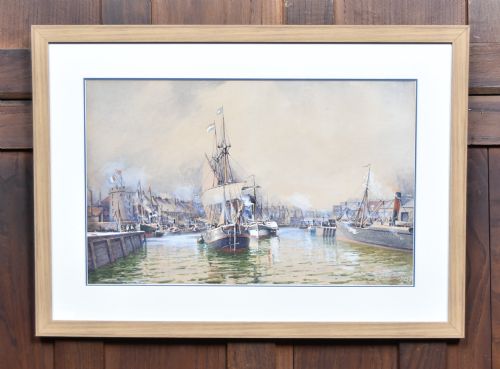
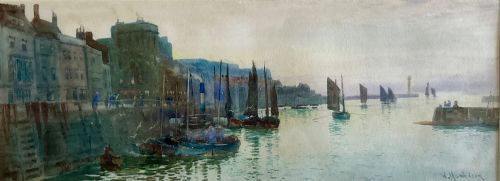
Vintage boat watercolour art covers marine paintings executed on paper using watercolour pigments, spanning periods from the nineteenth century through the mid-twentieth century. These works frequently depict coastal scenes, harbours, and sailing vessels from locations such as Whitby, London, and foreign ports.
The selections encountered most often on this page date from the Victorian and Edwardian eras up to the 1950s, representing British Impressionism and maritime traditions. Buyers will find framed watercolours ranging from intimate harbour sketches to larger coastal panoramas.
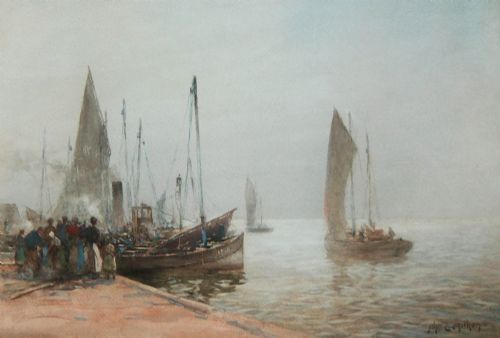
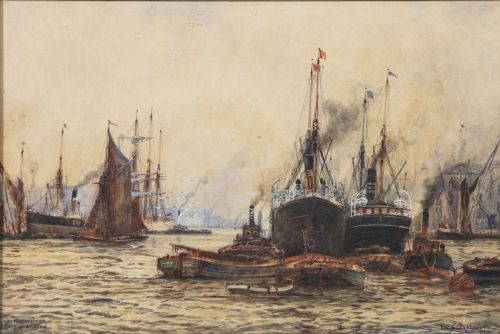
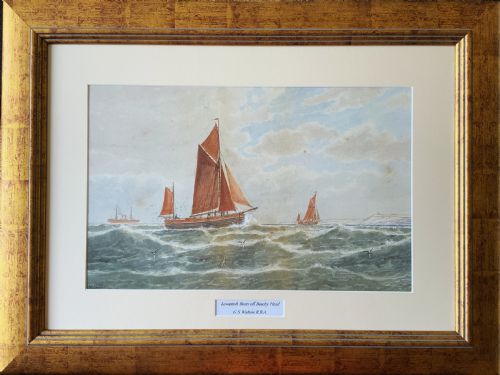
Subjects centre heavily on working fishing boats, moored yachts, and busy river traffic on the Thames or Venetian canals. Artists captured the changing light of the coast, recording daily maritime labour and leisure on paper.
Materials and construction
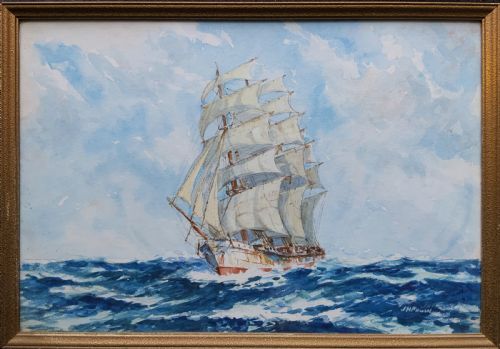
Artists applied watercolour pigments onto paper substrates, occasionally supplemented by bodycolour or gouache for highlights on churning seas or vessel sails. The application relies on transparent washes to capture the luminosity of sky and water.
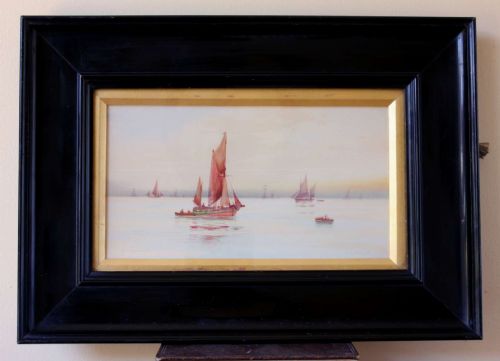
Finished works are typically housed behind glass within wood or ebonised frames, sometimes complemented by gilt wood mouldings to separate the paper from the room. These period mountings protect the fragile paper surface from atmospheric moisture.
Vintage Boat Watercolour Art Retail Price Guide 2026
Typical asking prices for vintage boat watercolour art among the pieces listed under this phrase on Sellingantiques today, from the lower quarter to the upper quarter. They describe what is for sale here now, not the wider market.
Listings feature works executed on paper using watercolour pigments, spanning the nineteenth and twentieth centuries.
Assessing quality
Quality rests upon the artist's handling of light, atmosphere, and water movement, distinguishing confident brushwork from rigid or formulaic topographical illustration. Stronger pieces convey the motion of waves and the specific mood of a harbour through economical washes.
The preservation of the paper and pigment intensity determines visual success, as prolonged exposure to sunlight can dull delicate blue and grey tones. The harmony between the watercolour sheet and its period frame also influences the integrity of the piece.
James E Aitken·Frank William Scarbrough·William Matthison·George Stanfield Walters·William Lee Hankey·Edward Seago·Thomas Bush Hardy·Tom Clough·William Tuck·Fred Waugh·Frank H Mason·Ernest F Hill·Walter Duncan·Frank Wasley·Fred Mayor·Thomas Clavering Alder·Walter Sweet·Frank Rousse·Fred Lawson·Harry Wanless·Frances E Nesbitt·GM de L'Aubiniere·Carleton Grant·Robert Leslie Howey
The Vintage Boat Watercolour Art Glossary
- Watercolour pigment
- Colouring material ground in a water-soluble binder, applied in translucent washes on paper to create luminous marine effects.
- Gilt wood
- Timber framing finished with a thin layer of gold leaf, frequently utilised for framing Victorian and Edwardian fine art paintings.
- British Impressionism
- A painting style focusing on light and everyday subjects, visible in coastal and marine watercolours from the late nineteenth and early twentieth centuries.
- Ebonised frame
- Wood stained or treated to imitate ebony, providing a dark, contrasting border around early twentieth-century watercolour paintings.
- Gouache
- An opaque water-based paint occasionally used alongside watercolour pigments to add solid highlights to sea foam and vessel sails.
Vintage Boat Watercolour Art: Frequently Asked Questions
What periods do these watercolours cover?
The works span from the nineteenth century through the Edwardian period and into the mid-twentieth century, including post-war examples.
Victorian and Edwardian pieces form a significant portion of the selection, reflecting a sustained British fascination with maritime subjects.
How should I hang watercolour art?
Watercolours are sensitive to light and should be positioned away from direct, strong sunlight to prevent the pigments from fading over time.
Keeping them behind glass in a stable environment protects the paper base from humidity fluctuations.
Where were these coastal scenes painted?
Artists travelled to active British fishing ports such as Whitby, Staithes, Mousehole, and various locations along the Yorkshire coast and the River Thames.
Others ventured further afield to European destinations including Venice, Holland, and Normandy.
What framing is typical for these pieces?
Many retain their original wood, ebonised, or gilt wood frames that complement the style of the period.
The glass front protects the delicate paper surface from dust and direct physical contact.