

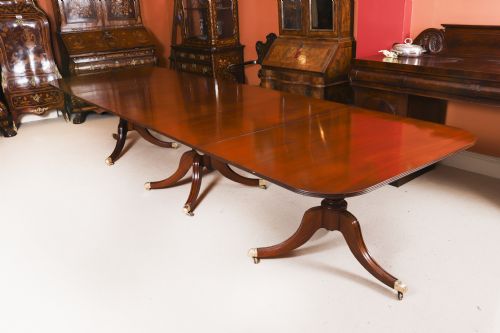


Vintage Boardroom Table
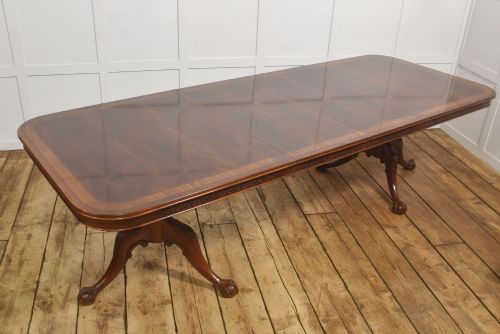
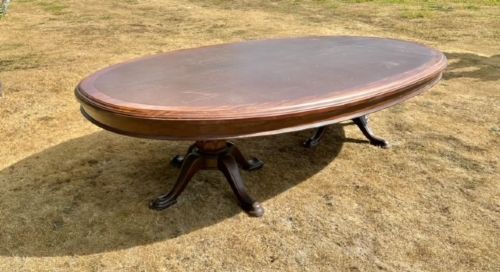
A vintage boardroom table provides a commanding centrepiece, built from rich timbers to seat large gatherings with understated authority.
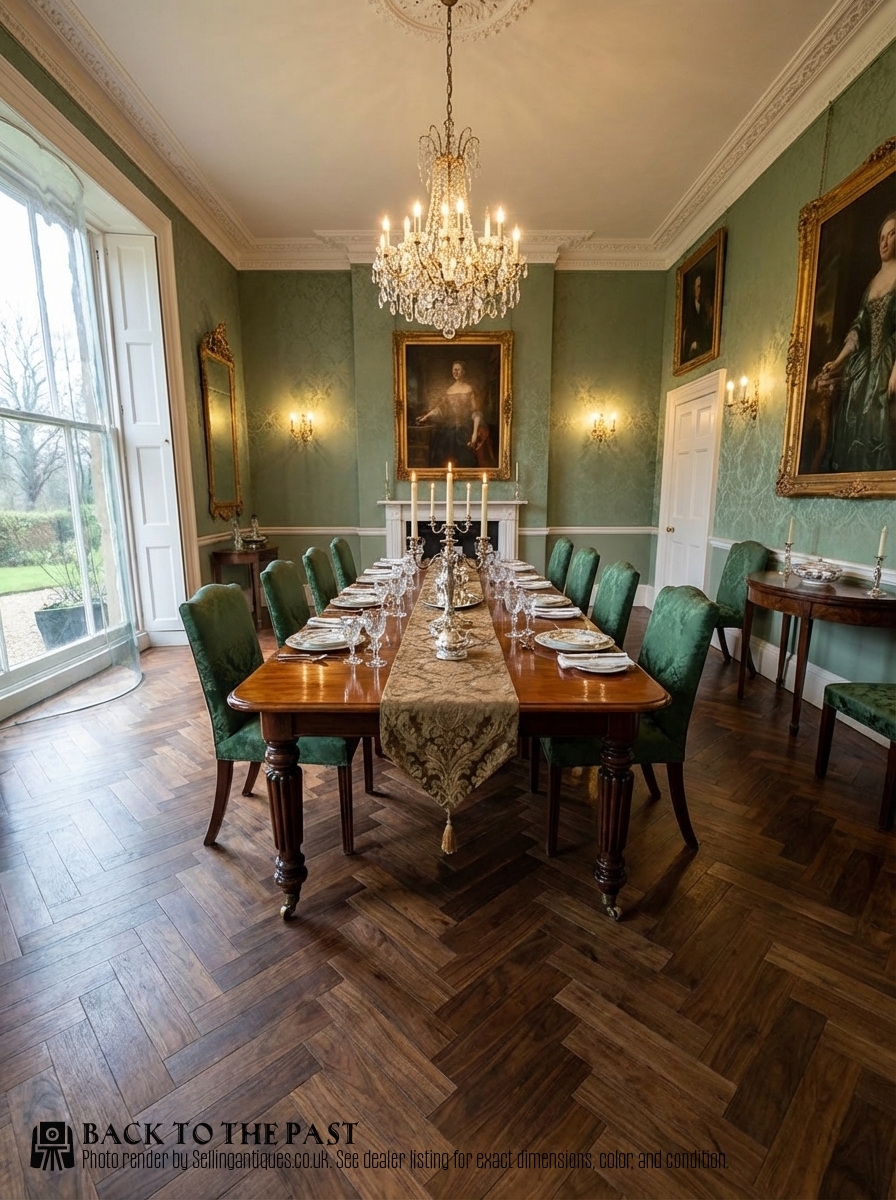
Vintage Boardroom Table
When you search for a vintage boardroom table, you are looking at substantial timber furniture designed to anchor large rooms and accommodate many diners or colleagues. These pieces often overlap with large dining tables, extending tables, and refectory forms originating from periods spanning the nineteenth and early twentieth centuries.
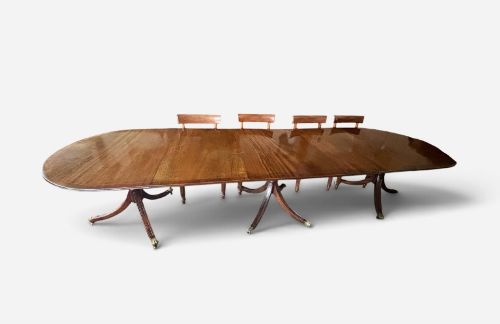
On this page, the most frequent examples you will encounter are mahogany tables from the Edwardian and Victorian eras, alongside robust oak refectory pieces and striking Art Deco designs in walnut or rosewood. They arrive in various formats, from multi-pillar pedestal styles to long, leaf-extending constructions suited to grand interiors.
Proportions remain a defining characteristic, with lengths frequently stretching to accommodate ten or twelve seats or more. Whether built in a restrained classical manner or adopting revivalist details, these items retain their utilitarian strength while offering considerable presence.
Materials and construction
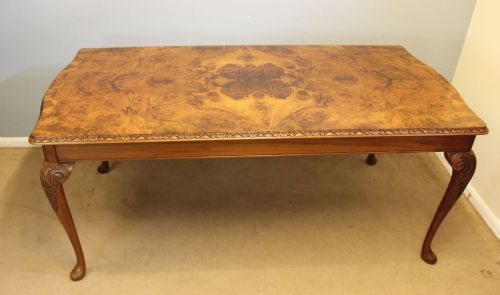
Makers relied heavily on dense hardwoods such as mahogany, oak, and walnut, often selecting figured veneers like burr walnut or plum pudding mahogany for primary surfaces. These timbers were chosen for their durability and grain pattern, providing a robust frame capable of supporting heavy daily use.
Construction techniques include pillar and pedestal supports with brass castors, extending mechanisms with removable leaves, and traditional joinery such as mortise and tenon frames. Inlaid banding and polished finishes completed the work, highlighting the natural figure of the wood without obscuring its texture.
Some nineteenth-century tables come with extra leaves stored separately in cloth bags, occasionally turning up in attics decades later.
Assessing construction and finish
Quality rests in the selection of timber and the integrity of the underlying framing, where dense, well-figured hardwoods command greater attention than utilitarian secondary woods. Superior examples display careful matching of veneers across extending leaves and solid timber construction in weight-bearing pedestals.
The refinement of the mechanism also marks the grade of the piece, with smooth-running winding systems and heavy brass components indicating superior workshop output. Original surface patination and tight, clean joinery distinguish tables that retain their structural balance from those with altered proportions.
Whytock & Reid·Gillows·Thomas Treherne
The Vintage Boardroom Table Glossary
- Refectory table
- A long, narrow dining or boardroom table traditionally supported by trestles or heavy legs with a low stretcher. This form dates back to medieval monastic dining halls but appears in later revival styles.
- Triple pillar
- A table base configuration utilising three separate pedestals, usually fitted with brass castors and legs, to support very long tops. This design allows ample legroom along the length of the table.
- Extending mechanism
- The internal runners and screw systems that allow a table to pull apart and accept additional leaves. Quality versions distribute weight evenly when fully opened.
Vintage Boardroom Table: Frequently Asked Questions
How do I seat twelve people comfortably?
Look for tables specifically noted as extending models or those exceeding ten feet in length. These usually incorporate multiple pillars or refectory bases to ensure legroom is preserved.
Check the clearance beneath the apron or skirt of the table to confirm standard dining chairs will slide underneath without obstruction.
How do I care for mahogany surfaces?
Apply natural beeswax periodically to nourish the timber and maintain a soft sheen. Avoid silicone-based sprays that can build up and dull the grain.
Keep tables away from direct heat sources and strong sunlight to prevent the timber from drying out or fading unevenly over time.
Can I use an antique table daily?
These tables were built for heavy communal use and handle daily gatherings well if treated with basic care. Using heat-resistant mats protects the polished surface from hot dishes.
Lift rather than drag the table when repositioning it to protect the joints and any pedestal castors fitted to the base.
What defines Art Deco style?
Art Deco pieces from the 1920s and 1930s favour streamlined geometric forms, sleek polished finishes, and exotic timbers like rosewood. Decoration is typically minimal, relying on the natural grain.
These tables often feature bold pedestal supports or stepped bases rather than the carved legs found on earlier Victorian and Edwardian furniture.