

Vintage Blue Stone Ring
A vintage blue stone ring brings together historic gold and platinum settings with sapphire, aquamarine, zircon, and paste in styles from Victorian to mid-century.
Vintage Blue Stone Ring
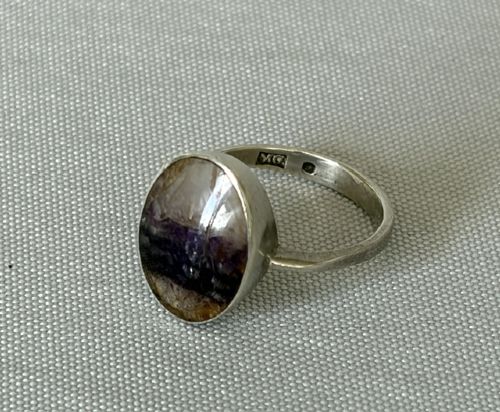
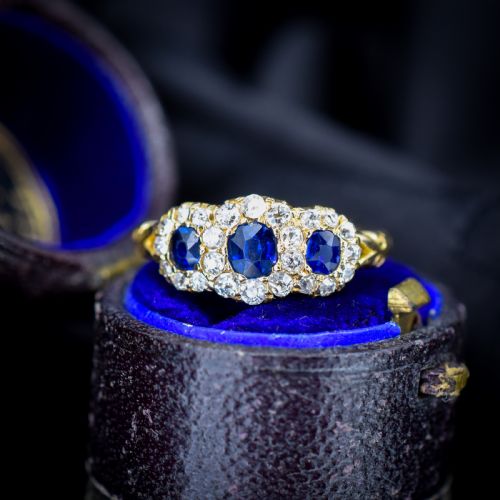
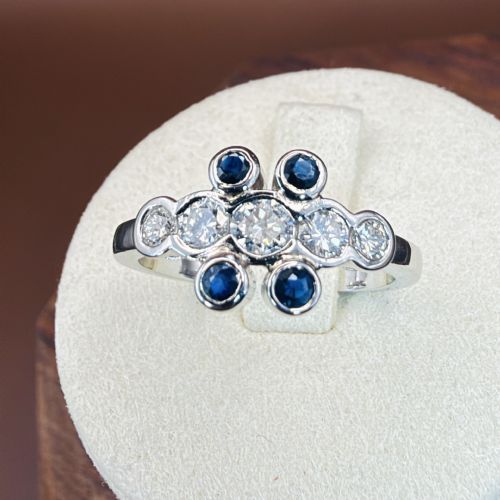
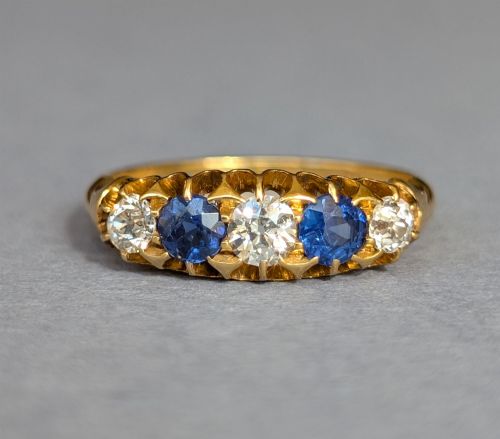
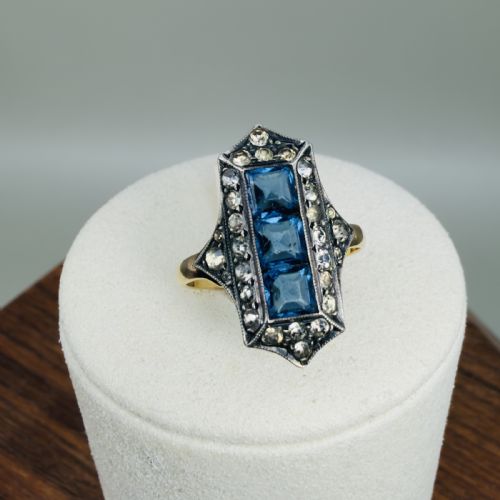
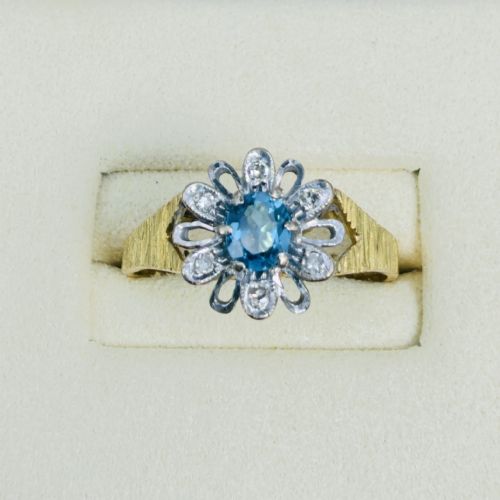
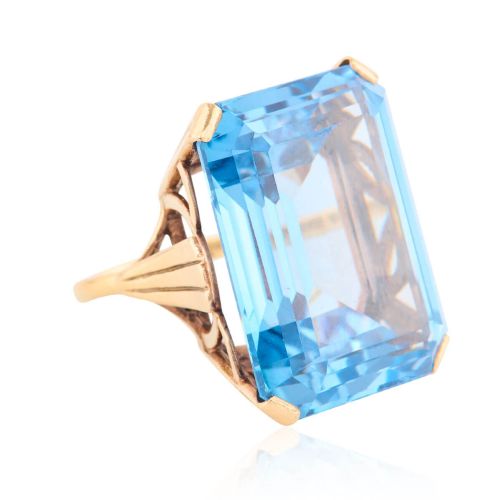
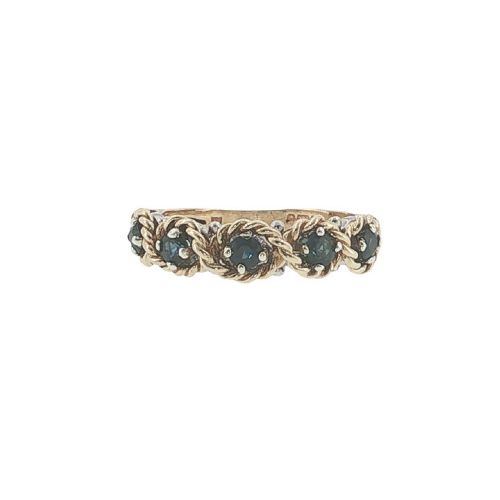
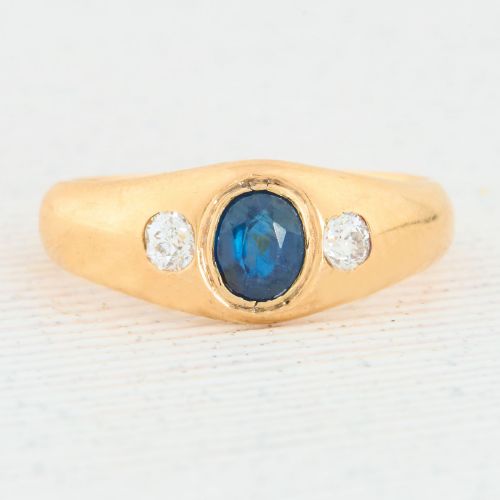
A vintage blue stone ring spans periods from the Victorian era through Edwardian, Art Deco, and mid-century designs. These pieces typically feature blue sapphires, aquamarines, zircons, spinels, or paste set in yellow gold, white gold, platinum, or silver.
Buyers encounter cluster rings, boat rings, gypsy settings, and twist designs on this page. The stones range from unheated Kashmir and Burmese sapphires to bright blue paste dress rings.
How they were made
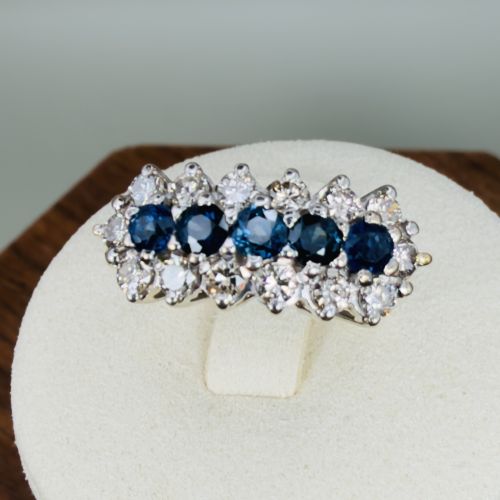
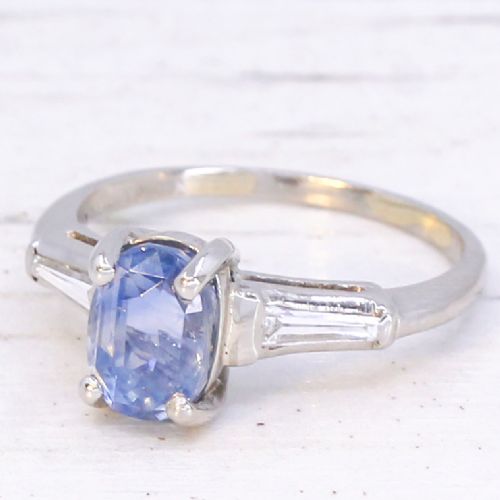
Goldsmiths utilised 18ct yellow gold, 18ct white gold, and platinum to mount central blue stones flanked by diamonds. Many pieces combine gold bands with silver settings for the diamond and sapphire clusters.
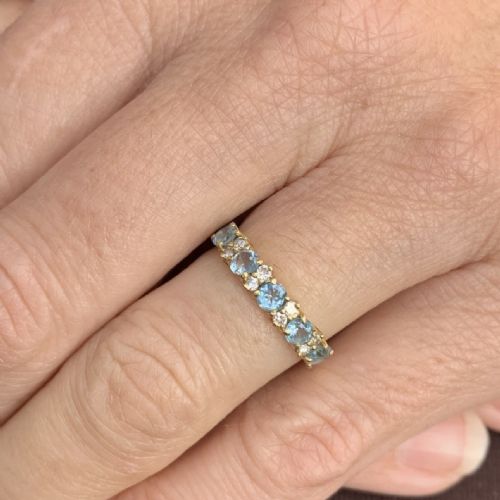
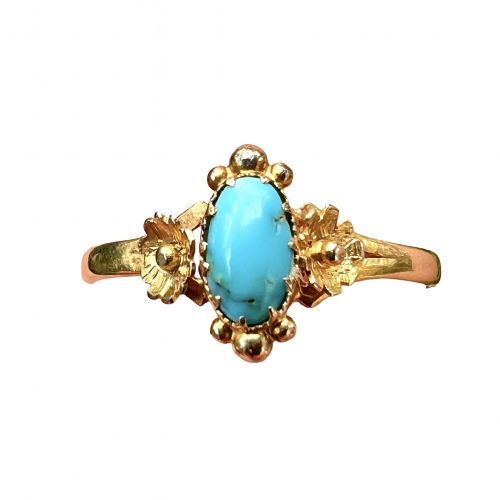
Gemstones are shaped into oval cuts, old cuts, and round stones, secured within claw settings, half eternity channels, or delicate floral and scroll motifs.
Listings feature periods from Georgian and Victorian through Edwardian, Art Deco, and mid-century modern.
What varies in quality
Quality rests in the origin and treatment of the central blue stone, distinguishing unheated Kashmir or Burmese sapphires from commercial stones or paste. The weight and cut of accompanying old cut diamonds alter the character of the piece.
The precision of the metalwork, whether Edwardian filigree, Art Deco geometry, or Victorian hand-engraving, dictates the refinement of the finished ring.
The Vintage Blue Stone Ring Glossary
- Cluster ring
- A ring design featuring a central stone surrounded by a circle of smaller gemstones. This layout maximises visual impact and light reflection.
- Gypsy ring
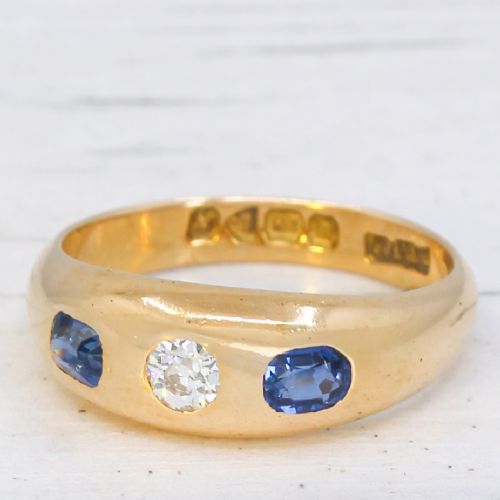
- A style where stones are flush-set directly into a heavy tapered metal band. The metal surrounds the girdle of the gem.
- Boat ring
- A navette-shaped cluster setting that curves horizontally across the finger. This elongated form was popular in the Georgian and Victorian periods.
- Paste
- Hand-cut and polished lead glass utilised as a gemstone substitute in historic jewellery. It offers high refractive brilliance.
- Half eternity ring
- A band set with gemstones along the top half of the circumference. This provides the appearance of a full eternity ring with greater comfort.
Vintage Blue Stone Ring: Frequently Asked Questions
What periods do these rings come from?
The selection includes pieces from the Victorian, Edwardian, and Georgian eras alongside Art Deco, Art Nouveau, and mid-century designs. Each period brings distinct metal colours and stone cuts.
Craftsmanship shifts from heavy gold scrollwork in the nineteenth century to platinum geometric settings in the 1920s and 1930s.
Are the blue stones always natural sapphires?
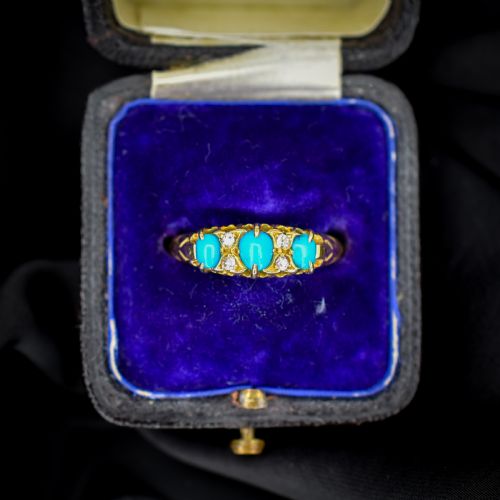
While sapphire is the most common blue gemstone in these listings, the category also includes aquamarine, zircon, spinel, turquoise, and glass paste.
Descriptions specify whether a blue stone is a natural sapphire, an unheated Kashmir or Burmese stone, or a synthetic alternative.
How do I care for historic rings?
Historic gold and platinum settings require gentle cleaning with warm soapy water and a soft brush. Harsh ultrasonic cleaners can damage fragile claws and softer stones.
Regular checks by a jeweller ensure that old cut diamonds and blue stones remain secure in their original mountings.
What is the difference between Edwardian and Art Deco rings?
Edwardian rings utilise platinum and yellow gold with lace-like filigree, floral motifs, and old cut diamonds surrounding sapphires. They favour romantic and organic shapes.
Art Deco rings embrace geometric symmetry, sharp lines, and platinum settings that showcase calibrated sapphires and diamonds.