




1920s Sapphire Cluster Ring
A 1920s sapphire cluster ring brings geometric brilliance and rich blue colour to the hand, built during the height of the Art Deco period.
1920s Sapphire Cluster Ring
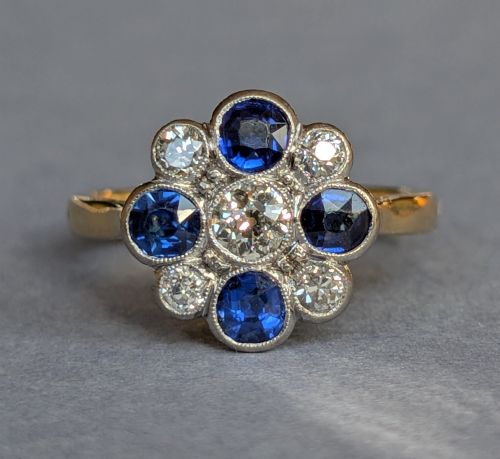
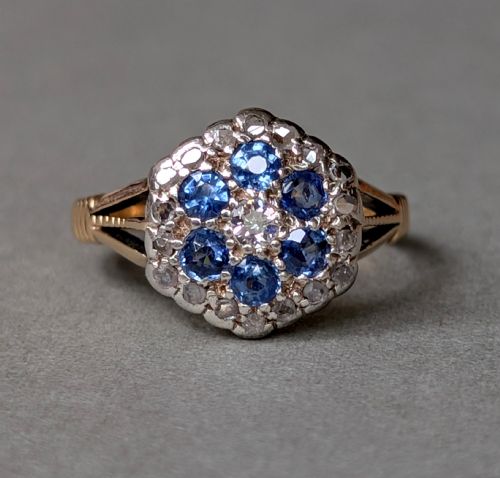
When searching for a 1920s sapphire cluster ring, buyers encounter distinctive dress rings defined by a central blue sapphire surrounded by sparkling diamonds. The most common iteration on this page is the classic Art Deco cluster, combining precise geometric arrangements with high-contrast gemstones.
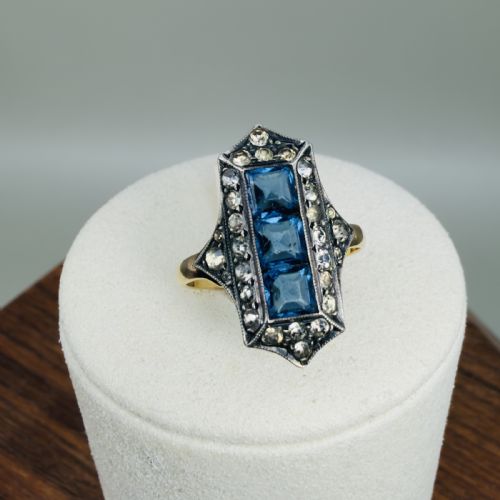
The aesthetic leans heavily into the clean lines and angular motifs typical of the period, appearing frequently in navette, target, and cushion outlines. These pieces were designed to catch the light from every angle, making them enduringly popular for engagement or cocktail wear.
Origins stretch across British, French, and European workshops of the interwar years, occasionally pulling in Edwardian transitional pieces. The sapphire takes centre stage, flanked by old cut or single cut diamonds set meticulously into metal faces.
Materials and Construction
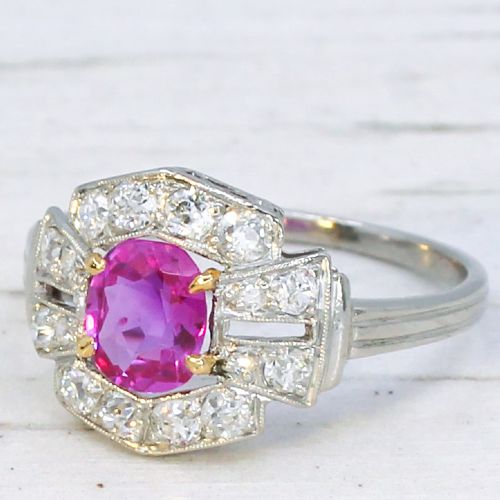
Platinum and 18ct gold, often white gold, form the principal structural foundations for these rings, allowing jewellers to create ultra-fine claw and millegrain settings. Platinum gained immense favour during this era for its tensile strength, which supported delicate calibre cuts without adding bulky weight.
Master jewellers employed hand-cut calibre stones, carefully tailored to fit tightly alongside one another in geometric channels, alongside traditional claw settings for larger central sapphires. This combination of precision sawing and pavé diamond work defined the rigorous workshop standards of the time.
Listings feature platinum, 18ct yellow gold, 18ct white gold, and rose gold alongside natural blue and pink sapphires.
Defining Quality in Period Clusters
Quality rests upon the saturation and origin of the sapphire, with unheated stones and deep cornflower or Burmese blues commanding greater attention. The presence of natural inclusions often tells the story of early mining sources rather than detracting from the piece.
The fineness of the metalwork, particularly the regularity of millegrain beading and the crispness of hand-cut facets on surrounding diamonds, separates standard workshop output from exceptional examples. Balance in the cluster proportion ensures the central gem commands the eye without overwhelming the delicate geometric border.
The 1920s Sapphire Cluster Ring Glossary
- Calibre cut
- Stones shaped specifically to fit tightly into geometric channels without visible gaps. This technique demands immense precision from the lapidary.
- Millegrain
- A decorative technique featuring tiny, raised metal beads along the edge of a setting. It softens the metal profile and adds subtle texture.
- Navette
- A boat-shaped ring design that tapers to points at either end. This silhouette flatters the finger by elongating the hand.
- Target ring
- A concentric cluster featuring a central stone surrounded by contrasting rings of colour. It creates an optical bullseye effect.
- Old cut diamond
- A hand-faceted diamond shape preceding modern brilliant cuts, characterised by a smaller table and higher crown.
- Pavé
- A setting style where small stones are placed closely together and held by tiny shared beads. This creates a continuous surface of sparkle.
1920s Sapphire Cluster Ring: Frequently Asked Questions
Are these rings suitable for everyday wear?
Sapphire sits at nine on the Mohs hardness scale, making it durable enough for daily use when mounted securely in robust platinum or gold settings. Regular checks by a jeweller ensure the claws remain tight.
Care should still be taken during manual labour or heavy lifting to protect antique metalwork and delicate pavé diamond settings from impact.
How can I tell if the sapphire is natural?
Examinations under magnification typically reveal natural internal growth lines, silk inclusions, or colour zoning unique to earth-mined stones. Laboratory certificates often accompany significant Burmese or unheated specimens.
Paste stones or synthetic substitutes appear in some period pieces, identifiable by uniform bubble inclusions or lack of natural inclusions.
What is the difference between platinum and white gold in these rings?
Platinum offers a naturally bright, durable white finish that does not require plating and holds tiny claw settings securely over decades of wear. White gold alloys used in the era often contained nickel or other metals to achieve a pale hue.
Both metals provide the cool monochromatic backdrop essential for making deep blue sapphires and white diamonds stand out.
How do I determine the correct ring size?
Professional sizing by a jeweller experienced in antique pieces is recommended to preserve delicate shoulders and gallery work. Many rings from this era feature solid shanks that accommodate careful adjustment.
Altering size requires caution when millegrain or calibre stones extend far down the band, as excessive stretching can compromise the side channels.