




Vintage Blue Enamel Pin
These vintage blue enamel pin pieces combine rich vitreous colour with precious metals, offering a sharp flash of period design for a lapel.
Vintage Blue Enamel Pin
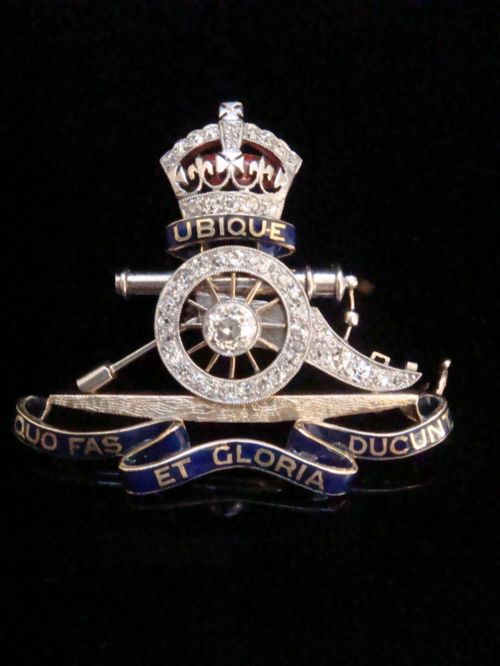
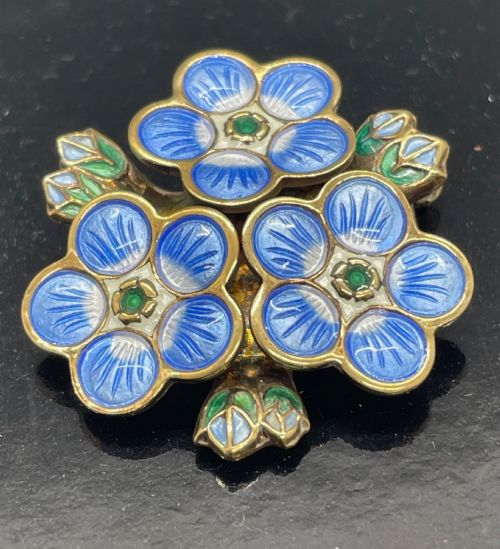
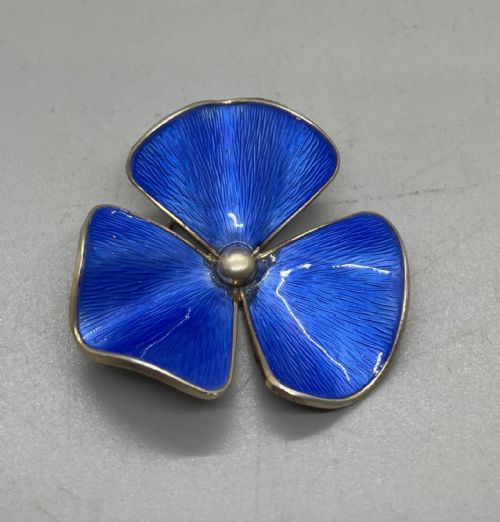
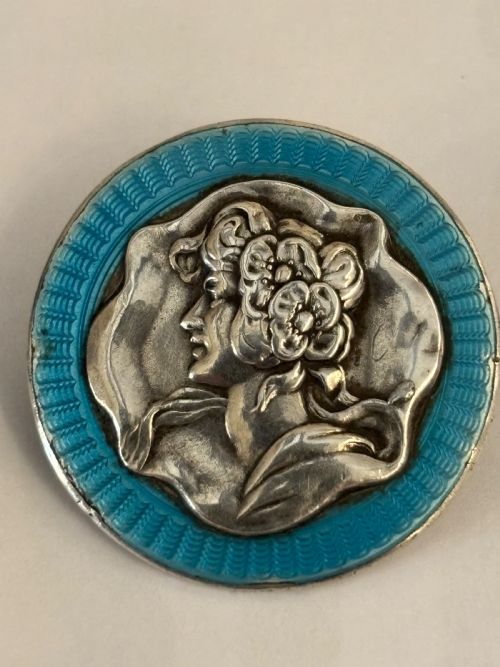
When you search for a vintage blue enamel pin, you encounter small decorative brooches and dress clips executed in shades of cobalt, ice, and turquoise. These pieces range from delicate Edwardian flower motifs and Art Nouveau hearts to bold Scandinavian modernism and butterfly designs.
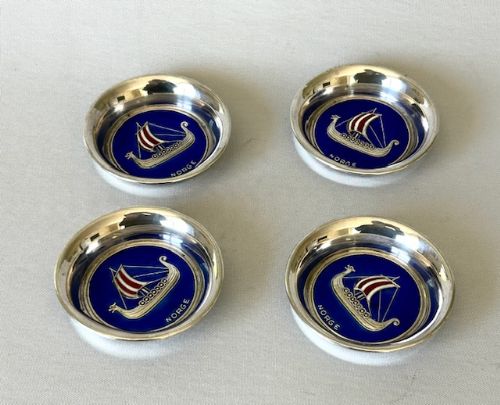
The items seen on this page span several decades, crossing periods from Georgian love tokens and Victorian silver gilt to mid-century Scandinavian output. While the broader category includes trinket dishes and trays, the wearable brooch remains the dominant form you will meet.
How they were made
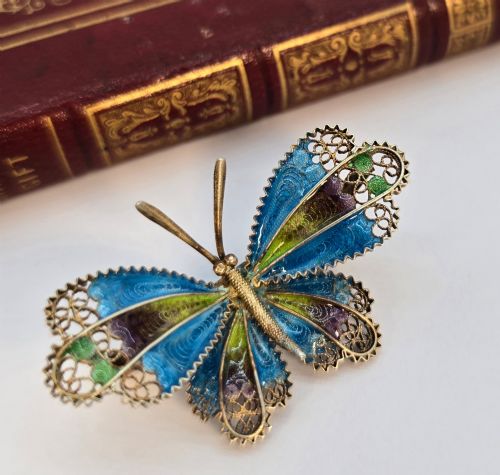
Makers fused powdered glass to metal bases under high heat, employing techniques such as guilloche engraving to catch the light beneath transparent enamel. Plique-a-jour work left cells open to let light pass through the coloured glass like stained glass.
The metalwork supporting these enamels relies heavily on sterling silver, silver gilt, and gold, occasionally augmented by pearls, moonstones, diamonds, and marcasite.
Several pieces depict delicate winged insects, including butterflies and dragonflies frozen mid-flight in blue enamel.
What varies in quality
Quality rests upon the precision of the metal smithing and the clarity of the fused glass. Finer examples display even application without cloudiness, while the underlying guilloche engine-turning remains sharp and crisp beneath the translucent glaze.
The reputation of the workshop also dictates standing, with designated Scandinavian houses achieving distinct recognition for their execution compared to unmarked output.
David Andersen·Hroar Prydz
The Vintage Blue Enamel Pin Glossary
- Guilloche
- An ornamental pattern engraved mechanically onto metal beneath translucent enamel. This technique creates a repeating geometric wave effect that shows through the coloured glass.
- Silver gilt
- Sterling silver that has been coated with a thin layer of gold. It provides the warm tone of gold while maintaining a silver foundation.
- Plique-a-jour
- An enamelling technique where the enamel is applied within a cell framework with no backing, resembling miniature stained glass. Light shines directly through the transparent or translucent material.
- Cloisonne
- A technique where decorative patterns are formed on a metal surface by adding compartments delineated by flattened wires. Enamel paste is placed within these boundaries before firing.
Vintage Blue Enamel Pin: Frequently Asked Questions
How do I date a blue enamel pin?
Dating relies on stylistic clues like the geometric lines of Art Deco or the organic curves of Art Nouveau. Maker marks and metal testing also point to specific manufacturing decades.
Clasps and pin stems offer further evidence, as safety catches and tubular hinges replaced simple c-clasps by the early twentieth century.
Are these pins made of solid silver?
Many pieces utilise sterling silver or silver gilt as a primary foundation for the enamel work. Gold and 18ct gold appear in select Edwardian and Art Nouveau examples.
Hallmarks stamped on the reverse of the metal often confirm the specific purity and origin.
How should I store my enamel brooch?
Keep enamel pieces in a lined box separated from other jewellery to prevent scratching the glass surface. Avoid prolonged exposure to direct sunlight and moisture.
Treat the delicate glass surfaces with care, as sharp impacts can chip the vitreous glaze from its metal base.
What is the difference between guilloche and cloisonne?
Guilloche involves engine-turning a precise geometric design directly into a metal disk before applying translucent enamel over the top. Cloisonne builds up raised wire walls to separate distinct pools of coloured enamel.
Both techniques create patterned surfaces, but guilloche relies on mechanical engraving while cloisonne uses soldered wire.