



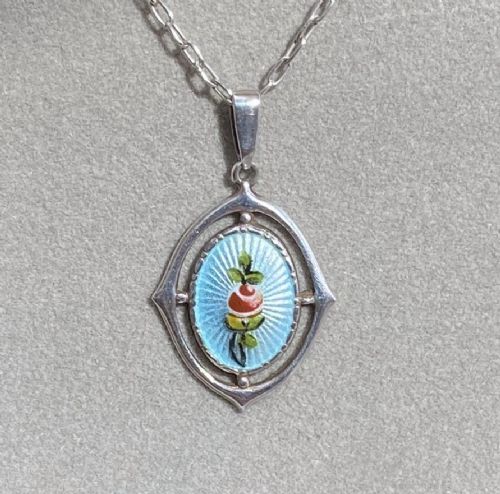


Vintage Blue Enamel Pendant
A vintage blue enamel pendant brings together brilliant vitreous colour and precious metal work from the nineteenth and twentieth centuries.
Vintage Blue Enamel Pendant
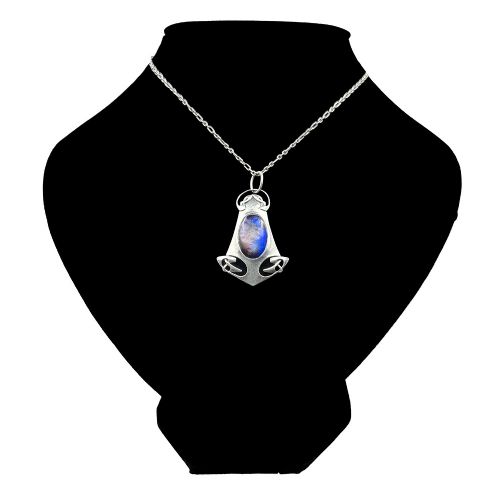
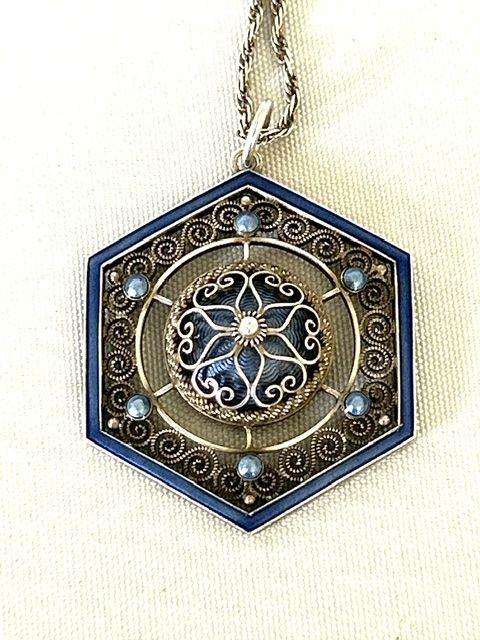
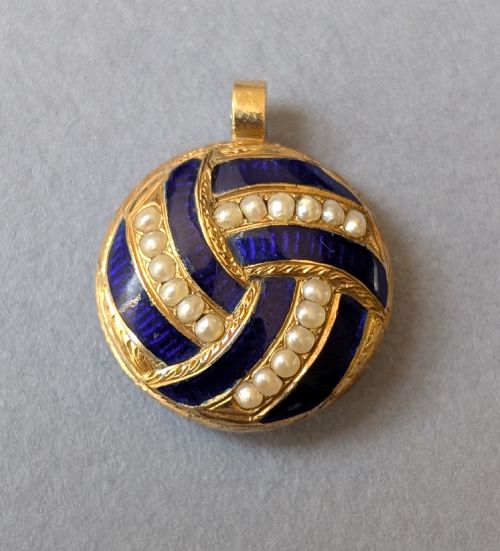
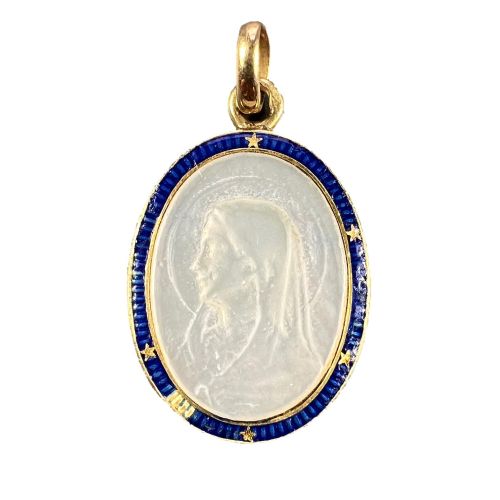
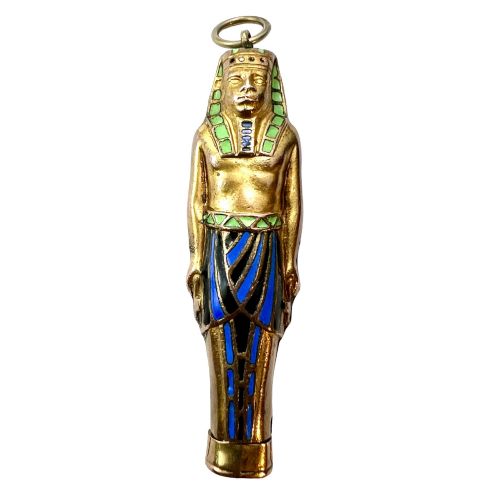
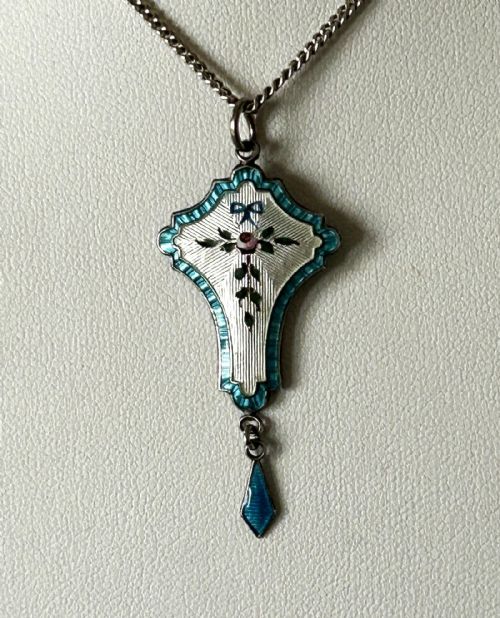
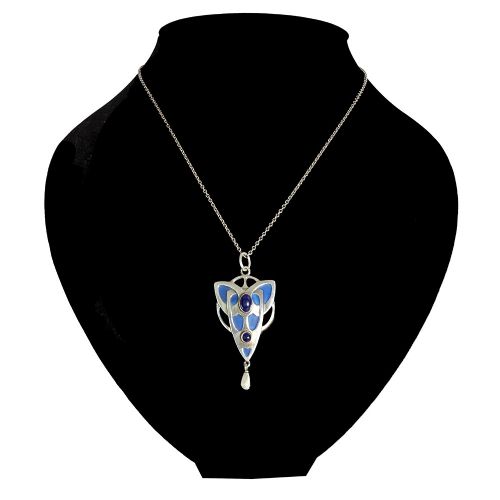
The most common versions met on this page are silver and gold settings enclosing guilloche, plique-a-jour, or cloisonne enamel. Makers utilised sterling silver or high karat yellow gold, occasionally incorporating pearls or chalcedony drops to complement the central blue tones. Forms range from geometric Art Deco plaques to flowing Art Nouveau floral motifs and devotional medallions.
What varies in quality
The distinction between ordinary and exceptional pieces rests upon the precision of the metalwork and the complexity of the enamel technique. Hand-turned guilloche engraving beneath translucent blue glass demonstrates a higher level of artisan skill than plain opaque enamel fills. Furthermore, the inclusion of precious gemstones like natural pearls or chalcedony elevates the overall standard of the jewellery.
Design attribution also separates pieces within the marketplace. Items bearing marks from renowned workshops or known silversmiths command attention through their distinct stylistic execution and careful finishing. The integrity of the enamel surface, free from major restoration or modern repairs, preserves the original artistic vision of the maker.
Vintage Blue Enamel Pendant Retail Price Guide 2026
Typical asking prices for vintage blue enamel pendant among the pieces listed under this phrase on Sellingantiques today, from the lower quarter to the upper quarter. They describe what is for sale here now, not the wider market.
The listings show pieces created across the Victorian, Edwardian, and Art Deco periods, utilising silver, eighteen karat gold, and mother of pearl.
Marius Hammer·Henry Williamson·Henry Matthews·Archibald Knox·Liberty and Co·Murrle Bennett·Henry Perkins and Sons·Charles Horner·Chiappe·David Andersen
The Vintage Blue Enamel Pendant Glossary
- Guilloche
- A decorative technique where a mechanical lathe engraves a precise, intricate pattern into metal before translucent enamel is applied over the top. This allows the underlying engraved design to shimmer through the coloured glass layer.
- Plique-a-jour
- An enamelling method resembling miniature stained glass, where the enamel is fired into open wire cells without a backplate. Light passes directly through the translucent blue glass.
- Cloisonne
- A technique featuring thin metal wires soldered to a metal base to form compartments, which are then filled with coloured enamel pastes and fired. The resulting design displays distinct metallic outlines separating the hues.
- Sterling silver
- A standard alloy consisting of ninety-two point five percent silver and seven point five percent other metals, commonly copper, used widely for durable jewellery frames.
- Vitreous enamel
- A material made by fusing powdered glass to a metallic substrate through high-temperature firing, creating a smooth, glass-like coating that resists fading over time.
Vintage Blue Enamel Pendant: Frequently Asked Questions
How do I wear a vintage pendant safely?
Suspend your pendant from a compatible silver or gold chain that matches the metal purity of the piece's bail or jump ring. Ensure the clasp is secure before wearing it out.
Avoid exposing enamel jewellery to harsh chemicals, perfumes, or ultrasonic cleaners, as these can dull the glossy vitreous surface or weaken delicate pearl drops.
What is guilloche enamel?
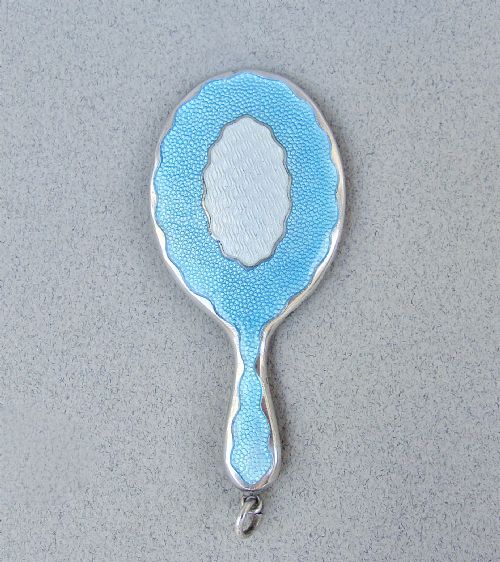
Guilloche is a decorative technique where a mechanical lathe carves a precise, repeating geometric pattern into a metal base before coloured glass enamel is applied.
The translucent enamel lets the underlying engraved texture show through, creating a shimmering depth that shifts as the piece moves in the light.
How can I tell Art Nouveau from Art Deco pieces?
Art Nouveau pieces, produced around nineteen hundred, feature flowing, organic lines inspired by nature, such as whiplash curves, floral motifs, and sinuous plant stems. They often use plique-a-jour or soft blue enamel.
Art Deco items from the nineteen twenties and thirties adopt strict geometric shapes, sharp lines, and symmetrical patterns, frequently pairing guilloche enamel with chrome or silver.
Were all blue enamel pendants made as necklaces?
No, many items catalogued as pendants served multiple functions or originated as different objects entirely. Some pieces double as brooches with integrated pin stems and safety catches on the reverse.
Others started as miniature purse mirrors, compacts, or watch keys before being adapted with suspension loops for modern wear on a chain.