




Vintage Blue Console Table
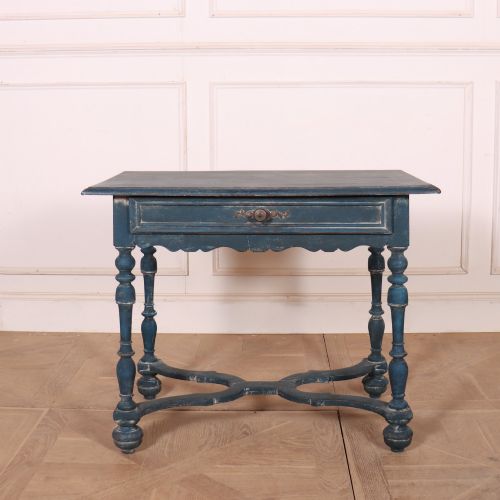
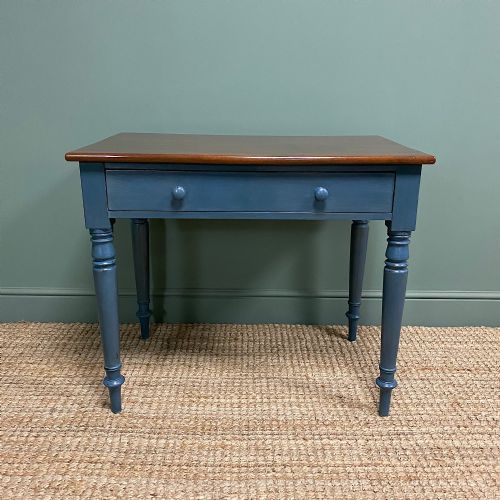
These vintage blue console table pieces offer practical surface space and painted character, bringing useful utility and distinct colour to a hallway or living room.
Vintage Blue Console Table
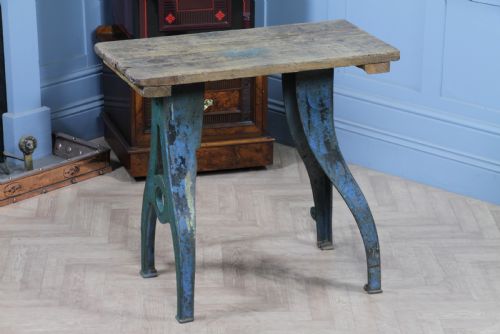
When someone searches for a vintage blue console table, they find a variety of narrow tables, side tables, and dresser bases modified or finished in paint. These pieces range from nineteenth-century pine washstands and baker tables to industrial iron-based side tables and Georgian country items.
The versions most common on this page are nineteenth-century pine and painted wood tables displaying English country, rustic farmhouse, and Gustavian styles. They serve primarily as hall tables or display surfaces where a narrow profile is required.
How they were made
Construction relies primarily on timber such as pine and reclaimed pine, joined for everyday utility in domestic and workshop settings. Structural elements sometimes incorporate cast iron and brass, particularly in industrial machine bases or washstand fittings.
Surfaces are finished with paint, often in blue or derived from original painted schemes, while specific variants include marble tops for washstands. Joinery reflects traditional carpentry appropriate to periods spanning the eighteenth, nineteenth, and early twentieth centuries.
Listings span the eighteenth, nineteenth, and early twentieth centuries, featuring materials such as pine, marble, brass, and cast iron.
What varies in quality
The standard of a piece depends on the integrity of its timber construction and the authenticity of its painted finish. Tables retaining original paint layers command greater interest than items subjected to modern repainting.
Proportion and structural balance also separate utilitarian work tables from finer design derivations, such as pieces following Regency or Queen Anne styles.
The Vintage Blue Console Table Glossary
- Console table
- A narrow table designed to stand against a wall, frequently used in hallways or reception rooms. These items often feature two or four legs with a flat top.
- Dresser base
- A low wooden storage unit featuring drawers or cupboards beneath a wide surface. This form originates from traditional country houses.
- Washstand
- A domestic table designed to hold a basin and pitcher for washing, frequently topped with marble. Many examples date from the nineteenth century.
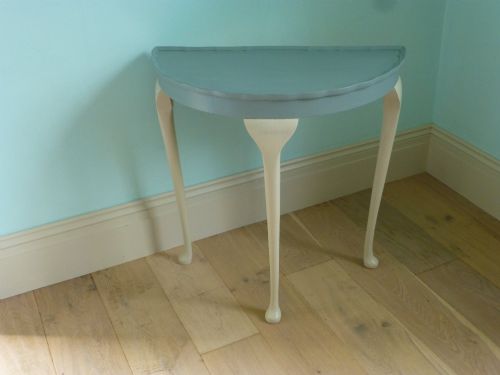
- Demine lune
- A half-moon shape used for tables designed to fit flat against a wall. This profile saves floor space in narrow entryways.
- Gustavian
- A Swedish style inspired by French neoclassical design, characterised by light painted finishes and restrained ornamentation. It appears frequently on eighteenth and nineteenth-century pine furniture.
Vintage Blue Console Table: Frequently Asked Questions
What is a console table used for?
A console table provides a narrow surface for lamps, decorative objects, or post in a hallway or living room. Its shallow depth allows it to sit against a wall without obstructing passage.
Historically, similar tables served functional roles in dining rooms or entrance halls, adapting easily to modern domestic layouts.
How do I identify a nineteenth-century table?
Nineteenth-century tables often show construction methods typical of the period, such as hand-cut joints and solid pine timbers. Wear patterns and original paint layers help indicate age.
Examining the underside and hardware can provide further clues regarding the manufacturing date and origin.
Are these tables suitable for everyday use?
Most of these tables were built for practical domestic or workshop tasks, making them sturdy enough for daily use. Pine and reclaimed timber withstand regular handling well.
Care should be taken with marble tops and historic painted surfaces to avoid moisture damage or scratching.
What distinguishes a dresser base from a console?
A dresser base typically incorporates built-in drawers and a heavier timber frame designed for kitchen or dining storage. Console tables are generally lighter and shallower, intended mainly for display.
Both forms provide useful surface areas but serve different architectural functions within a room.