
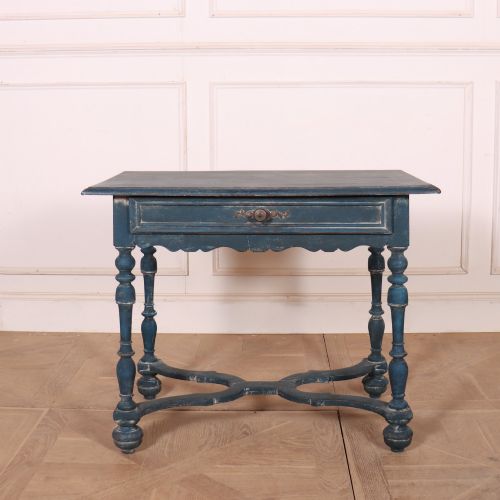
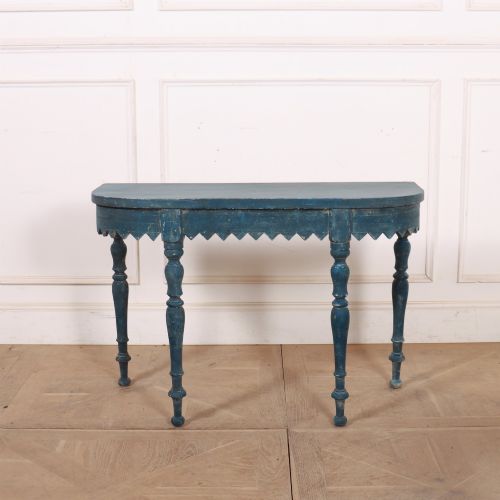


Blue Wooden Console Table
A blue wooden console table brings quiet colour and practical surface space to a hallway or reception room.
Blue Wooden Console Table
A blue wooden console table offers a narrow profile designed to sit flat against a wall, making it ideal for corridors, living spaces and entrance halls. The selection includes side tables, serving tables, washstands and dresser bases, frequently finished in muted or painted tones.
The pieces on this page span the eighteenth and nineteenth centuries, alongside examples from the early twentieth century. Styles range from English country and rustic farmhouse to Swedish folk art, Gustavian and French provincial designs.
Forms vary from simple pine trestles and lamp tables to bow ends, two-tier work tables and Gothic consoles. Origins stretch across England, France, Sweden, Italy and Spain, reflecting diverse regional furniture traditions.
Materials and Construction
Carpenters relied primarily on solid pine and timber carcasses, shaping boards by hand for everyday domestic use. Many surfaces received layers of paint, often applied in muted shades that weathered over decades of service.
Hardware details typically involve brass fixtures, whilst select forms incorporate marble tops for durability. Structural elements range from simple joined frames to trestle supports and multi-drawer arrangements.
Florists work tables hint at muddy boots, damp stems and centuries of botanical arrangement.
Assessing Quality
Quality rests upon the integrity of the timber frame and the character of the painted surface. Earlier eighteenth-century Georgian and Italian pieces display refined proportions and traditional joinery, whilst nineteenth-century country items lean towards utilitarian robustness.
The depth and patination of the painted finish distinguish standard utility furniture from finer folk art and regional European examples. Surface wear that accumulates naturally over time enhances the visual weight of the piece without compromising stability.
The Blue Wooden Console Table Glossary
- Console table
- A narrow table designed to stand against a wall, often secured with brackets or supported by front legs. These pieces provide surface space in confined areas such as hallways.
- Dresser base
- A lower storage unit featuring drawers or cupboards, historically used in kitchens and dining rooms for utensils and provisions. They offer substantial timber construction and generous surface areas.
- Washstand
- A small table traditionally made to hold a basin and jug for personal washing before modern plumbing. Many survive with timber tops and lower tiers designed for storage.
- Gustavian
- The Swedish interpretation of neoclassical design, characterised by restrained ornamentation and pale painted finishes. This style emerged during the late eighteenth century under King Gustav III.
- Trestle table
- A board resting on two or more upright supports, representing one of the earliest and most straightforward table designs. They provide sturdy support and generous legroom.
Blue Wooden Console Table: Frequently Asked Questions
Where should I place a console table?
These narrow tables suit entrance halls, narrow corridors and behind sofas where floor space is limited. Their shallow depth allows them to sit flush against a wall while offering a useful surface for lamps and small objects.
In larger rooms, they function well as serving tables or display surfaces against plain walls.
How do I care for a painted wooden surface?
Painted timber requires minimal maintenance beyond dusting with a dry or slightly damp cloth. Avoid harsh chemical cleaners that can lift historic paint layers.
Keeping the table away from direct heat sources and strong sunlight protects the wood and preserves the finish over time.
What is the difference between a console and a side table?
Console tables are specifically designed to stand against a wall, sometimes featuring flat backs or wall fixings. Side tables are generally freestanding and can be moved around a room to sit beside seating.
Both forms appear frequently in historical country houses and domestic interiors.
How can I tell an eighteenth-century table from a nineteenth-century one?
Eighteenth-century examples often display hand-cut joinery, pegged joints and timber selected for structural integrity in domestic service. Nineteenth-century pieces frequently incorporate machine-sawn elements alongside traditional construction methods.
Stylistic cues such as Georgian proportions or Gustavian carved details also help indicate the period of origin.