
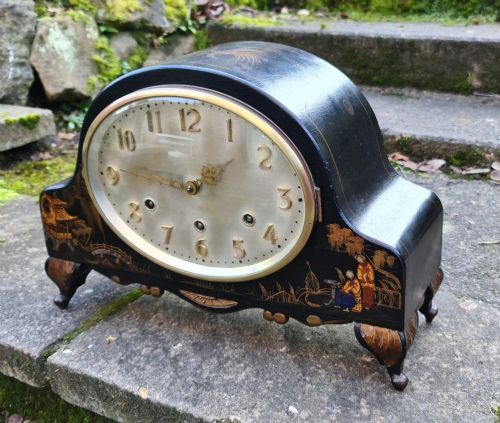
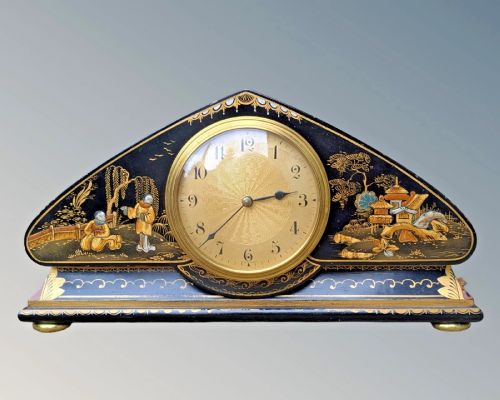
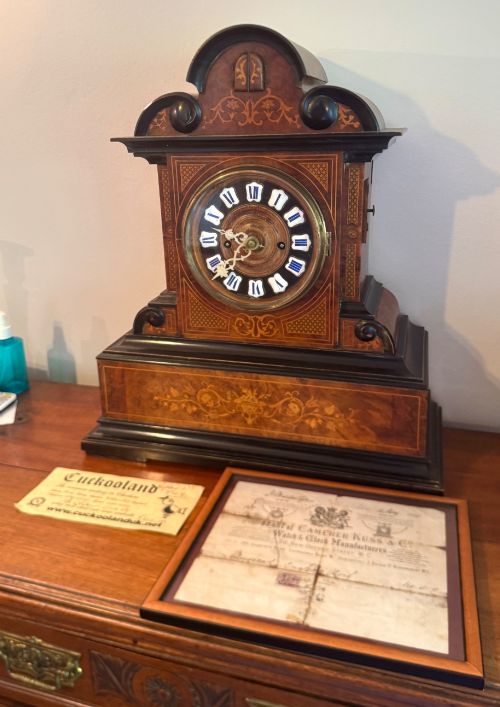


Vintage Black Shelf Clock
These vintage black shelf clock pieces bring architectural presence and steady timekeeping to a room, ranging from robust slate to polished marble.
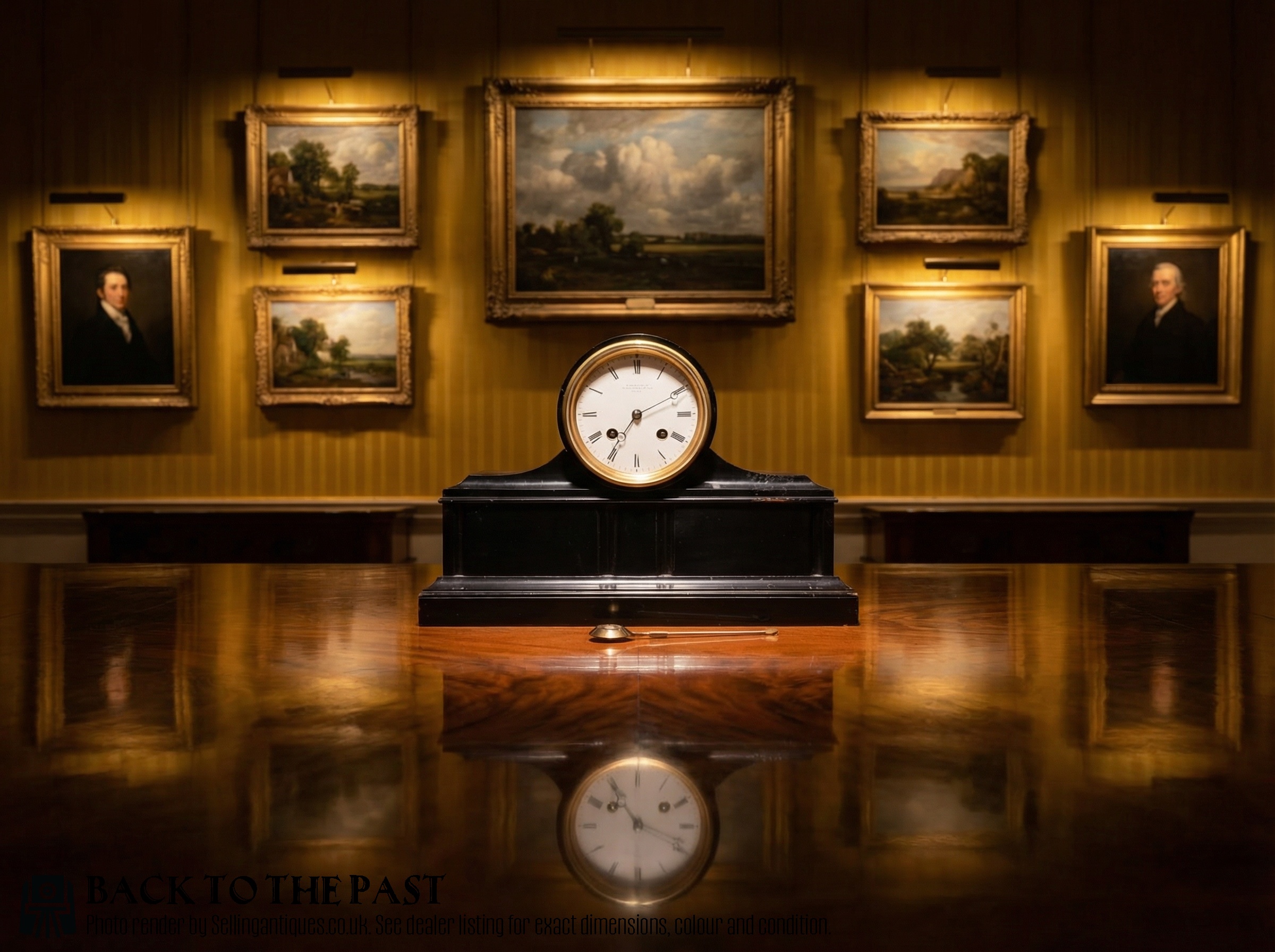
Vintage Black Shelf Clock
When you search for a vintage black shelf clock, you encounter substantial timepieces designed to sit proudly on mantels and sideboards. These objects span the nineteenth century and the early decades of the twentieth century, taking forms such as architectural mantel clocks and bracket clocks.
You are most likely to meet Victorian slate and marble examples alongside Art Deco designs on this page. The selection encompasses diverse stylistic revivals and regional interpretations, including Black Forest and Chinoiserie pieces.
Makers utilised dark mineral stones and ebonised wood to create imposing silhouettes that anchored domestic interiors. These clocks served as both reliable timekeepers and decorative centrepieces for the home.
Materials and construction methods
The construction of these pieces relies heavily on heavy natural stones such as black slate and marble, often paired with contrasting brass details and white enamel dials. Craftsmen shaped dense stone into architectural facades, incorporating columns, pediments, and plinths.
Woodwork involved ebonising timber to mimic more expensive materials, alongside marquetry and lacquered finishes found on Chinoiserie and bracket clock variants. Movements were housed securely within these robust cases, utilising brass components and glass bezels to protect the dial.
Listings span periods from the 1860s through to the 1930s, uniting Victorian architectural forms with later Art Deco designs.
Distinctions in quality
The distinction between standard examples and superior pieces rests on the choice of materials and the ambition of the case design. Richly veined marble, crisp architectural moulding, and substantial brass mounts separate high-end Victorian models from simpler utilitarian versions.
Movement complexity also sets pieces apart, with eight-day movements, bell chiming, and gong striking indicating superior production standards. The integration of decorative elements like gilt coloration and intricate enamel dials marks the upper tier of the range.
Smiths, England·D Robertson of Perth·Wm. Gilbert U.S.A.
The Vintage Black Shelf Clock Glossary
- Ebonised wood
- Timber treated to resemble ebony through staining or painting. This technique was popular in the nineteenth century for achieving a dark, uniform finish on clock cases.
- Slate
- A fine-grained metamorphic rock used extensively for Victorian mantel clock cases. It provides a heavy, durable body that often mimics black marble.
- Bracket clock
- A portable clock designed originally to sit upon a wall bracket. Later versions functioned as large mantel or shelf clocks.
- Enamel dial
- A metal dial face coated with fused glass powder to create a smooth, glossy surface. These faces typically feature painted Roman or Arabic numerals.
- Gilt
- A thin layer of gold applied to the surface of brass or wood. This treatment highlights architectural details and mounts on the clock case.
Vintage Black Shelf Clock: Frequently Asked Questions
How heavy are these slate and marble clocks?
These clocks are remarkably heavy due to the dense natural stone used in their construction. Solid slate and marble cases require a sturdy shelf or mantel capable of supporting considerable weight.
When positioning the clock, ensure the surface is level and stable to protect both the furniture and the timepiece.
What is an eight day movement?
An eight day movement refers to a mechanical clock mechanism that requires winding roughly once a week. This system was standard in better quality Victorian and later clocks.
Owners typically set aside a specific day each week to wind the clock, ensuring continuous and reliable timekeeping.
How do I distinguish Victorian from Art Deco models?
Victorian examples lean heavily on classical architecture, utilising heavy slate, marble, columns, and pediments. They often project a formal and imposing presence in a room.
Art Deco models, emerging around the 1920s and 1930s, favour streamlined geometric forms, symmetric layouts, and modern stylistic influences distinct from nineteenth-century revival styles.
Where should I place a shelf clock?
A shelf clock belongs on a stable, flat surface away from direct sunlight, excessive moisture, and heavy vibrations. Traditional placements include living room mantels, sideboards, and large bookshelves.
Providing a stable base ensures the pendulum swings evenly and the clock keeps accurate time without interruption.