





Vintage Biscuit Box
A vintage biscuit box is a functional receptacle for storing biscuits, prized for its decorative presence on a dining table.
Vintage Biscuit Box
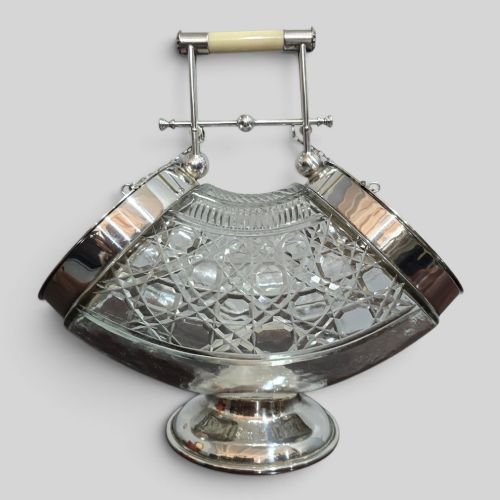
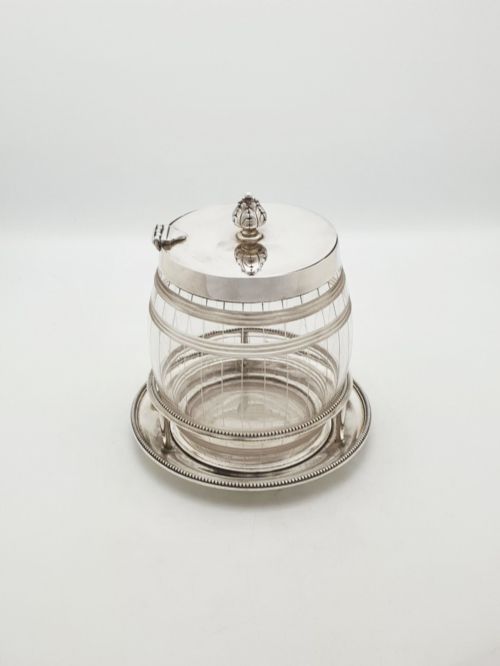
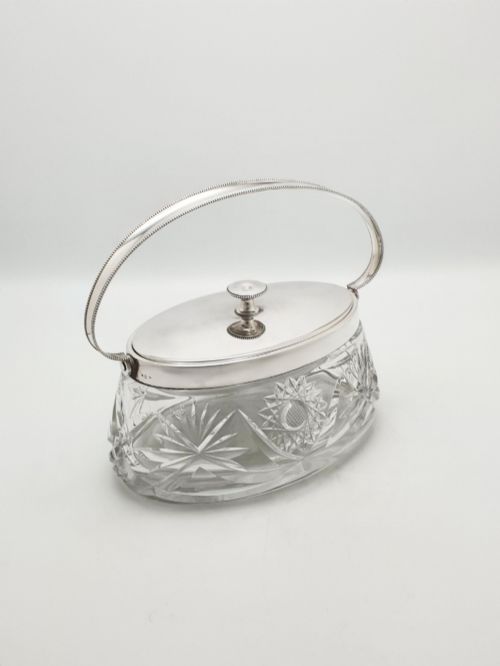
A vintage biscuit box serves to store and present biscuits on the dining table, taking various forms from barrels to novelty shapes. When searching for a vintage biscuit box, a buyer encounters pieces originating from the Victorian era through the early twentieth century.
The most common versions on this page combine glass or ceramic bodies with silver plated mounts, alongside wooden and lithographed tinplate examples. These containers reflect the domestic habits of past periods, transitioning from formal Victorian silver and cut glass to Edwardian novelty tins.
How they were made
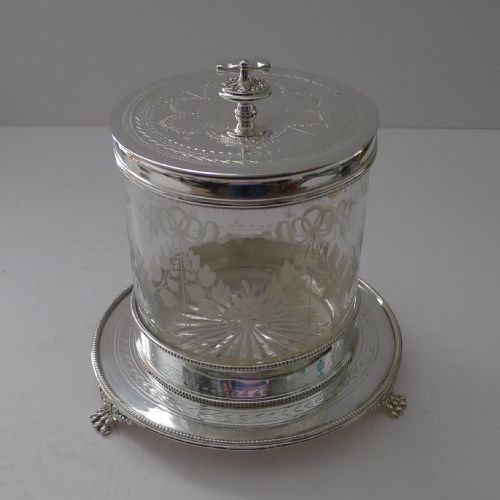
Makers utilised a combination of silver plate, sterling silver, cut glass, oak, and stoneware, frequently pairing metal mountings with transparent glass or ceramic bodies. Glass vessels were often faceted, hobnail cut, or twisted to catch the light, while metal elements provided hinged lids and carrying handles.
Tinplate examples employed lithography to apply detailed exterior decoration, mimicking materials like carved wood or creating novelty shapes such as books, satchels, and tractors. Metal smiths worked silver plate and solid silver into stands, rims, and heraldic finials to complete the composition.
Vintage Biscuit Box Retail Price Guide 2026
Typical asking prices for vintage biscuit box among the pieces listed under this phrase on Sellingantiques today, from the lower quarter to the upper quarter. They describe what is for sale here now, not the wider market.
Listings show a primary division between heavy cut glass containers with silver plated mounts and novelty tinplate boxes shaped like books and tractors.
What varies in quality
The distinction between tiers rests upon the crispness of the glass cutting, the weight and integrity of the silver plating or solid silver, and the precision of the mechanics in hinged lids. Superior examples display deep, clear facet cutting in the glass and substantial metal mountings that fit securely.
Novelty forms vary according to the ingenuity of their design and the fidelity of their detailing, whether mimicking a weight, a hat box, or a leather satchel. Maker attribution and the inclusion of original stands or specialised hardware further separate standard production pieces from more ambitious commissions.
Doulton Lambeth·Elkington·WMF·Huntley & Palmers·William Crawfords & Son Ltd·Peek Frean and Co·John Grinsell & Sons·James Dixon and Sons
The Vintage Biscuit Box Glossary
- Biscuit barrel
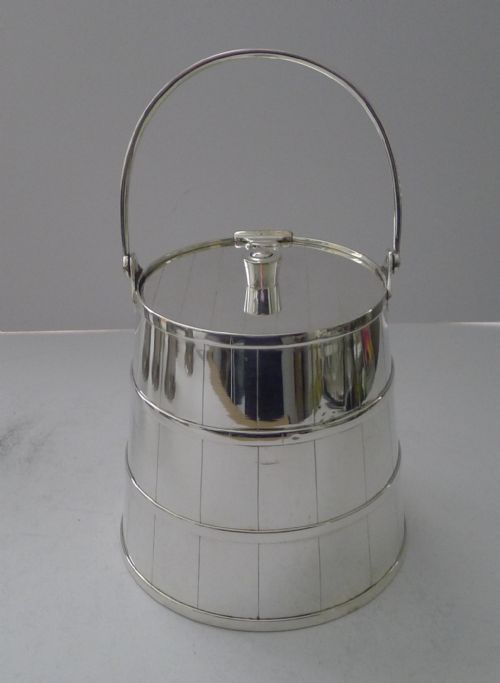
- A cylindrical container designed specifically for storing biscuits, usually fitted with a hinged lid and a carrying handle. This form dominated late Victorian and Edwardian dining tables.
- Silver plate
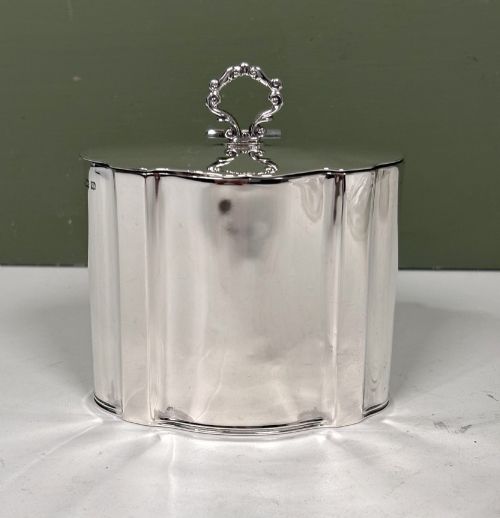
- A layer of silver bonded to a base metal core, such as copper or Britannia metal, widely utilised for mounts and lids during the nineteenth and early twentieth centuries.
- Hobnail cut
- A decorative glass-cutting pattern consisting of rows of raised, pyramidal points that resemble hobnails on boots. It creates a textured, light-reflecting surface on glass bodies.
- Lithographed tinplate
- Sheet metal printed with colourful designs using a planographic printing process, enabling mass-produced tins to display intricate exterior imagery and textures.
- Finial
- A decorative ornament fixed to the top of a lid or cover, sometimes cast in sculptural forms such as a heraldic dragon.
Vintage Biscuit Box: Frequently Asked Questions
What is the difference between a biscuit barrel and a biscuit box?
The terms are largely interchangeable in the trade, though barrel traditionally describes a cylindrical, upright vessel with a fixed handle over the top. Box or caddy generally refers to square, drum, or novelty shapes.
Both forms served the same domestic purpose of holding dry biscuits on the sideboard or tea table during the Victorian and Edwardian periods.
Were these containers used only for biscuits?
While intended primarily for dry biscuits to accompany tea or dessert, similar glass and ceramic jars functioned as ice buckets or general kitchen storage.
Precious metal and cut glass versions remained strictly within the dining room or drawing room for formal entertaining.
How do I identify a Victorian piece from an Edwardian one?
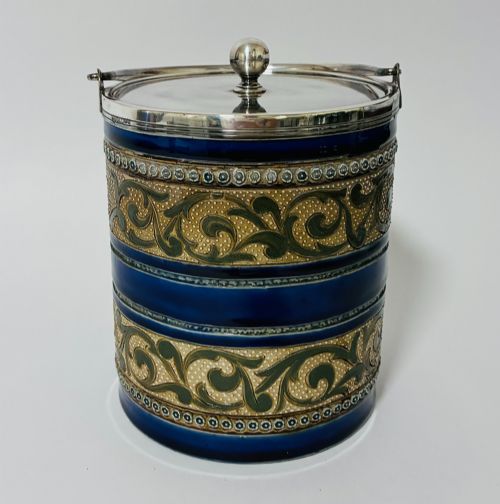
Victorian examples often feature heavier silver plating, ornate engraving, and robust ceramic bodies like stoneware or Doulton Lambeth salt-glaze. They tend towards formal, architectural grandeur.
Edwardian pieces frequently incorporate brighter cut glass, lighter mounts, and the beginnings of playful novelty designs that became popular after 1900.
How should I clean a silver plated biscuit box?
Silver plate requires gentle cleaning with a specialised soft cloth and mild silver polish to avoid removing the thin layer of precious metal over the base alloy. Glass bodies can be washed separately in warm, soapy water.
Avoid submerging pieces with integrated wooden bases or glued components in water to protect the structural integrity.