







Vintage Bird Plates
These vintage bird plates bring painted plumage and feathered subjects directly to the table from periods spanning Georgian creamware to Edwardian ironstone.
Vintage Bird Plates
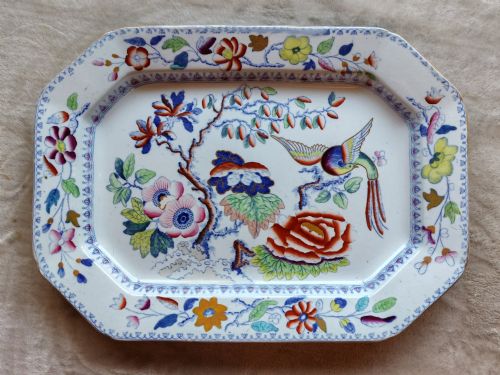
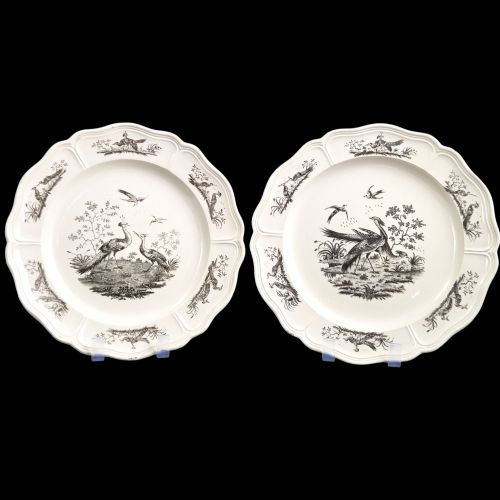
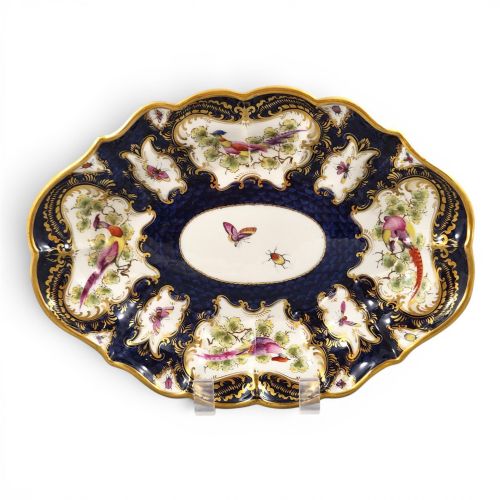
Vintage bird plates encompass painted earthenware, porcelain chargers, and cloisonne enamel trays depicting avian subjects across multiple historic eras. When searching for vintage bird plates, buyers encounter diverse forms ranging from Meissen desert dishes to Mason's patent ironstone charger plates with exotic birds.
The material expression shifts significantly across decades, moving from Georgian creamware and 19th century Japanese porcelain to Edwardian porcelain soup dishes. Pieces appear in various decorative formats, including dessert dishes, decorative plates, and large octagonal trays.
Origins span European potteries such as Leeds and Meissen alongside Japanese workshops and Chinese export traditions. These objects serve as both functional tableware and wall-hung display pieces, uniting ornithological interest with historic ceramic craft.
Materials and techniques
Makers utilised ceramic bases such as earthenware, creamware, and hard-paste porcelain, applying hand-painted polychrome glazes or transfer-printed imagery. Ironstone provided a durable ground for vibrant orange and yellow background treatments featuring exotic birds.
Japanese workshops employed cloisonne enamel techniques, soldering fine metal wires to metal tray bodies to form cellular compartments filled with coloured enamel pastes. Other pieces utilise gold leaf accents, lacquer, and moulded shallow relief work to define crane and sparrow forms.
Vintage Bird Plates Retail Price Guide 2026
Typical asking prices for vintage bird plates among the pieces listed under this phrase on Sellingantiques today, from the lower quarter to the upper quarter. They describe what is for sale here now, not the wider market.
Owls, ibises, and house sparrows take turns supervising tea time from the centres of these historic ceramic surfaces.
Assessing quality
Quality rests upon the precision of the avian depiction and the crispness of the surrounding glaze or enamel work. Finer examples display meticulous hand-painted detail in the plumage and naturalistic postures, whereas lesser pieces rely on repetitive transfer printing.
The complexity of the manufacturing technique dictates desirability, particularly in cloisonne work where intricate wire-bending and smooth polishing separate standard vessels from exceptional chargers. Condition of the underlying ceramic or metal body and the preservation of original gilding also govern the standing of each piece.
Leeds Pottery·Royal Worcester·Mason·Grainger And Co·Meissen·Bassano
The Vintage Bird Plates Glossary
- Creamware
- A refined earthenware developed in Yorkshire featuring a pale yellowish lead glaze. It served as a primary canvas for Leeds pottery bird decorations.
- Cloisonne
- A decorative metalwork technique where flat wires form compartments on a tray or plate surface to hold coloured enamel pastes. Japanese makers utilised this method extensively for bird chargers.
- Ironstone
- A heavy, durable patented earthenware body capable of taking vibrant coloured grounds. Mason's utilised this material for exotic bird charger plates.
- Charger
- A large decorative plate intended primarily for display on a sideboard or wall rather than for everyday dining. These often feature elaborate scenes such as owls or phoenixes.
- Polychrome
- Decoration executed in multiple distinct colours across the ceramic surface. This technique brings out the varied hues of natural bird plumage.
Vintage Bird Plates: Frequently Asked Questions
How do I hang a heavy charger?
Large chargers require purpose-built spring-loaded wall hangers that distribute the weight evenly around the rim without putting pressure on the ceramic body.
Ensure the wall fixing is secured into solid brick or a wall stud rather than relying solely on plasterboard.
Can I use these plates for food?
Most antique ceramic and porcelain plates function adequately for serving dry foods, though historic glazes may be susceptible to staining from acidic items.
Enamel cloisonne trays are better suited for display rather than culinary use due to the metal construction and delicate surface wires.
How do I clean enamel cloisonne?
Dust enamel surfaces gently with a soft dry cloth and avoid submerging older metal trays in water for extended periods.
Harsh chemical detergents will strip the metallic lustre and damage the delicate coloured glass pastes within the wire cells.
How are different periods identified?
Examining the reverse of a plate reveals maker marks, registry numbers, or factory stamps that pinpoint manufacturing dates from Georgian creamware to Edwardian ironstone.
stylistic clues such as Meissen blue crossed swords or Japanese Meiji period motifs help narrow down the era of production.