



Vintage Beer Pitcher
These vintage beer pitcher examples range from Georgian earthenware to Art Nouveau metalwork, offering robust service and heavy table presence for any collector.
Vintage Beer Pitcher
A vintage beer pitcher covers a diverse group of large drinking vessels designed for ale, beer, and cider, appearing in forms such as flagons, tankards, and Toby jugs. When exploring this selection, buyers encounter functional tavern vessels and decorative ceramic jugs spanning multiple centuries.
The objects seen here originate across the eighteenth, nineteenth, and early twentieth centuries, capturing periods from Georgian elegance to Edwardian utility. Common manifestations include heavy pewter flagons, brass-bound oak vessels, and Staffordshire pottery jugs.
Makers and manufacturers utilised varied materials to construct containers suitable for communal drinking or domestic display. The assortment leans heavily toward British and European forms, particularly traditional metalware and glazed ceramics.
How they were made
Metal vessels in this category rely upon traditional techniques of casting and soldering, frequently utilising pewter, copper, silver plate, and Old Sheffield plate. Artisans shaped sheet metal and applied chased decoration, engraving, or applied motifs such as hops.
Ceramic examples employ earthenware bodies shaped by throwing or moulding, finished with coloured glaze and hand-painted details. Toby jugs and tavern figures demonstrate modelled stoneware and pottery construction from the Georgian and Victorian eras.
Wooden and composite pieces incorporate cooperative methods, binding staves of oak with brass bands to create durable, liquid-tight drinking vessels. Glass tankards further demonstrate silver mounting techniques to secure rims and handles.
Vintage Beer Pitcher Retail Price Guide 2026
Typical asking prices for vintage beer pitcher among the pieces listed under this phrase on Sellingantiques today, from the lower quarter to the upper quarter. They describe what is for sale here now, not the wider market.
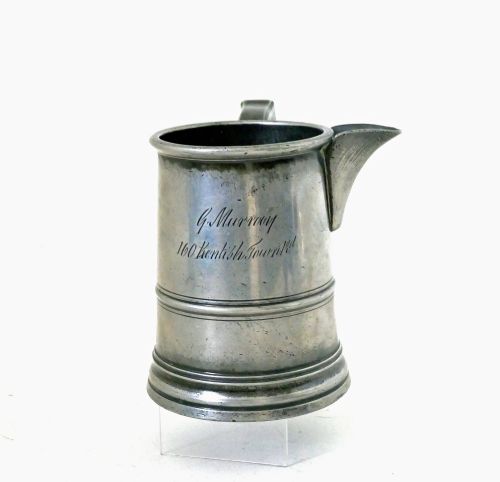
Some nineteenth-century tavern jugs feature engraved names like G. Murrouy, immortalising forgotten drinkers in solid pewter.
What varies in quality
Quality in these drinking vessels rests upon the crispness of casting or modelling and the integrity of construction materials. Heavy-gauge metalwork and well-defined ceramic moulding distinguish superior examples from standard utility pieces.
The preservation of original surface finishes, such as aged patination on pewter or intact glaze on pottery, dictates desirability. Engraved inscriptions, maker marks, and decorative elements like hop reliefs add depth to the craftsmanship.
The Vintage Beer Pitcher Glossary
- Flagon
- A large drinking vessel with a handle and lid, often used for serving beer or ale. These containers frequently feature metal construction and generous capacities.
- Toby Jug
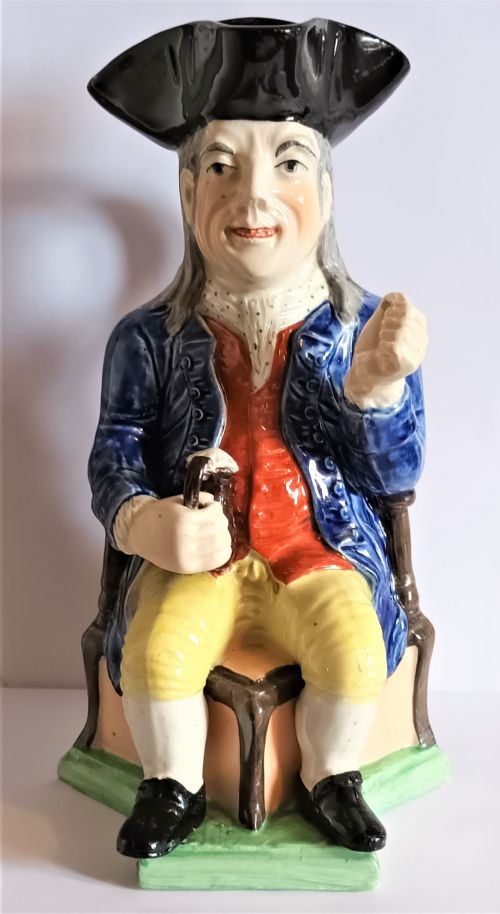
- A pottery jug shaped as a full-bodied figure, usually a stout, jovial man wearing a tricorn hat. These ceramic pieces date predominantly from the Georgian and Victorian eras.
- Old Sheffield Plate
- A composite material made by fusing a layer of silver to a copper base, popular for tableware before electroplating. It provides the appearance of solid silver.
- Tankard
- A tall, cylindrical drinking vessel with a single handle and sometimes a hinged lid. They appear in silver plate, glass, and pewter across various centuries.
Vintage Beer Pitcher: Frequently Asked Questions
What is a vintage beer pitcher used for?
These vessels were originally manufactured for serving, pouring, and consuming large quantities of ale, beer, or cider in domestic settings and taverns.
Today, collectors utilise them as decorative display items, floral containers, or functional serving pieces for gatherings.
How do I clean metal beer pitchers?
Metal pitchers made of pewter, brass, or silver plate require gentle washing with mild soap and warm water to protect their historical surfaces.
Avoid harsh chemical polishes and abrasive pads that can strip away natural patination and vintage character.
How can I tell the period of a jug?
Dating relies upon examining the material composition, manufacturing marks, overall style, and technological indicators like plating methods or ceramic glazes.
Georgian and Victorian pieces display distinct aesthetic traits and construction methods that differ from later Edwardian or Art Nouveau examples.
Are ceramic Toby jugs functional?
Staffordshire and other pottery Toby jugs were originally created for serving beverages in social environments during the eighteenth and nineteenth centuries.
While they remain structurally capable of holding liquids, modern owners generally display them as cabinet pieces due to their age and artistic value.