
Vintage Barometer
A vintage barometer measures atmospheric pressure to predict weather, bringing mechanical utility and period style to any wall.
Vintage Barometer
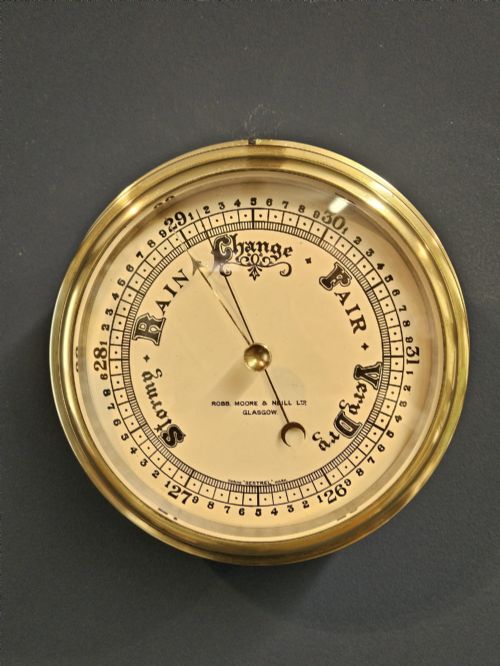
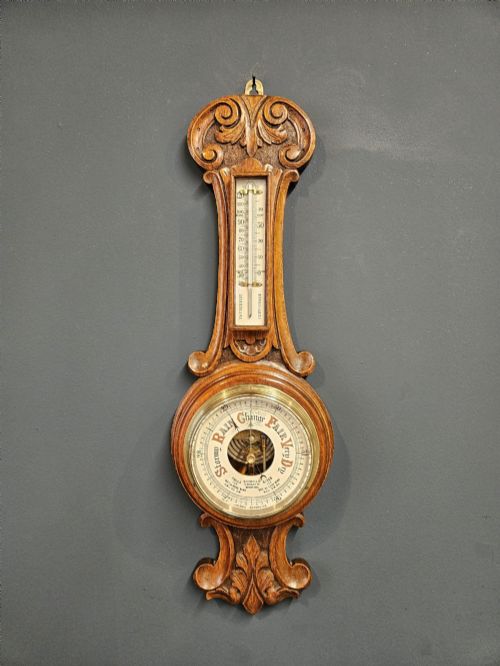
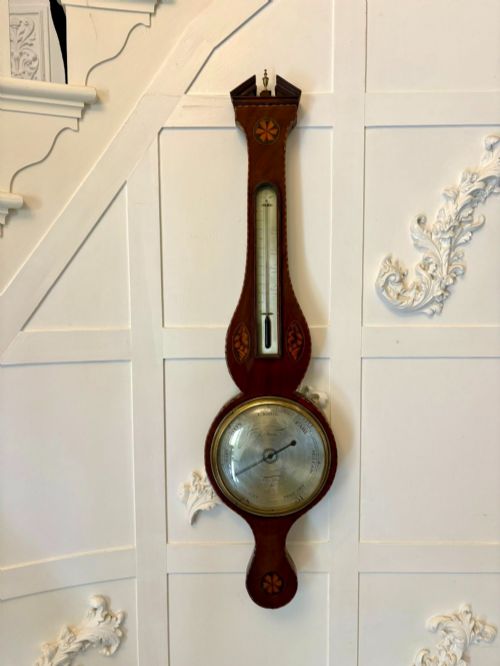
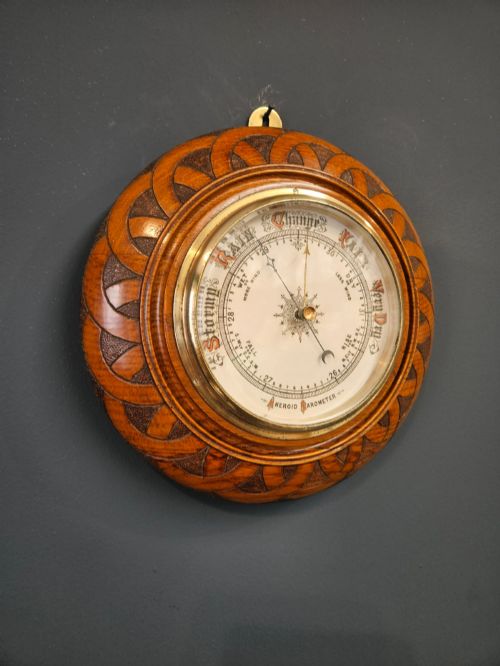
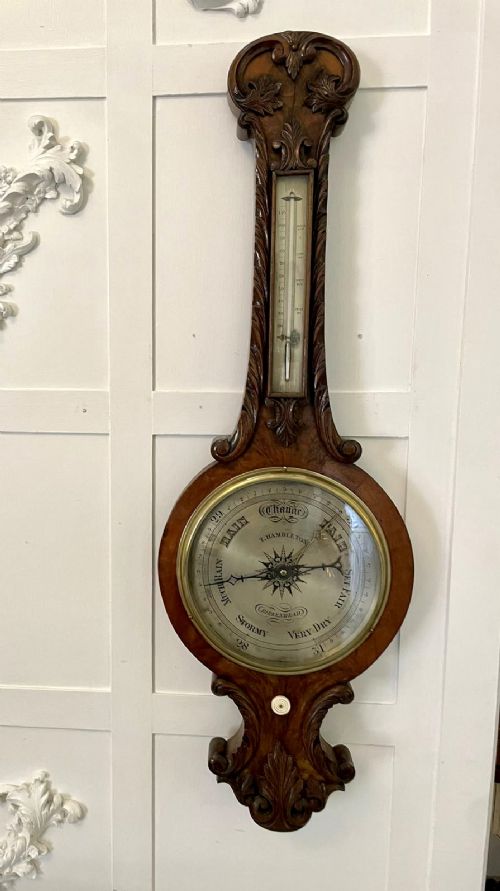
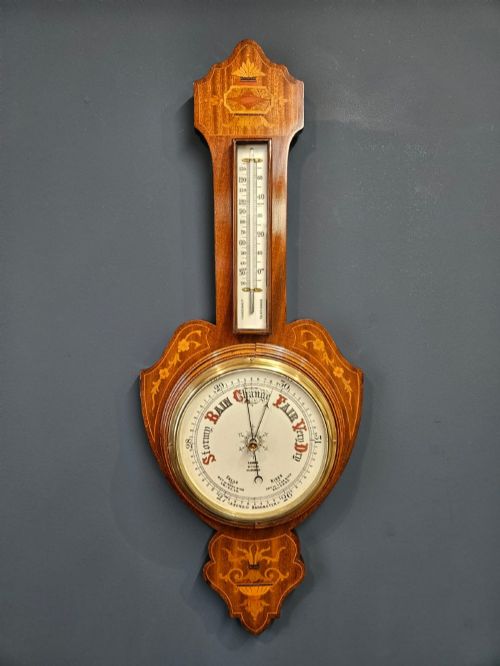
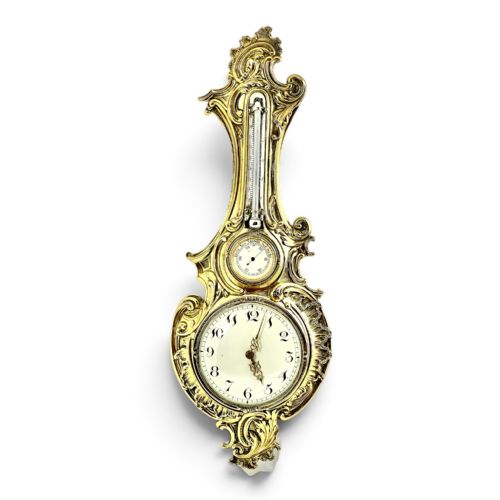
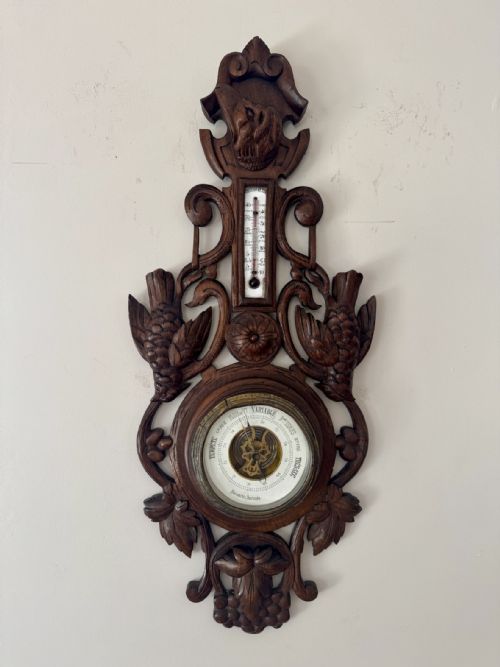
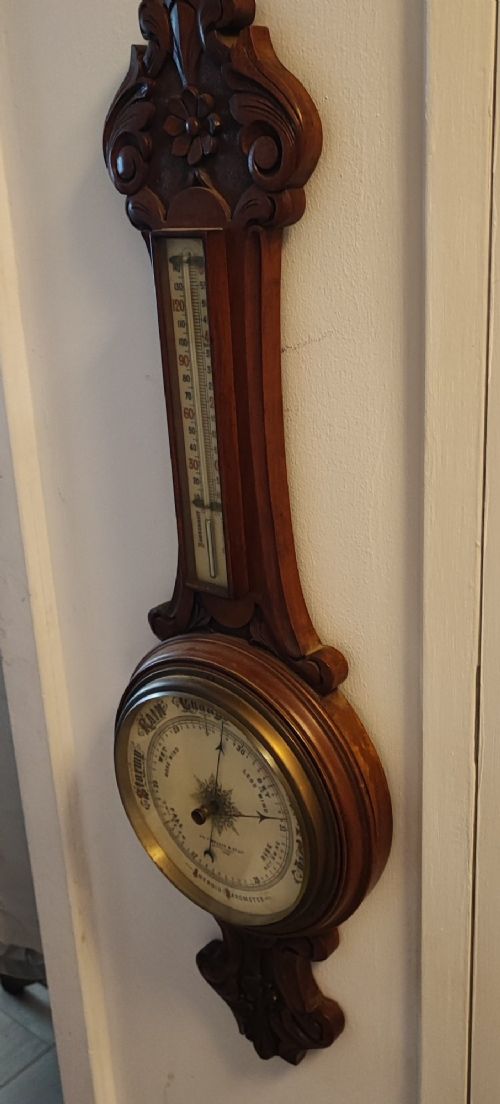
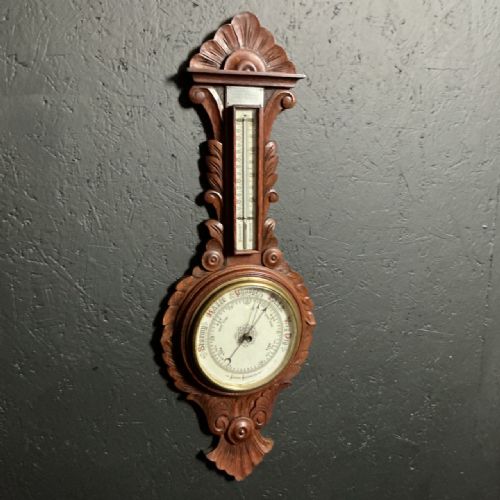
A vintage barometer spans several distinct domestic and scientific forms originating from the Georgian, Victorian, Edwardian, and Art Deco periods. Buyers frequently encounter wall-mounted instruments, ranging from traditional mahogany stick barometers to elaborate banjo shapes and carved oak aneroid models.
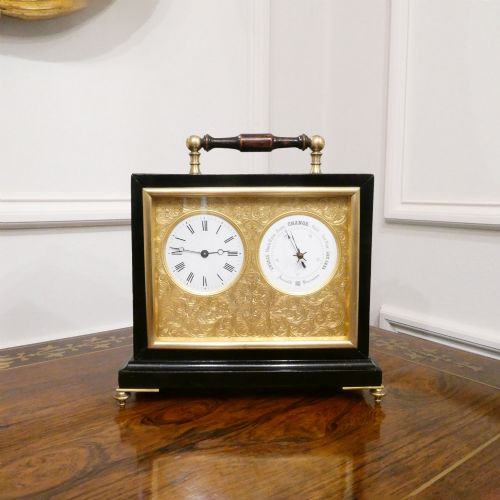
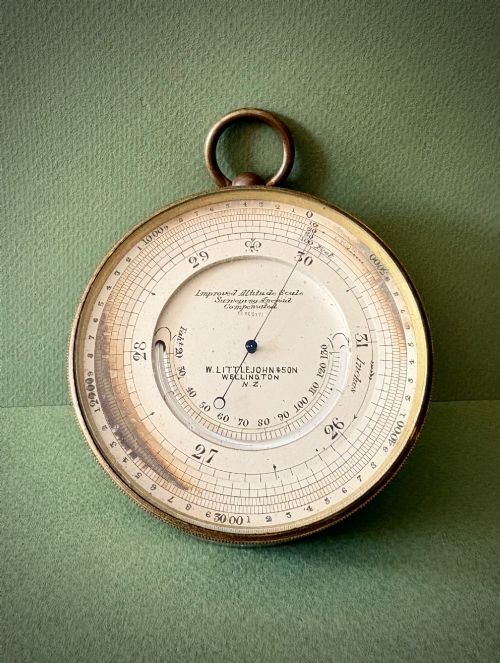
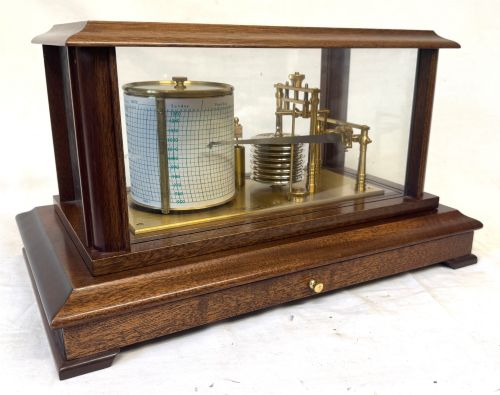
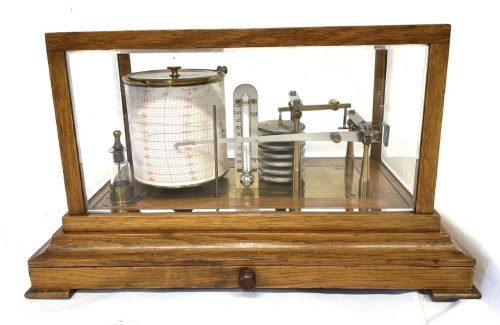
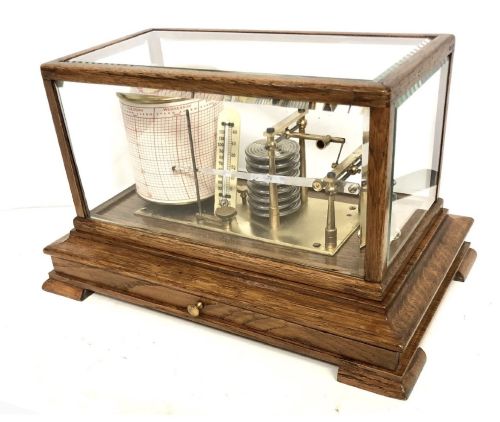
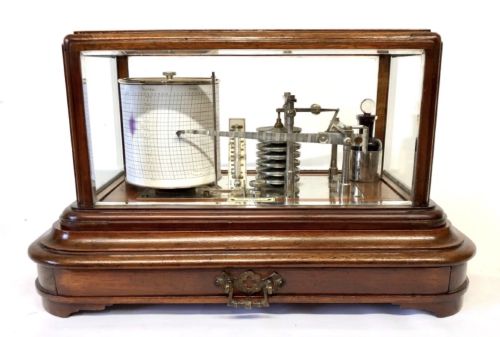
Beyond standard wall instruments, the selection includes mechanical barographs housed in glass and wood cases, portable pocket barometers, and specialised weather stations combining thermometers and clocks. Materials span rich timbers like mahogany, walnut, and oak alongside brass, glass, and porcelain.
Stylistic diversity runs from plain Georgian stick designs to ornate Victorian Rococo Revival carvings, Black Forest foliage, and streamlined 1930s Art Deco pieces. Each variation reflects the prevailing interior taste and technological advancements of its specific decade.
Materials and construction
Makers utilised dense cabinet timbers such as mahogany, oak, and burr walnut for the outer cases, frequently incorporating shell inlay, mother of pearl, or carved detailing. These wooden housings protect the delicate internal mechanisms while providing a polished decorative finish for domestic interiors.
Internal mechanical systems rely on brass, steel, and glass components, often featuring bevelled viewing windows and silvered metal dials. Aneroid barometers and barographs utilise sealed metal capsules that expand or contract with pressure changes, linked to indicator needles via delicate levers.
Listings feature timber cases in mahogany, oak, and walnut, alongside brass mechanisms and paper chart records from the Victorian and Edwardian eras.
Evaluating craftsmanship
Quality rests in the precision of the internal movement and the crispness of the exterior case carving or inlay work. Finer examples exhibit hand-engraved brass dials, robust bevelled glass covers, and cabinet-grade timber free from crude alterations.
The presence of specialised subsidiary instruments, such as integrated thermometers, hygrometers, or clock stations, elevates the complexity and desirability of the piece. Makers who incorporated signed movements and robust mechanical housings produced instruments that endure reliably.
Short and Mason·Negretti and Zambra·Wilh Lambrecht·B Besozzi of Weymouth·P Caminada Taunton
The Vintage Barometer Glossary
- Aneroid barometer
- A barometer that measures atmospheric pressure through the expansion and contraction of a flexible metal capsule, requiring no liquid mercury. This design allowed for more compact and varied domestic casing styles.
- Barograph
- A self-recording meteorological instrument that draws a continuous line of atmospheric pressure onto a rotating paper chart over a week. These devices are typically housed in polished wooden cases with glass covers and chart drawers.
- Stick barometer
- A tall, narrow wall instrument containing a vertical glass tube filled with mercury to measure atmospheric pressure directly against a scale. Georgian and Regency examples often feature exposed scales and architectural wooden trunks.
- Banjo barometer
- A wall-mounted barometer shaped broadly like a banjo, featuring a circular dial at the base and an extended trunk usually holding a thermometer or hygrometer. These were widely produced in mahogany and walnut during the Victorian era.
- Hygrometer
- An instrument used to measure the humidity or moisture content in the air, frequently paired alongside barometers and thermometers in domestic weather stations. Certain period models utilise animal hair to detect atmospheric moisture.
Vintage Barometer: Frequently Asked Questions
How do I read a barometer?
A barometer measures atmospheric pressure, where rising pressure generally indicates improving weather and falling pressure points toward rain or wind. Readings are observed by noting the position of the pointer relative to engraved weather descriptors on the dial.
Many vintage instruments include a secondary manually set pointer that allows you to track whether pressure is increasing or decreasing since your last observation. Comparing these movements forms the basis of traditional weather forecasting.
Where should I hang a wall barometer?
Hang your barometer on an interior wall away from direct sunlight, radiators, and heavy drafts to ensure accurate mechanical response. Stable indoor temperatures prevent artificial expansion of the internal metal components.
Secure the instrument firmly using appropriate wall fixings suited to the weight of the timber case, whether solid mahogany, oak, or walnut. Positioning the dial at eye level makes daily observation straightforward.
How do I date a vintage barometer?
Dating relies on stylistic clues, including the shape of the wooden case, the typography on the dial, and the presence of maker signatures or patent marks. Georgian and Regency pieces favour simple stick designs, while Victorian and Edwardian examples lean toward carved oak and banjo shapes.
Examining the fixings, glass bevels, and backboards provides further chronological evidence. Patent names and registered maker stamps often allow exact attribution to specific late nineteenth or early twentieth-century workshops.
What is the difference between a barometer and a barograph?
A standard barometer displays real-time atmospheric pressure via a single pointer moving across a static dial face. It shows the immediate pressure condition at the exact moment of observation.
A barograph records pressure continuously over a seven-day period by using an arm with an ink nib that traces a line onto a rotating paper chart driven by a clockwork mechanism. These units are housed in larger wooden boxes with glass viewing panels.