







Vintage Balkan Carpet
A vintage balkan carpet brings dense geometric vernacular design and rich natural dye palettes into modern interiors through flatweave textiles.
Vintage Balkan Carpet
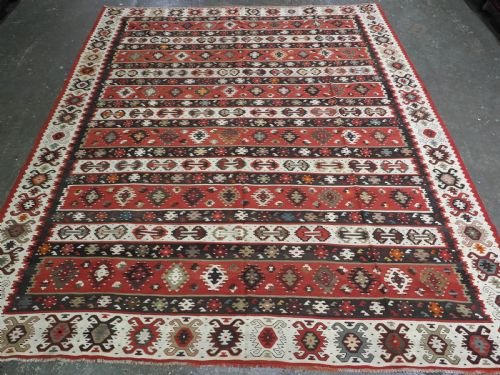
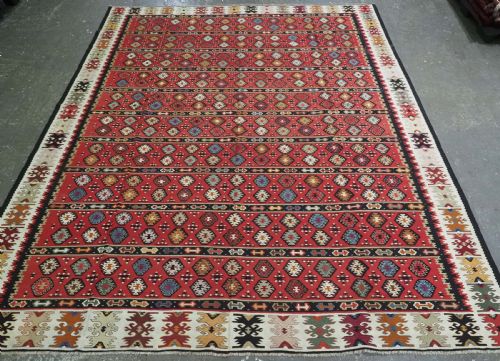
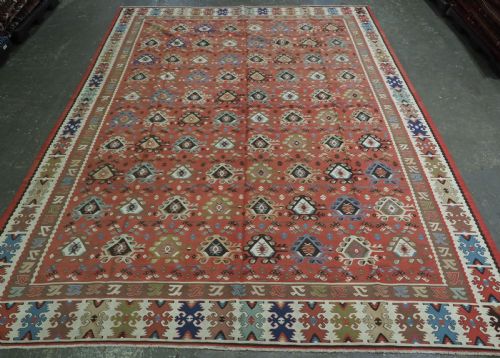
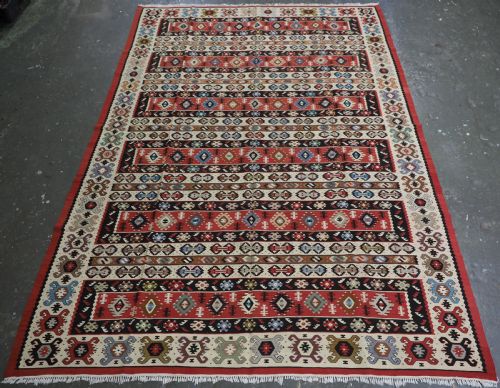
When someone searches for a vintage balkan carpet, they encounter woven floor coverings and flatweaves originating from the Balkan region, spanning the Ottoman era and early twentieth century. These textiles include kilim rugs, prayer rugs, and large room size carpets worked in regional traditions.
The selection on this page centres primarily on Sarkoy and Pirot kilims, alongside Thracian and Monastir examples dating from eighteen sixty up to nineteen thirty. Buyers find distinct stylistic groupings such as banded, lattice, flowering tree, and repeat medallion designs.
These pieces reflect various local idioms categorised under Balkan folk art, tribal styles, and traditional Ottoman Balkan aesthetics. They serve equally as floor coverings and decorative wall hangings in contemporary spaces.
How they were made
The construction relies on traditional wool and cotton materials, combining woollen yarns for the durable flatweave surface with cotton elements where utilised in the structure. Weavers employed slit-tapisserie techniques to create sharp geometric colour transitions.
Makers utilised locally sourced animal and plant materials to dye the wool, producing the warm soft colours, pastel tones, and deep reds seen across these rugs. The resulting flatweave lacks a pile, giving a crisp profile to the motifs.
Woven trees on these kilims sometimes feature branches that tilt sharply, as if caught in a sudden mountain gale.
What varies in quality
Quality in these flatweaves rests upon the fineness of the weave and the complexity of the geometric or floral composition. Pieces with scarce lattice patterns or elaborate repeat medallion layouts demand closer attention to technical execution.
Colour retention and the subtlety of the dye palette dictate the visual standing of an individual carpet. Examples displaying warm soft colours or outstanding contrast maintain a stronger presence within the tradition.
The Vintage Balkan Carpet Glossary
- Kilim
- A flatwoven carpet or rug produced without a pile across the Balkan and Ottoman regions. These textiles are known for their sharp geometric pattern boundaries.
- Sarkoy
- A specific weaving centre and style associated with flatweaves from the Balkan territories. Sarkoy kilims often display banded or flowering tree layouts.
- Pirot
- A town renowned for producing traditional flatweave carpets with intricate geometric motifs. Pirot kilims typically present balanced repeat designs.
- Prayer rug
- A small format rug designed with a Mihrab or niche motif pointing toward Mecca. Monastir examples represent this specific devotional form.
- Flatweave
- A textile constructed by interlocking warp and weft threads without knotting yarn onto a foundation. This method creates a thin, durable fabric.
Vintage Balkan Carpet: Frequently Asked Questions
How do I clean a balkan carpet?
Maintenance requires gentle surface vacuuming without a rotating brush head to protect the flatweave structure. Professional specialist cleaning remains necessary for deeper attention.
Water exposure should be kept minimal to preserve the traditional wool fibres and natural dyes. Prompt action on spills prevents permanent marking.
Are these carpets suitable for heavy traffic?
These flatweaves withstand moderate foot traffic in domestic settings when placed over a quality underlay. The tight wool weave offers solid durability for daily use.
Placing them in low-impact areas preserves the antique material structure over decades. Staircases and damp spaces test the fabric excessively.
How do I tell a Sarkoy from a Pirot kilim?
Sarkoy and Pirot kilims share overlapping design vocabulary from the wider Balkan region, making strict attribution challenging. Sarkoy pieces frequently exhibit banded arrangements and softer palettes.
Pirot examples tend toward crisper geometric repeat patterns and medallion layouts. Comparing the specific border structures helps clarify regional origins.
Can I hang these rugs on the wall?
Hanging these textiles effectively showcases their intricate flatweave patterns as vertical art. A non-damaging sleeve or specialised clip system distributes the weight evenly.
Direct sunlight through windows can fade the natural wool dyes over time. Rotating wall-hung pieces maintains even exposure to light.
What size do these carpets usually come in?
Dimensions range from compact prayer formats up to large room size examples suitable for main living spaces. Runner proportions and medium area sizes appear frequently.
Larger room formats often feature repeat medallion or all-over lattice designs. Compact formats typically highlight central prayer niches or banded motifs.