




Vintage Bakers Rack
A vintage bakers rack brings robust industrial utility and French country charm to modern interiors, offering sturdy shelving built for daily service.
Vintage Bakers Rack
A vintage bakers rack serves as a practical shelving unit, display shelving, plant stand, or storage rack derived from commercial bakery and shop use. These pieces embody styles such as French country, industrial, French provincial, and Victorian design.
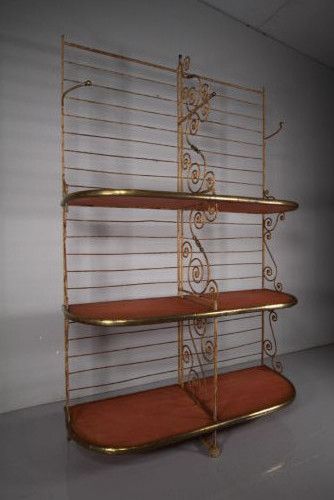
Buyers encounter forms dating from the nineteenth century through the nineteen-twenties, including items originating from France and England. Examples range from large Parisian boulangerie bread racks to English scroll-work iron bakery racks and Victorian shop display stands.
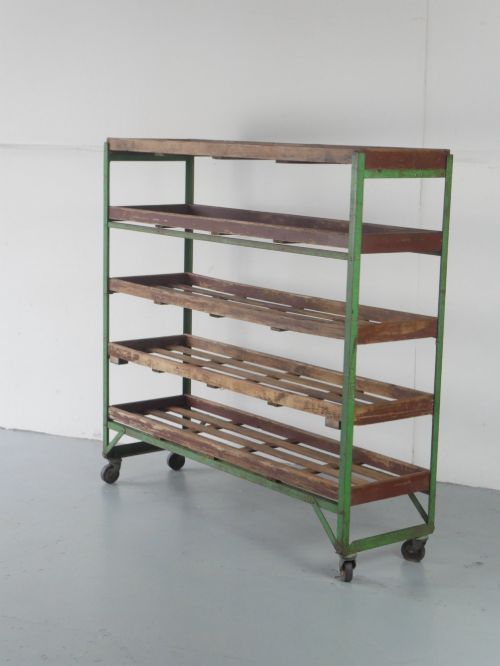
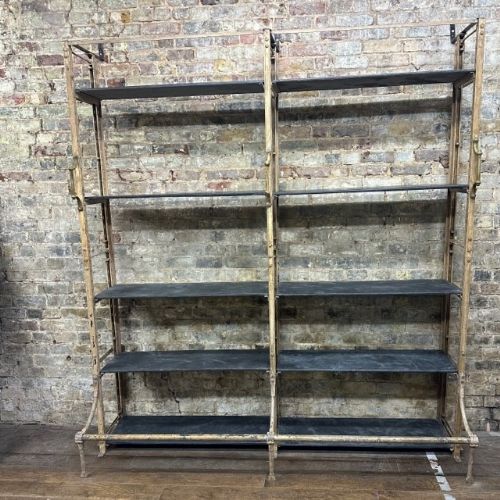
The construction typically incorporates open metal frames paired with wooden or slate surfaces to hold heavy loads. Such racks function equally well in contemporary kitchens for pantry storage or in living spaces for displaying ornaments.
How they were made
Maker construction relies heavily on wrought iron, cast iron, steel, and brass for the primary structural framework and decorative scroll-work. Metal components frequently feature painted finishes or patinated surfaces developed through decades of heavy commercial use.
Horizontal surfaces combine these metal frames with heavy pine boards or slate shelving to withstand daily trade requirements. Stamping and maker marks occasionally appear on the ironwork, indicating specific nineteenth-century Parisian workshops.
Vintage Bakers Rack Retail Price Guide 2026
Typical asking prices for vintage bakers rack among the pieces listed under this phrase on Sellingantiques today, from the lower quarter to the upper quarter. They describe what is for sale here now, not the wider market.
Dubois of Lyon left their stamp on a towering nine-foot-six French rack, proving bakers meant business.
What varies in quality
Quality differences emerge in the complexity of the iron scroll-work and the structural integrity of the main frame. Pieces featuring stamped maker marks or substantial brass elements demonstrate higher workshop standing than standard utility shelving.
The choice of shelf material also dictates overall grade, with thick slate shelving or seasoned pine boards representing superior specification compared to basic painted metal replacements.
Dubois of Lyon
The Vintage Bakers Rack Glossary
- Bakers Rack
- A tall open shelving unit originally utilised in bakeries for cooling bread and pastries. Modern interiors adopt them for general display and storage.
- Wrought Iron
- Tough, malleable iron worked by hammering while hot, used to create decorative scroll-work and sturdy frames. It resists bending under heavy loads.
- Boulangerie
- A French bakery establishment, which often employed specialised metal bread racks during the nineteenth and early twentieth centuries. These commercial pieces now form a distinct decorative category.
- Scroll-Work
- Ornamental architectural or furniture designs formed into spiral scrolls. Iron scroll-work defines the aesthetic of many nineteenth-century bakery racks.
Vintage Bakers Rack: Frequently Asked Questions
What is a vintage bakers rack?
A vintage bakers rack is a heavy-duty metal and wood shelving unit originally built for commercial bakeries and shops. They provide multiple tiers of open storage for cooling goods or displaying wares.
Today, these robust pieces function as statement furniture in kitchens, pantries, and living rooms. Their combination of iron frames and wooden or slate shelves suits various decorative schemes.
How were bakers racks used originally?
Bakers utilised these racks in commercial kitchens and shops to cool freshly baked bread and pastries efficiently. The open metal design allowed air to circulate around hot loaves straight from the oven.
Shopkeepers also employed similar stands as display shelving for merchandise. This commercial background explains their exceptional load-bearing capacity and durable construction.
How do I style a bakers rack?
A bakers rack works well in a kitchen for storing heavy cookware, crockery, and dry goods on the lower shelves. Upper tiers can hold cookbooks, jars, and trailing plants.
In living areas or dining rooms, use the shelves to display ceramics, books, and decorative objects. The open structure keeps large rooms feeling airy while maximising vertical storage space.
How do I date a bakers rack?
Dating relies on examining the primary materials, construction techniques, and stylistic markers such as Victorian scroll-work or French provincial forms. Nineteenth-century examples often feature hand-worked wrought iron and stamped workshop details.
Twentieth-century pieces tend to incorporate standard steel components and slate shelving. Comparing the joinery and metalworking methods helps distinguish earlier artisan pieces from later industrial variants.