
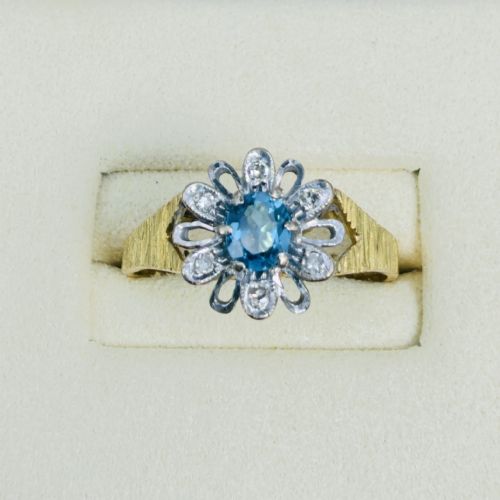
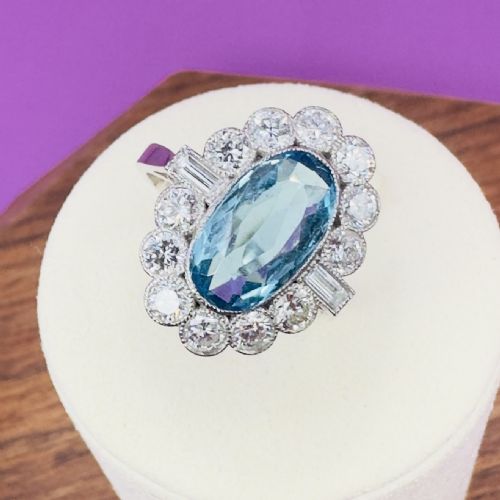


Vintage Aquamarine Dress Ring
A vintage aquamarine dress ring brings a striking wash of pale blue to the hand, drawing the eye with its clear, cool facets.
Vintage Aquamarine Dress Ring
A vintage aquamarine dress ring is a statement piece designed primarily for ornamentation rather than betrothal, appearing frequently in substantial carat weights. These rings span periods from the nineteenth century through the mid-century, encompassing distinct design movements such as Art Deco, Art Nouveau, Retro, and Mid-Century Modern. Buyers seeking this phrase encounter a rich variety of forms, ranging from geometric cluster rings to bold cocktail rings and sleek solitaires.
The aesthetic vocabulary of these pieces reflects the decades in which they were made, utilising platinum and various carats of gold to frame the central gemstone. Early twentieth-century examples often feature crisp platinum settings paired with onyx or diamond accents, while later mid-century iterations lean towards warmer yellow gold mountings. Cluster rings and elongated oval cuts dominate the selection, offering significant presence on the finger.
How they were made
Makers utilised precious metals including platinum, 18ct white gold, 18ct yellow gold, and 14ct gold to construct the robust mountings required for large gemstones. Stones were secured using traditional claw settings, bezel settings, and flush mounts, often accompanied by meticulously arranged diamond melee or contrasting dark onyx accents. The structural integrity of these rings relied on solid metal casting and hand-finished detailing characteristic of their respective eras.
Gemstones such as aquamarines and diamonds were shaped into diverse cuts, including oval, marquise, and old European cuts, to maximise brilliance within the metal framework. Artisans balanced the considerable weight of stones exceeding thirty carats with supportive basket settings and thick shanks. This combination of precious metals and precise gemstone cutting defines the physical construction seen across the collection.
Listings feature periods spanning the nineteenth century through the 1960s, executed in platinum, yellow gold, and white gold.
What varies in quality
Quality in these rings is determined by the clarity and saturation of the central aquamarine, alongside the harmony of the surrounding design. Stones with exceptional transparency and a deep, even ice-blue hue elevate a piece significantly above those with paler, milkier quartz-like tones. The precision of the supporting diamond work and the crispness of the platinum or gold casting further distinguish finer examples from standard production.
The architectural balance of the mounting dictates the overall distinction of the jewellery. Superior pieces demonstrate thoughtful integration between the central stone and secondary elements like onyx or baguette diamonds, ensuring the metalwork enhances rather than overpowers the gem. Proportions that flatter the hand while securely anchoring heavy carat weights represent the benchmark of superior craftsmanship.
The Vintage Aquamarine Dress Ring Glossary
- Aquamarine
- A blue to greenish-blue variety of beryl, prized for its transparency and cool maritime colour. It serves as the primary gemstone in the rings listed on this page.
- Cluster ring
- A ring design featuring a central stone encircled by a group of smaller surrounding stones, typically diamonds. This arrangement maximises overall sparkle and visual impact.
- Cocktail ring
- A large, prominent ring worn to attract attention, frequently featuring oversized centre stones and bold geometric styling from the mid-twentieth century.
- Marquise
- A boat-shaped gemstone cut with pointed ends and a brilliant facet pattern, designed to maximise carat weight visually and elongate the appearance of the finger.
- Old cut
- A diamond facet style hand-cut before the standardisation of modern brilliants, characterised by a smaller table, higher crown, and broad facets that catch candlelight.
Vintage Aquamarine Dress Ring: Frequently Asked Questions
How do I date a vintage aquamarine dress ring?
Dating relies on stylistic clues, such as the geometric symmetry of Art Deco platinum work or the robust yellow gold tank designs of the retro era. Metal choices also offer guidance, as platinum and white gold dominated earlier decades while yellow gold resurged later.
Examining the cut of the stones and any accompanying diamond melee helps narrow the decade of origin. Comparing the overall architecture to documented periods ensures an accurate historical placement.
Are these rings suitable for everyday wear?
Aquamarine ranks reasonably high on the Mohs hardness scale, making it durable enough for regular use when set securely in robust precious metals. However, the substantial size of many dress rings means care should be taken to avoid sharp impacts against hard surfaces.
Prongs and settings should be inspected periodically by a jeweller to ensure heavy stones remain firmly anchored. Removing the ring during strenuous physical activity preserves both the gemstone and the surrounding metalwork.
What is the difference between art deco and retro rings?
Art Deco rings from the 1920s and 1930s typically feature linear precision, white metals like platinum, and contrasting dark accents such as onyx. The aesthetic prioritises architectural symmetry and flat, geometric planes.
Retro rings from the 1940s and 1950s embrace warm yellow gold, three-dimensional curves, and massive, uninhibited stone sizes. These later pieces reflect a post-war exuberance focused on bold, heavy forms rather than delicate filigree.
How should I clean a large aquamarine ring?
Cleaning requires warm water, mild washing-up liquid, and a soft-bristled brush to remove oils and debris trapped beneath large stones. Rinsing thoroughly in clean water restores the refractive brilliance of the aquamarine.
Harsh chemical cleaners and ultrasonic devices should be avoided, particularly if the piece incorporates softer accent stones or vulnerable antique settings. Gentle hand washing remains the safest method for preserving historic jewellery.