



Vintage Apothecary Vessels
Vintage apothecary vessels encompass heavy stone mortars, blown glass carboys, and ceramic albarellos that bring historic utility to modern interiors.
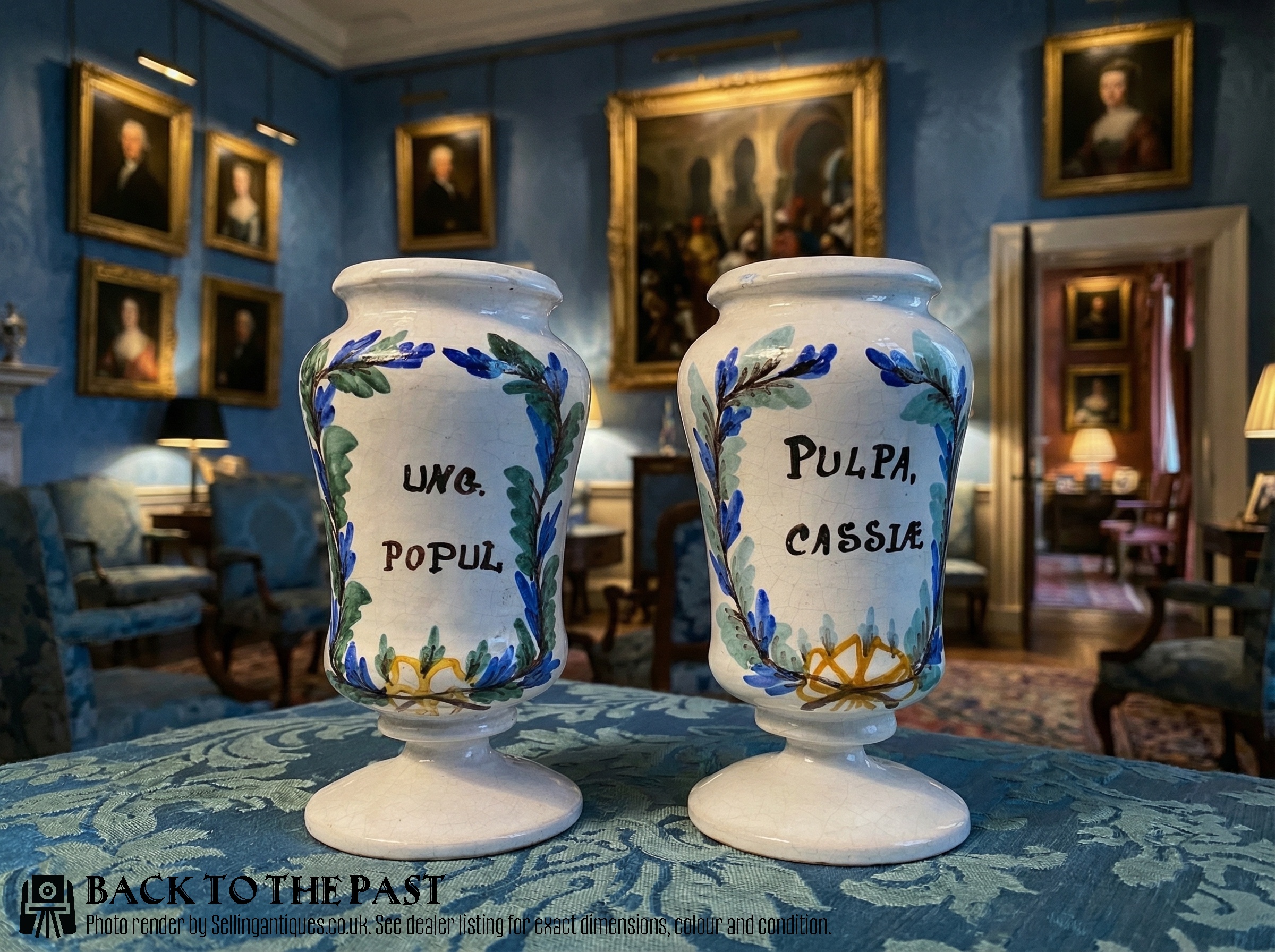
Vintage Apothecary Vessels
Vintage apothecary vessels comprise functional items used in historic dispensaries, kitchens, and laboratories, spanning centuries of practical design. Buyers seeking these pieces will encounter everything from tall display carboys to desktop ointment jars and heavy grinding sets.
The selection on this page relies heavily on nineteenth-century examples, alongside older seventeenth- and eighteenth-century survivals. Common forms include apothecary jars, storage jars, pharmacy bottles, kitchenware, and complete mortar and pestle sets.
Origins vary across English, French, Italian, and Dutch workshops, showing both utilitarian country craftsmanship and formal urban production. These items bridge scientific history and decorative interior display through robust materials and straightforward utility.
How they were made
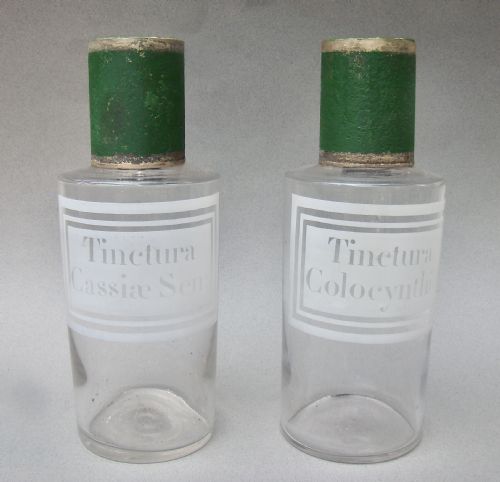
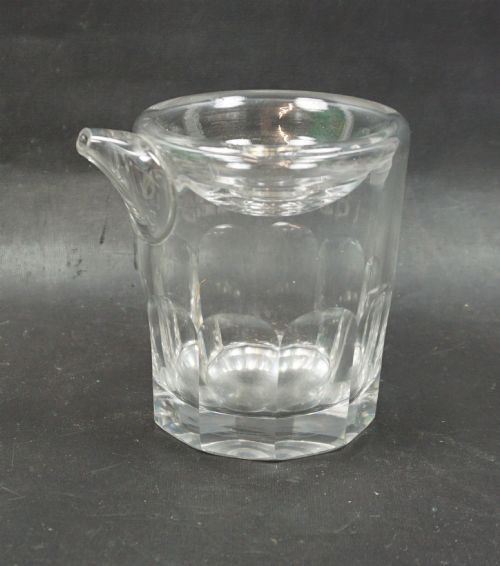
Glass vessels involve hand blowing and etching techniques, resulting in varied wall thicknesses, pontil marks, and occasional bubbles within the metal. Makers also utilised cut glass and coloured glass such as Bristol blue or green hues for specific storage purposes.
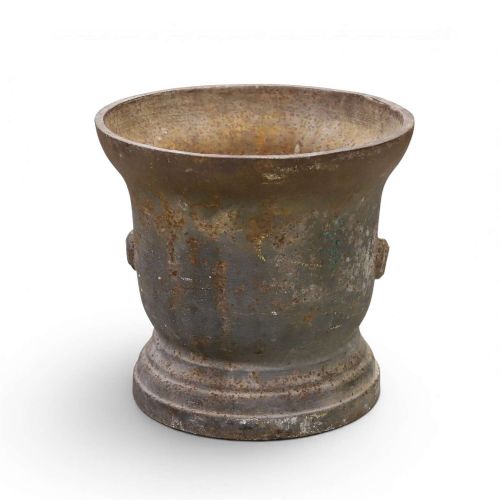
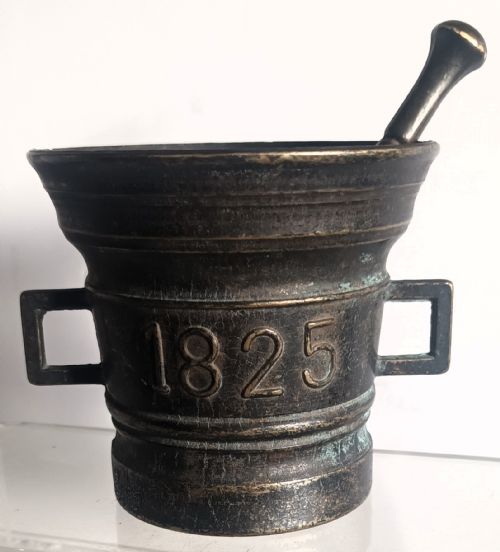
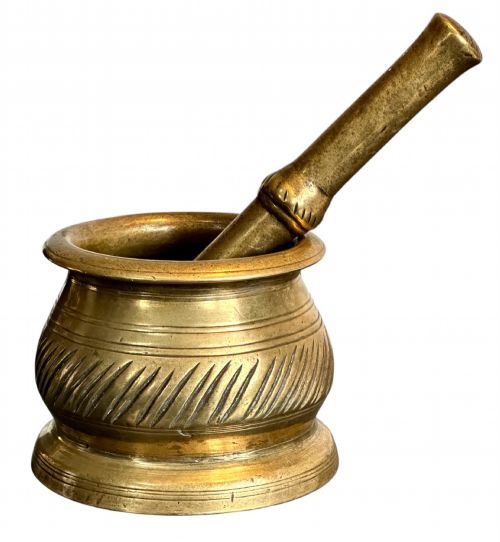
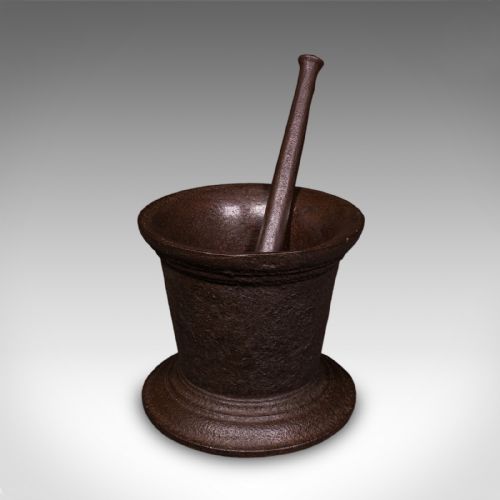
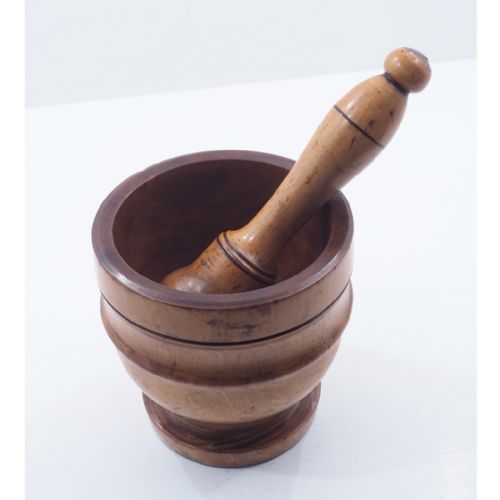
Metal items utilise casting and turning methods, seen in heavy bronze, brass, and cast iron mortars alongside turned wooden pieces in lignum-vitae, fruitwood, and olive wood. Ceramic examples incorporate earthenware, stone, marble, and tin-glazed majolica or faience with polychrome or blue and white decoration.
Listings feature materials spanning glass, brass, bronze, gold leaf, ceramic, stone, and earthenware across multiple centuries.
What varies in quality
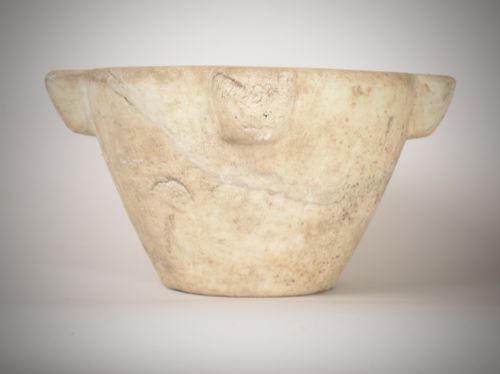
Quality rests in the weight of the material, the crispness of any moulded or cast detail, and the preservation of original surfaces. Heavy marble and thick-walled bronze mortars show superior solidity compared to lighter utilitarian alternatives.
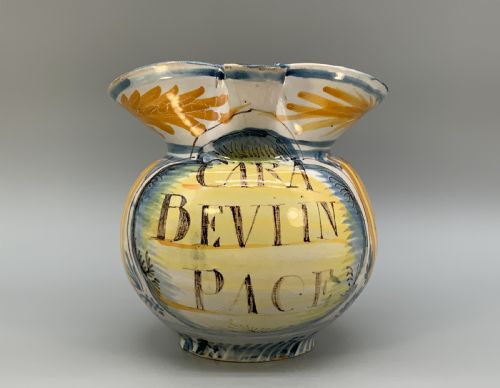
Artistic execution divides standard storage containers from exceptional painted ceramics, such as detailed Italian majolica pharmacy jugs and labelled glass bottles with intact gilding or enamel decoration. Completeness also dictates standard, with matching pestles and original lids retaining greater integrity.
Samuel Alcock and Co
The Vintage Apothecary Vessels Glossary
- Carboy
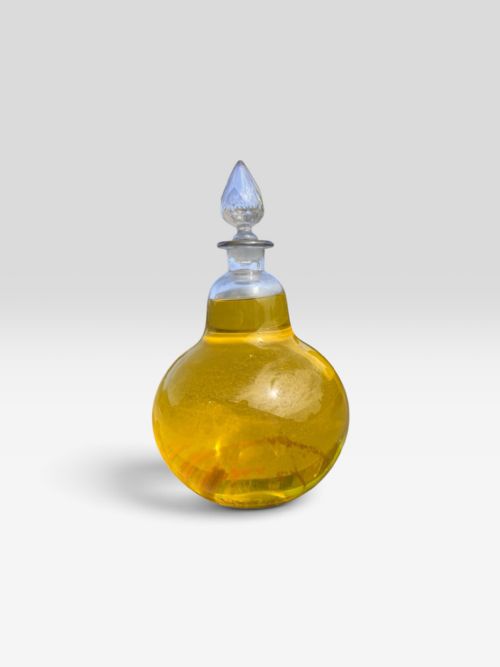
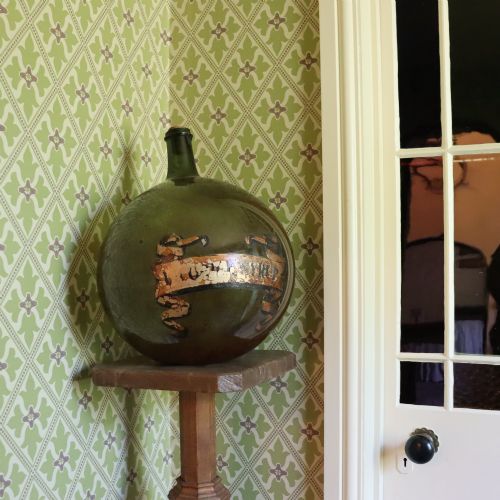
- A large, bulbous glass vessel used historically for holding liquids, often displayed in chemist windows.
- Albarello
- A vertical ceramic jar used by apothecaries for holding ointments and dry drugs, typically waisted for grip.
- Mortar and pestle
- A heavy bowl and club-shaped tool used for grinding and mixing solid ingredients.
- Faience
- Tin-glazed earthenware produced in France and other European countries, known for opaque white surfaces.
- Treen
- Small handmade wooden household objects and utensils turned on a lathe.
- Pontil mark
- The rough scar left on blown glass where the pontil rod was attached during manufacture.
Vintage Apothecary Vessels: Frequently Asked Questions
What were apothecary carboys used for?
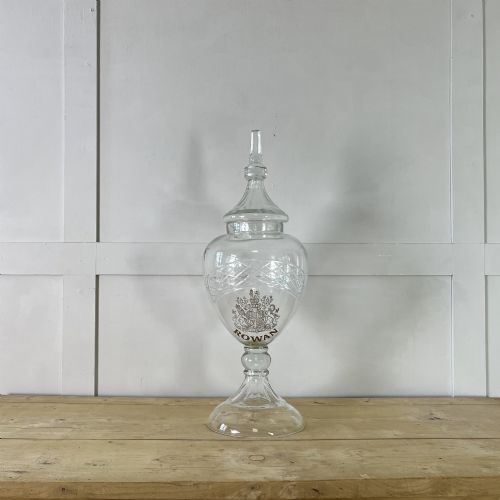
Apothecaries used large glass carboys to store bulk liquids and medicinal compounds in dispensary backrooms. Many large examples also stood in chemist shop windows filled with coloured water to attract passing trade.
Over time, these large glass vessels transitioned from working laboratory equipment into decorative interior objects valued for their handmade bubbles and heavy blown forms.
How do I date a bronze mortar?
Dating bronze mortars involves examining the rim profile, base thickness, and surface wear left by centuries of handling and grinding. Earlier seventeenth-century examples often display gothic or flared rib designs, while later Georgian pieces show simpler classical proportions.
Casting flaws and tool marks left during production also help distinguish older workshop output from later reproduction items.
What is an albarello jar?
An albarello is a cylindrical ceramic drug jar designed with an inward curve at the waist so handlers could grasp it securely with sticky fingers. Apothecaries lined shelves with these vessels to store dry herbs, spices, and thick ointments.
Originating in the Middle East, the form spread through Italian majolica and Dutch delft production, featuring painted botanical or heraldic labels on the front.
Are wooden mortars durable?
Wooden mortars turned from dense timbers like lignum-vitae or fruitwood were designed for crushing dry materials that would not stain or degrade the grain. These hardwoods handle impacts well, though they require careful treatment to prevent drying and splitting.
Historical examples survive through regular oiling and careful use, showing rich patination across the turned exterior surfaces.
How should I display apothecary jars?
Apothecary jars suit placement on deep shelves, window sills where natural light highlights coloured glass, or kitchen worktops. Grouping different forms, such as pairing tall carboys with smaller ceramic albarellos, creates a balanced display.
Keeping these vessels away from direct heat sources protects fragile historic glass and maintains the stable condition of older ceramics and wood.