
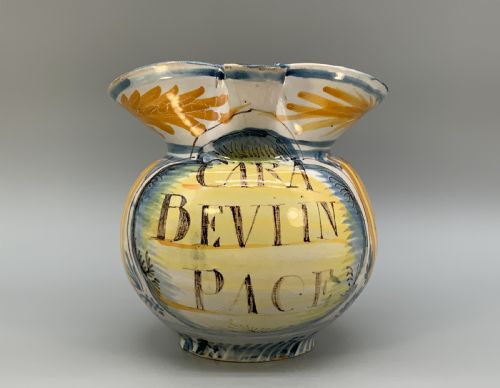


Faience Drug Jar
These faience drug jar pieces bring the rich history of historic apothecary displays into modern interiors through tin-glazed earthenware and traditional hand-painted pigments.
Faience Drug Jar
A faience drug jar represents the historic vessel used in apothecaries and pharmacies to hold medicines, syrups, and dry preparations. When searching for a faience drug jar, a buyer encounters ceramic cylinders, bottles, and handled jugs produced across European centres. The pieces available span the seventeenth, eighteenth, and nineteenth centuries.
The most common forms on this page include the cylindrical albarello shape alongside pharmacy jugs designed for wet and dry contents. These ceramic containers often feature painted inscriptions detailing their former medical contents, reflecting Italian and Dutch traditions.
Continental faience and Italian majolica dominate the styles seen in these listings. Workshops in Italy and Delft produced these tin-glazed pieces using cobalt and polychrome pigments to decorate surfaces with Baroque, Renaissance, and traditional motifs.
Materials and production methods
The foundational body of each piece consists of earthenware ceramic, formed into jars, bottles, and jugs. Potters coated these clay bodies in a tin glaze to create a smooth, opaque white surface suitable for painting.
Decorators applied cobalt pigment and other coloured pigments directly onto the unfired or raw glaze. This technique required precise brushwork, as the porous glaze absorbed the liquid colour instantly before the final firing fixed the design.
Distinctions in quality and execution
Quality in these ceramics rests upon the clarity of the tin glaze and the control shown in the painted decoration. Finer examples display crisp cobalt or polychrome brushwork and well-balanced proportions across the albarello body or jug handle.
The precision of the pharmacy inscriptions and the complexity of the surrounding decorative panels also separate standard workshop output from exceptional examples. Surviving covers matching the original jar further elevate the integrity of the piece.
The Faience Drug Jar Glossary
- Albarello
- A cylindrical earthenware jar used by apothecaries to store drugs and ointments. This shape originated in the Middle East and became popular across Italian and Dutch workshops.
- Tin glaze
- An opaque white glaze made by adding tin oxide to a lead glaze base. It provides the ideal smooth background for painting cobalt and polychrome designs.
- Majolica
- Italian tin-glazed earthenware decorated with colourful pigments. The technique flourished during the Renaissance and Baroque periods.
- Polychrome
- Decoration employing multiple distinct colours rather than a single hue. These palettes often include manganese, yellow, and blue pigments.
- Cobalt pigment
- A deep blue metallic colour used extensively for underglaze painting on ceramics. It remains stable at high kiln temperatures, producing sharp patterns.
Faience Drug Jar: Frequently Asked Questions
What were drug jars used for?
Apothecaries utilised these ceramic vessels to store medicinal herbs, dry powders, and liquid syrups safely on pharmacy shelves.
The painted inscriptions on the exterior ensured the apothecary could quickly identify the specific contents during compounding.
Are these jars waterproof?
While the tin glaze seals the porous earthenware body, these historic ceramics are primarily intended for display rather than active modern utility.
Age and historic hairline drying can compromise the integrity of the glaze over long periods.
What is the difference between wet and dry jars?
Dry jars typically take a straight-sided albarello form designed to hold powders, ointments, or dried roots accessed easily from the top.
Wet jars feature spouts or handles configured to pour liquid syrups and medicinal oils without spilling.