


Antique Albarello Pottery
These antique albarello pottery vessels are medicinal storage jars that bring historic pharmacy design into your home.
Antique Albarello Pottery
When you search for antique albarello pottery, you examine cylindrical drug jars designed for apothecary shops. These containers held ointments, dry drugs, and liquid medicines on pharmacy shelves.
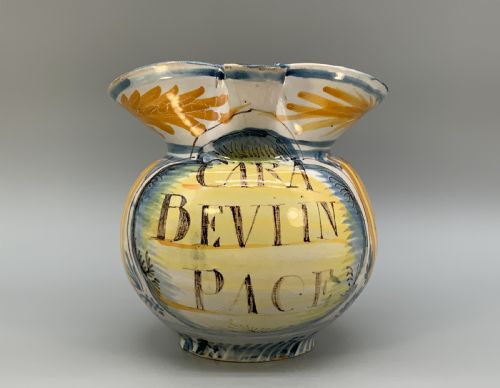
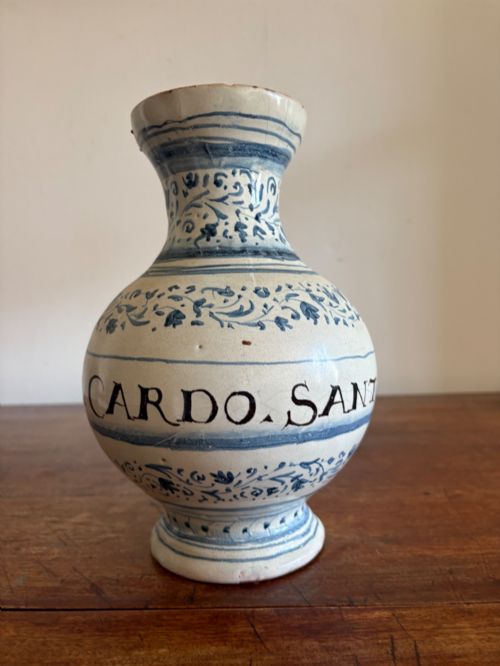
You are most likely to meet 18th-century and 19th-century examples on this page, alongside earlier pieces from the 17th century. The forms range from waisted jars to pharmacy jugs and wider wet drug vessels.
The aesthetic draws heavily from Italian traditions and Dutch faience, reflecting centuries of European ceramic production. Italian Majolica and tin glaze dominate the origins and visual styles of these pieces.
How these pieces were made
Potters shaped earthenware and clay on the wheel to form the distinctive cylindrical bodies of these apothecary vessels. The resulting clay body provided a sturdy foundation for subsequent decoration.
Craftsmen applied tin glaze over the earthenware to create an opaque white or pale surface suited for painting. Pigments in blue and white, polychrome, manganese, and yellow were then applied directly onto the unfired glaze.
Firing in kilns fused the metallic oxides into the tin glaze, producing the vibrant colours seen across Italian and Dutch workshops. This technique protected the porous clay from medicinal liquids and powders.
Some pharmacy jars survived centuries of shelf life only to find a second career holding dried lavender instead of leeches.
What varies in quality
The precision of the painted decoration distinguishes finer examples from simpler workshop output. Details in the polychrome or blue and white pigments show the skill of the individual hand.
The clarity and thickness of the tin glaze affect the overall visual weight of the ceramic body. Smoother coverage without heavy pooling enhances the definition of the underlying earthenware form.
The Antique Albarello Pottery Glossary
- Albarello
- A cylindrical ceramic drug jar designed for storing pharmaceutical products. This shape originated in the Near East before becoming a staple of European apothecary shops.
- Majolica
- Tin-glazed earthenware decorated with colourful pigments on an opaque white glaze. Italian workshops produced significant quantities of this ware throughout the Renaissance and later centuries.
- Faience
- European tin-glazed pottery, particularly tin-glazed earthenware produced in France, Germany, and the Netherlands. The technique creates a smooth white surface similar to porcelain.
- Tin Glaze
- A ceramic glaze made opaque by the addition of tin oxide. This coating provides a white background for painted decoration on earthenware bodies.
- Wet Drug Jar
- An apothecary vessel designed with a spout or wider neck for liquid medicines and syrups. These jars often feature handles to assist with pouring.
Antique Albarello Pottery: Frequently Asked Questions
What were albarello jars used for?
These cylindrical vessels served as storage containers in historic apothecary shops and pharmacies. Apothecaries used them to hold dry drugs, ointments, and medicinal compounds.
The shape allowed pharmacists to line them tightly on shelves while leaving space to grip each jar easily.
How do you date antique albarello pottery?
Dating relies on stylistic shifts in painting, tin glaze composition, and vessel form. Pieces from the 17th century often display distinct blue and white palettes or early Italian motifs, while 18th-century examples introduce broader regional variations like Nove or Naples styles.
Examining the underlying clay and glaze thickness also helps determine the approximate period of manufacture.
Are these jars waterproof?
The tin glaze applied over the earthenware body creates a sealed surface suitable for holding contents. However, centuries of age mean these ceramics are best appreciated as decorative objects rather than functional containers.
Displaying them dry preserves the integrity of the historic glaze and any residual earthenware.
Where were albarello jars made?
Production centred primarily in Italy and the Netherlands, with notable regional styles from towns like Savona and Naples. Italian Majolica and Dutch faience traditions shaped the decorative vocabulary of these pieces.
Workshops across Europe adapted the Middle Eastern cylindrical form to local ceramic practices.