




Vintage Apothecary Treen
These vintage apothecary treen objects are practical wooden implements and containers shaped by hands that prized utility above all else.
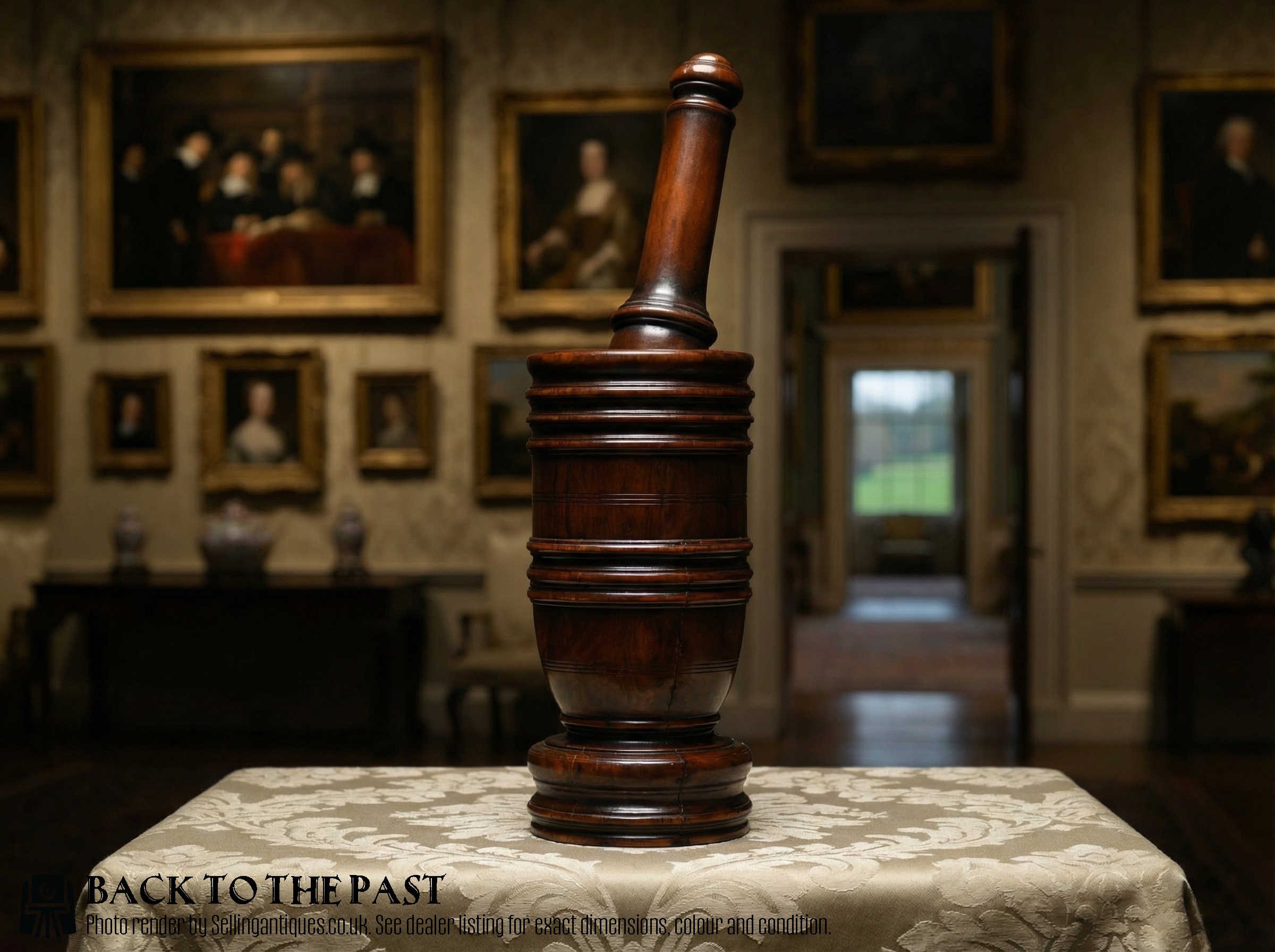
Vintage Apothecary Treen
The periods represented stretch from the seventeenth century through the Georgian era and into the nineteenth century, including Victorian examples. These pieces originate from British workshops and country makers, combining utilitarian purpose with honest material presence.
Forms range from simple turned jars and nested boxes to stethoscopes and pill rounders. You are most likely to meet nineteenth-century turned treen alongside earlier seventeenth-century survivals.
Materials and construction methods
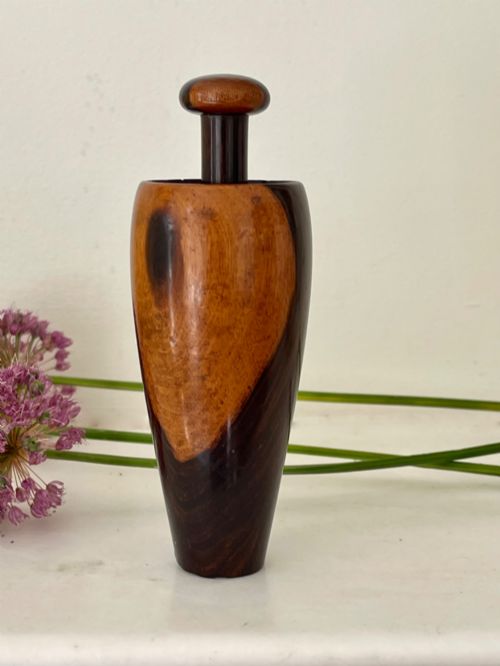
Makers utilised dense hardwoods such as lignum vitae, boxwood, sycamore, walnut, and fruitwood to withstand the rigours of grinding, measuring, and storing medicinal compounds. These timbers were selected for their grain tightness and stability.
Turning on a lathe produced symmetrical vessels like mortars, jars, and cylindrical containers with tight-fitting lids. Additional construction involved bentwood techniques for storage boxes and string binding for specific instruments.
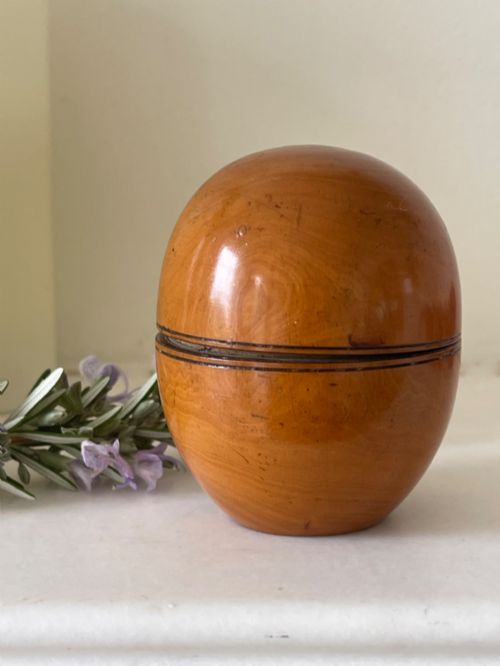
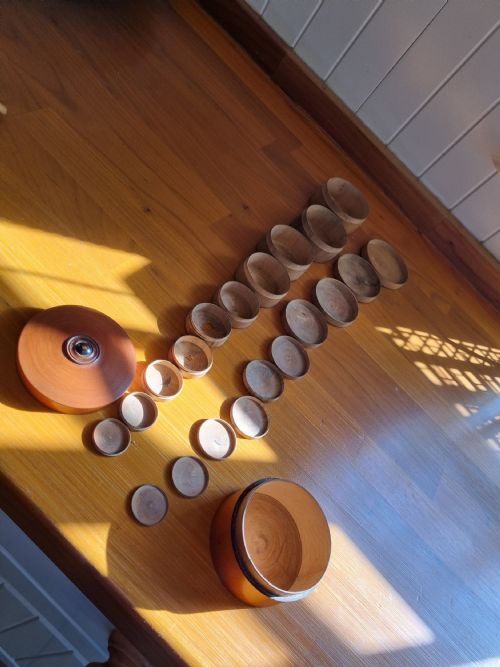
A boxwood container holding ten smaller nested boxes demonstrates the persistent fascination miniature vessels held for nineteenth-century makers.
Judging quality in turned wood
The standard of a piece depends on the crispness of the original turning, the integrity of the timber, and the depth of surface patina developed through handling. Heavier dense woods like lignum vitae command attention for their substantial weight and durability.
Finer examples display harmonious proportions and minimal intervention over the centuries, retaining their original form and tool marks. Simpler vernacular items show the straightforward execution typical of country workshops.
The Vintage Apothecary Treen Glossary
- Treen
- Small handmade wooden domestic and professional objects. The word derives from the Old English term for tree.
- Lignum Vitae
- An exceptionally heavy and dense hardwood obtained from trees of the genus Guaiacum. It was frequently utilised for mortars due to its resistance to splitting.
- Pill Rounder
- A wooden tool consisting of grooved boards used by apothecaries to shape soft mass into uniform pills. Boxwood was often chosen for this task.
- Mortar and Pestle
- A bowl and club used for crushing and grinding ingredients together. Wooden versions allowed apothecaries to prepare remedies without reacting chemically with specific substances.
- Sycamore
- A light-coloured hardwood belonging to the maple family, commonly turned into jars and domestic containers. It provides a clean surface that ages to a warm tone.
Vintage Apothecary Treen: Frequently Asked Questions
What is apothecary treen?
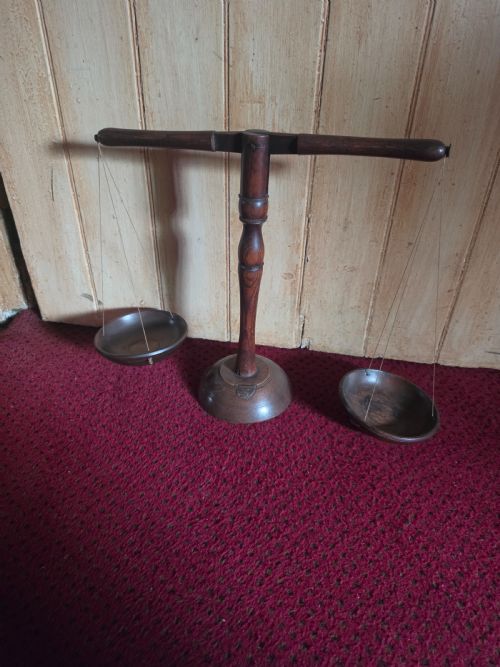
Apothecary treen comprises wooden tools, containers, and instruments used historically in the preparation and storage of medicines. These items include mortars, pill rounders, scales, and jars.
They reflect the daily work of apothecaries and herbalists who relied on durable wooden implements before mass-produced glass and metal took over.
How do I date wooden treen?
Dating relies on identifying the tool type, the turning style, and the species of wood used. Seventeenth-century pieces often display thicker walls and darker, drier surfaces compared to later Victorian items.
Tool marks left by the lathe and the degree of wear around handling points also offer clear clues to a piece's age.
Were these items used for medicines?
Yes, these objects served active roles in preparing remedies, weighing ingredients, and housing dry compounds or pills. Mortars ground herbs, while nested boxes kept small quantities of substances separate.
Their survival shows how sturdy materials like boxwood and lignum vitae endured decades of daily pharmacy work.
How do I care for antique treen?
Keep wooden treen away from direct heat sources and dramatic humidity changes to prevent the timber from splitting or warping. Dust gently with a dry cloth and avoid harsh cleaning products.
Applying a light coat of neutral wax occasionally helps protect the surface and preserve the natural patina.