


Vintage Amethyst Earrings
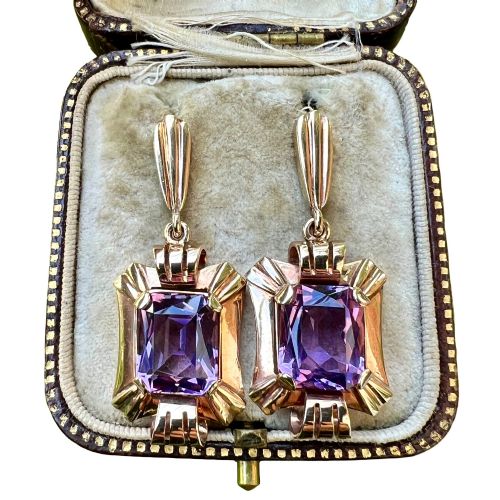
These vintage amethyst earrings bring together rich purple stones and precious metals across periods from the Georgian era to the mid-twentieth century.
Vintage Amethyst Earrings
When you search for vintage amethyst earrings, you are looking at ear ornaments set with purple quartz spanning multiple decades and past centuries. The selection ranges from early Georgian flat-cut pieces to Edwardian drops and mid-century gold studs.
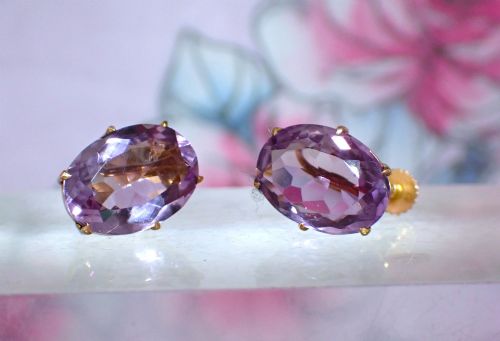
You are most likely to meet 9ct gold versions dating from the nineteen-fifties and sixties on this page, often styled as simple stud earrings or drop designs. These frequently pair the central purple stone with smaller pearls or paste glass.
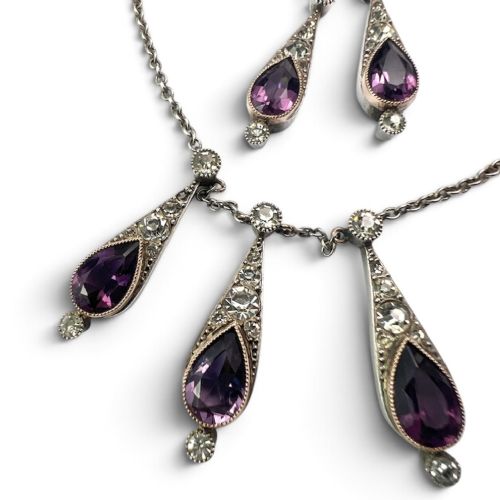
Earlier examples stretch back through the Victorian and Edwardian periods into the Georgian era, incorporating richer gold weights like 15ct and 18ct alongside intricate filigree or chainwork. Art Deco geometric forms also appear, utilising silver and gold settings.
How they were made
Makers set amethysts into 9ct gold, 15ct gold, 18ct white gold, rose gold, and silver. These metals provide the structural support for various stone cuts including faceted, oval, cabochon, and flat-cut formats.
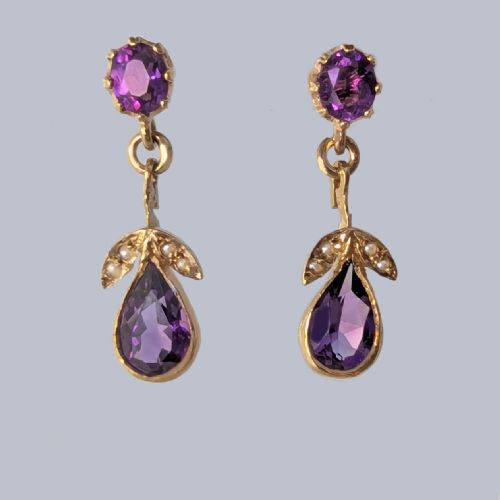
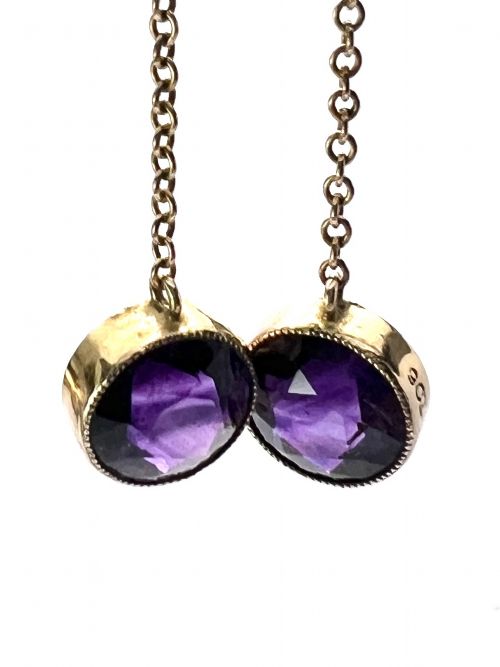
Craftsmen enhanced the purple quartz by surrounding it with seed pearls, paste glass, diamonds, and aquamarine. Settings range from screw-back mechanisms and chain drops to traditional cluster stud configurations.
Listings include amethysts paired with 9ct gold, silver, pearls, and paste glass across Edwardian, Art Deco, and mid-century periods.
What varies in quality
The standard of these earrings rests largely on the depth of colour within the amethyst and the substance of the precious metal housing it. Heavier gold configurations and more substantial stone sizes separate the finer examples from lighter, mass-produced counterparts.
The complexity of the surrounding work, such as the inclusion of natural pearls or secondary gemstones like diamonds, marks the distinction between standard daily wear and pieces intended for finer occasions.
Cropp & Farr
The Vintage Amethyst Earrings Glossary
- Amethyst
- A purple variety of quartz valued for centuries as a primary gemstone in ear ornaments. Its hue ranges from pale lilac to deep violet.
- Cabochon
- A gemstone shaped and polished with a smooth, rounded surface rather than faceted edges. This cut highlights the inner depth of the stone.
- Paste glass
- Hand-cut and polished glass used to imitate gemstones in period jewellery. It appears frequently in Art Deco pieces.
- Screw-back
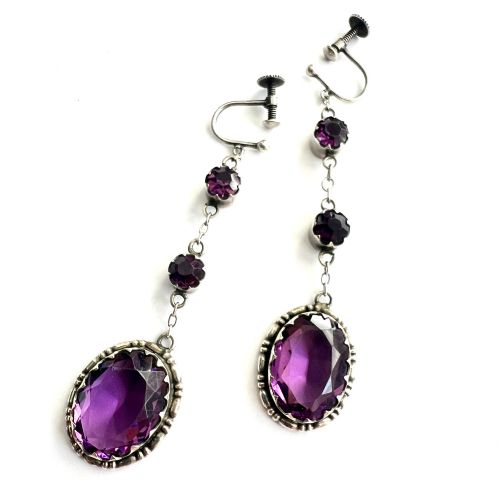
- A mechanical earring backing tightened with a threaded screw rather than a post and butterfly clip. This fitting suits non-pierced ears commonly found in older pieces.
- Seed pearl
- A very small, natural or cultured pearl often utilised in clusters around a central amethyst. These add a delicate border to drop and stud designs.
Vintage Amethyst Earrings: Frequently Asked Questions
How do I wear screw-back earrings?
Screw-back fasteners are designed for non-pierced lobes by turning the threaded backing until it rests comfortably against the ear.
Adjust the tension gently so the piece stays secure without pinching the skin.
Are these earrings made of solid gold?
The listings feature pieces constructed from 9ct yellow gold, 9ct rose gold, 15ct gold, and 18ct white gold. Hallmarks where present indicate the specific metal standard used.
Different periods favoured different gold purities, with Victorian and Edwardian items often utilising higher gold weights.
How can I tell an Edwardian pair from a 1950s pair?
Edwardian examples often feature delicate chain drops, milgrain edges, and intricate wirework paired with seed pearls. They reflect the lighter, ornate aesthetic of the early twentieth century.
Mid-century pieces from the nineteen-fifties and sixties tend towards cleaner lines, featuring straightforward gold cluster studs or simple bezel-set stones.
What is the difference between a stud and a drop earring?
Stud earrings sit directly on the earlobe, holding the amethyst close to the skin with minimal movement. They often take a cluster or single oval cut form.
Drop earrings suspend the stone below the lobe on a chain, wire, or rigid bar, allowing the amethyst to dangle and catch the light.