




Vintage Altar Lights
These vintage altar lights bring ecclesiastical gravity and warm metal lustre into domestic spaces.
Vintage Altar Lights
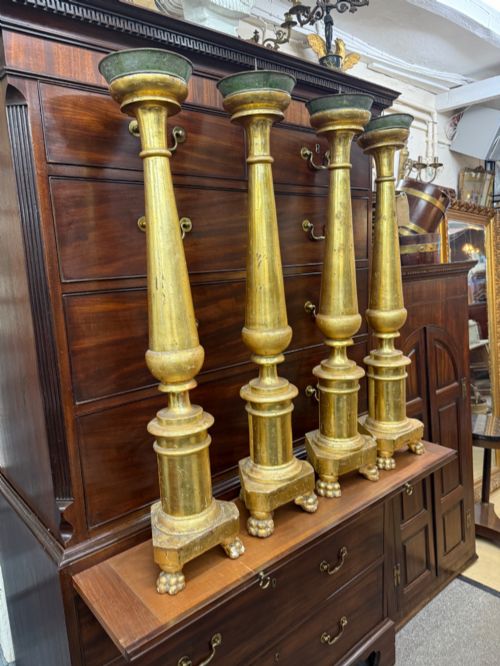
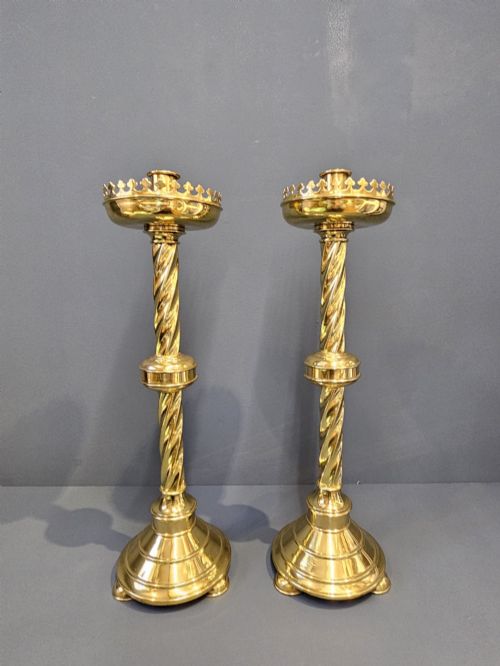
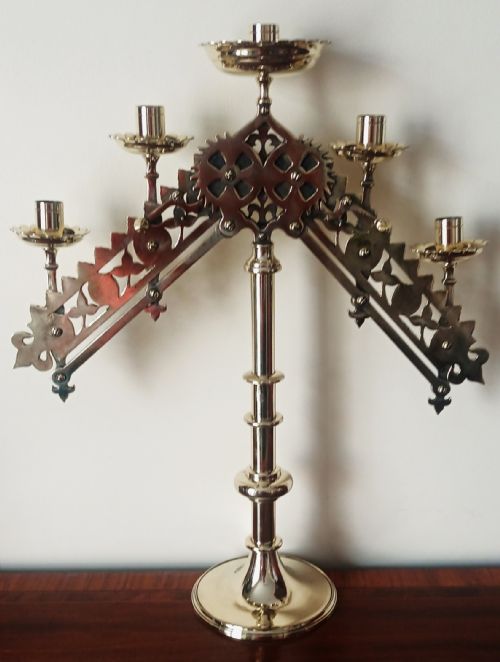
When people search for vintage altar lights, they encounter heavy ecclesiastical fittings originating from churches, chapels and monastic settings. These pieces primarily manifest as tall candlesticks, pricket candlesticks, and candelabras, alongside table lamps and standard lamps adapted from church lighting. The form serves a ritual purpose, designed to elevate candles above the altar surface.
The version most commonly met on this page is the brass church candlestick from the nineteenth century, often bearing the heavy proportions of the Victorian and Gothic Revival styles. These items frequently survive in pairs, reflecting the symmetrical demands of ecclesiastical placement. Alongside brass, the selection includes examples in carved wood, giltwood, bronze and copper.
Dating ranges from the nineteenth century through the early twentieth century, encompassing Victorian, Edwardian, and Amsterdam School aesthetics. While many retain their original configuration for candles, numerous examples arrive converted into electric lamps with wired fittings. Their substantial height and architectural presence distinguish them from domestic tableware.
Materials and construction
Brass dominates the construction of these pieces, shaped through casting, turning, and heavy construction methods suited to ecclesiastical use. Workshops utilised bronze, copper, and iron for structural strength, often combining metals to achieve stability in tall shafts. Giltwood, gesso, and carved timber appear frequently in continental and domestic adaptations, finished with silver leaf or painted surfaces.
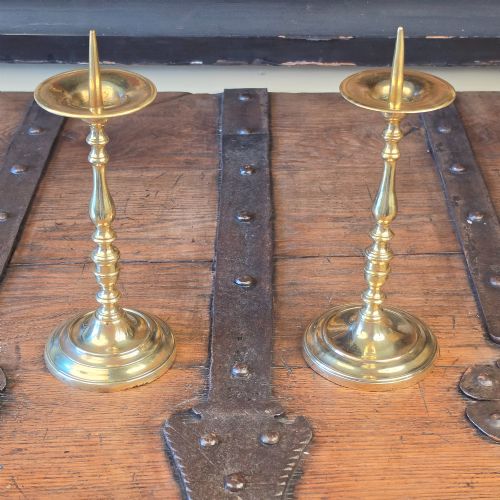
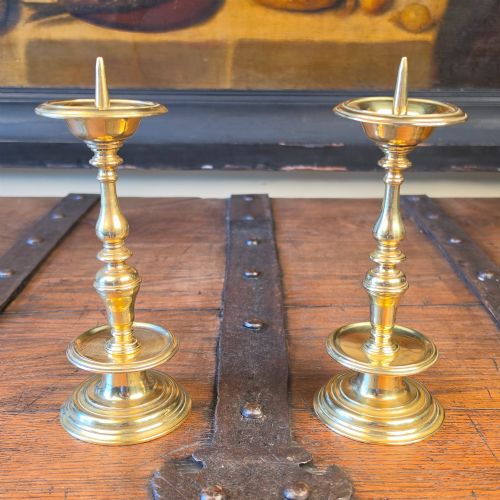
Techniques relied on solid metal casting and woodturning, producing substantial weight and durable load-bearing bases. Many pieces incorporate prickets - spikes designed to hold wax candles directly - which builders later adapted or bypassed when converting fixtures for electrical wiring. Surface decoration often includes chased patterns, applied mouldings, and Corinthian column detailing.
Vintage Altar Lights Retail Price Guide 2026
Typical asking prices for vintage altar lights among the pieces listed under this phrase on Sellingantiques today, from the lower quarter to the upper quarter. They describe what is for sale here now, not the wider market.
Design influences include Gothic Revival, Italian Baroque, Amsterdam School, and Edwardian aesthetic traditions.
Distinctions in quality
Quality rests upon the weight of the metal, the crispness of the cast detailing, and the integrity of the proportions. Heavy, thick-walled brass castings and robust turned timber demonstrate superior manufacture compared to lighter, hollow alternatives. The precision in executing Gothic Revival motifs or Amsterdam School structural lines separates standard production from finer workshop output.
Proportion and scale dictate the visual impact of the piece, with taller, well-balanced shafts holding greater presence. Original patination and untouched surfaces hold precedence over heavily polished or altered finishes. The execution of hand-carved elements in wooden examples similarly marks the distinction between mass production and skilled craftsmanship.
The Vintage Altar Lights Glossary
- Pricket
- A metal spike on a candlestick designed to impale and secure a candle. This form is common in ecclesiastical lighting.
- Gothic Revival
- An architectural and decorative style popular during the nineteenth century, emulating medieval forms, pointed arches, and heavy ecclesiastical ornamentation.
- Amsterdam School
- An architectural and design movement from the early twentieth century characterised by expressive, rounded forms and traditional craftsmanship.
- Giltwood
- Wood that has been coated with a thin layer of gold leaf or gesso and gold paint. It appears frequently on decorative lamps and candlesticks.
- Ecclesiastical
- Relating to the Christian Church or its clergy, describing items originally manufactured for use within a place of worship.
Vintage Altar Lights: Frequently Asked Questions
What is a pricket candlestick?
A pricket candlestick uses an upward-pointing metal spike rather than a socket to hold the candle in place. This design appears frequently on church and altar lighting from the nineteenth century.
Such items were built to support large wax candles during religious services, allowing the wax to pool around the spike as it burned down.
How do I light a room with altar lamps?
These tall fixtures command attention when placed on large sideboards, console tables, or directly on the floor as standard lamps. Their height brings vertical emphasis to dark corners and empty wall spaces.
Many converted examples provide functional ambient illumination through paired bulbs, blending historical presence with modern electrical convenience.
Are these pieces original church items?
The inventory consists largely of ecclesiastical furnishings sourced from chapels, churches, and monastic foundations across Britain and continental Europe. Their robust construction and formal design reflect the strict requirements of nineteenth-century worship.
Over time, many of these heavy brass and wooden items transitioned into the secular sphere, adapting to domestic interiors through conversion into table lamps.
How do I distinguish Victorian from Edwardian styles?
Victorian altar lights tend to display heavy, ornate Gothic Revival characteristics, featuring deep chasing, structural brass, and solemn proportions. They project a sense of dense historical weight.
Edwardian and early twentieth-century examples often incorporate cleaner lines, drawing on Amsterdam School influences or simpler turned wood forms that lighten the overall silhouette.