



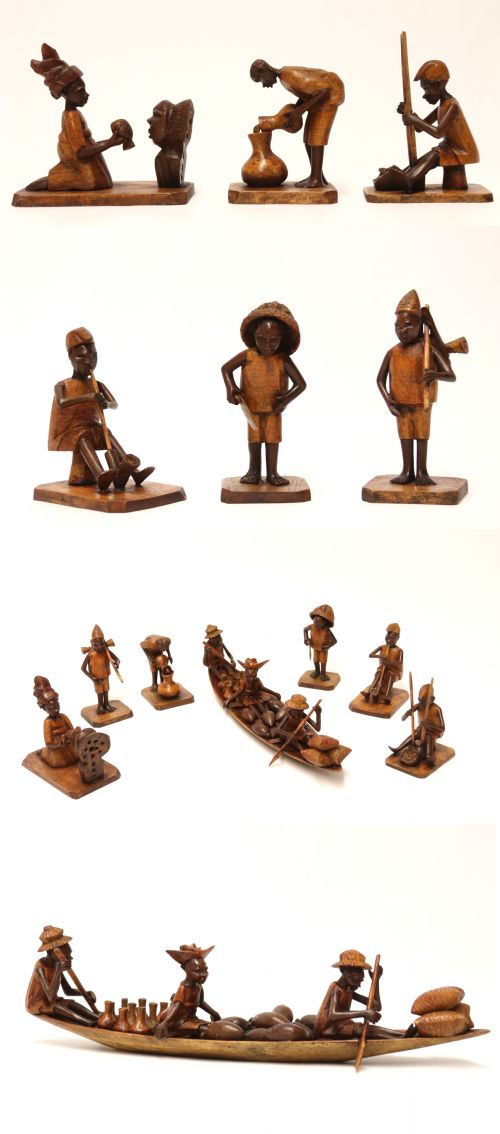


Vintage African Hardwood Carving
Vintage african hardwood carving objects bring substantial sculptural presence and rich cultural history directly into a room.
Vintage African Hardwood Carving
When you search for vintage african hardwood carving, you encounter a diverse selection of sculptural figures, functional items, and seating shaped from dense indigenous timbers. The pieces span from the late nineteenth century through the early decades of the twentieth century, reflecting varied regional traditions across the continent.
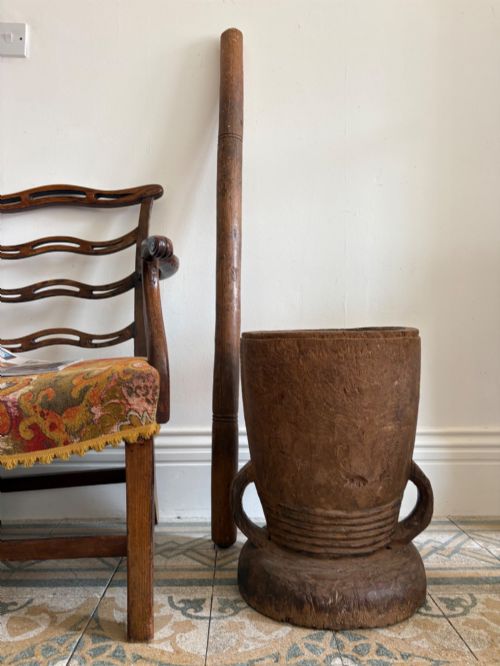
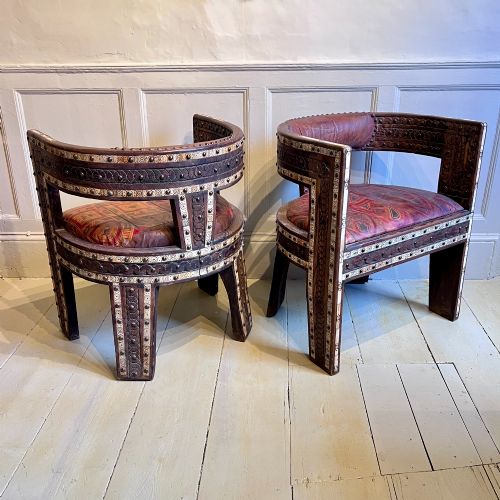
You are most likely to meet figural sculptures representing warriors, figures, and animals alongside utilitarian objects such as grain mortars, stools, combs, and throwing clubs. Many examples integrate mixed media elements like bone, brass, and leather into the wooden structures.
The aesthetic ranges from distinct tribal art and folk traditions to specific regional styles associated with Zulu and Southern African makers. These forms serve both decorative and everyday practical purposes within their original cultural contexts.
Materials and construction
Artisans shape these works primarily from heavy hardwood and carved indigenous timber using hand tools that leave visible chisel and knife marks across the surfaces. This direct method of working the raw material ensures each object retains a strong organic character and distinct weight.
Makers occasionally incorporate bone, brass, and leather components to accent the wooden forms, securing them with iron fittings where necessary. The combination of dense timber with these contrasting materials creates textured surfaces that develop a rich patina over decades of handling.
A hippopotamus carved from wood and bone proves that sculptors found inspiration in local wildlife just as much as human figures.
Assessing the craftsmanship
Quality rests upon the confidence of the carving and the expressive depth of the form rather than surface polish or symmetry. Stronger examples display a sure handling of anatomy and proportion, whether depicting a human figure, an animal, or a functional object.
The condition of the timber and the depth of the accumulated patination distinguish finer works from simpler productions. Pieces that retain their original integrated elements, such as bone inlays or leather straps, hold greater visual and material integrity.
The Vintage African Hardwood Carving Glossary
- Hardwood
- Dense timber derived from broad-leaved trees, used here to provide structural durability and a fine surface for detailed carving. It resists heavy wear and takes a dark, rich patina over time.
- Knobkerrie
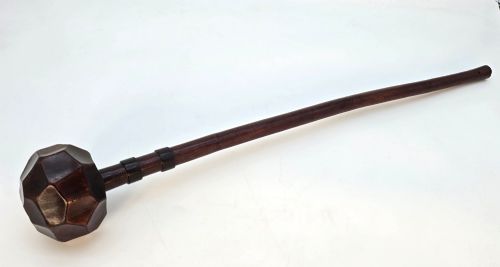
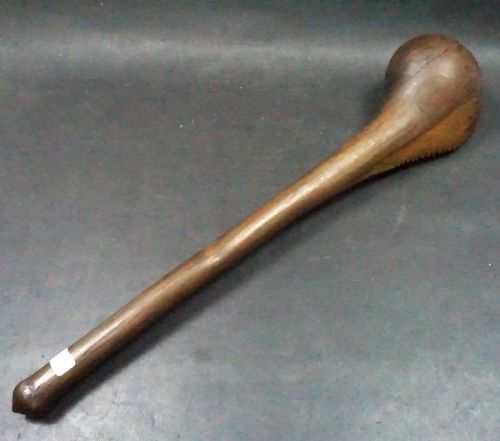
- A traditional Southern African wooden throwing club featuring a straight shaft terminating in a heavy rounded knob. These implements served for hunting, defence, and ceremonial use.
- Ethnographic Art
- Cultural objects created by indigenous peoples, valued for their traditional craftsmanship and anthropological significance. Such pieces document historical techniques and regional aesthetics.
- Patina
- The surface sheen and darkening developed on wood and other materials through age, handling, and exposure to light. It acts as a primary indicator of authenticity and period.
Vintage African Hardwood Carving: Frequently Asked Questions
How do I date these carvings?
Dating relies upon examining the tool marks, the dryness and colour of the timber, and the nature of any accumulated surface wear. Stylistic markers and regional traditions also help narrow the period of creation.
Comparison with documented examples from the nineteenth and early twentieth centuries provides further context for establishing a probable date range.
Where were these items made?
The pieces originate from various regions across the African continent, including Southern Africa, West Africa, and North Africa. Different communities and cultural groups developed distinct sculptural languages and utilitarian forms.
Specific regional attributions often emerge from the characteristic shapes of figures, stools, weapons, and domestic implements.
How should I care for hardwood sculptures?
Keep wooden objects away from direct sources of heat and sudden humidity changes to prevent the timber from splitting or warping. Dust them gently with a dry, soft cloth rather than applying liquid polishes.
Allowing the natural patina to breathe preserves the historical surface integrity built up over decades.
What materials are used besides wood?
Many carvings incorporate secondary materials such as bone, brass, leather, and iron to add functional strength or decorative contrast. These elements are typically integrated directly into the construction of figures, seating, and implements.
Such mixed media construction highlights the resourcefulness and aesthetic preferences of the makers.