


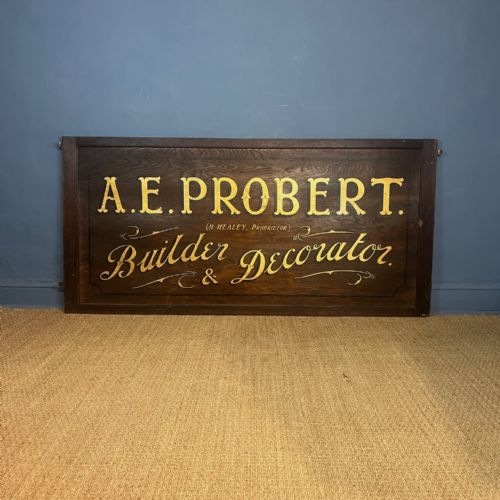


Vintage Advertising Board
A vintage advertising board brings honest commercial character indoors, offering a direct link to past trades through hand-painted lettering and robust materials.
Vintage Advertising Board
A vintage advertising board encompasses trade signs, wall signage, pub signs, and shop displays that once promoted local businesses and goods. When searching for a vintage advertising board, buyers encounter pieces ranging from early twentieth century examples to nineteenth century items.
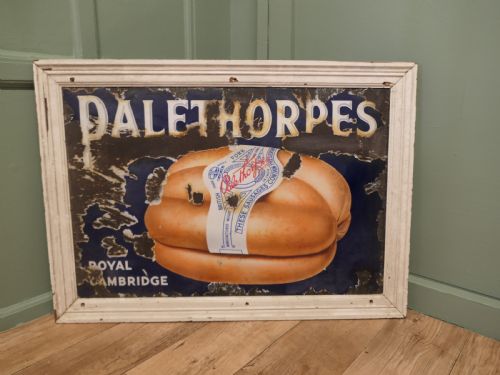
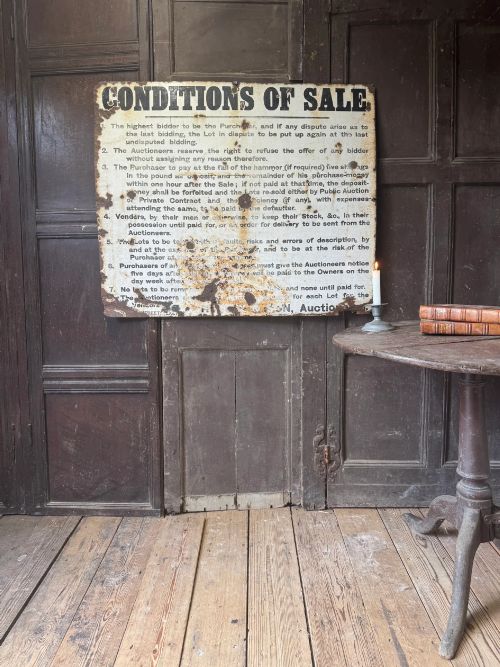
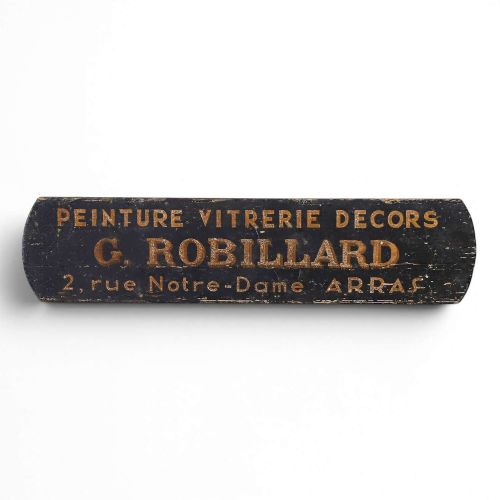
The selections on this page typically feature metal, painted wood, and glass formats reflecting trades such as locksmiths, dentists, painters, and breweries. These objects served utilitarian commercial purposes before finding new life in domestic and interior spaces.
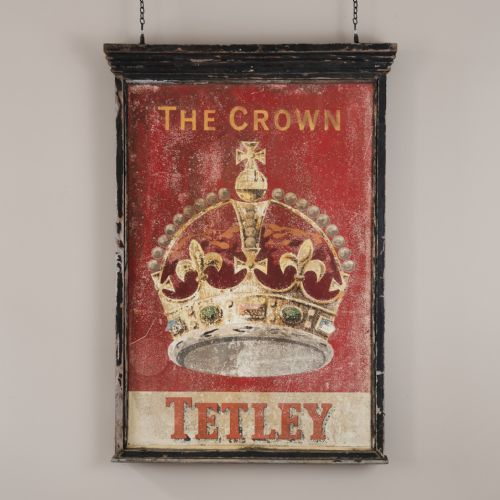
Originating from British, French, and Edwardian contexts, these boards display diverse regional lettering styles and pictorial elements. From double-sided pub signs to framed glass displays, each piece records the commercial aesthetic of its period.
How they were made
Makers utilised durable base materials including sheet metal, oak, timber, and iron to construct boards capable of withstanding outdoor conditions. Artisans applied hand-painted lettering, gold leaf, and enamel directly onto these robust surfaces to ensure clear visibility for passers-by.
Wooden frames and backing boards frequently accompanied glass panels and metal sheets, secured with traditional joinery and fixings. The integration of painted finishes with metallic leaf created contrasting textures that caught the light on busy streets.
Vintage Advertising Board Retail Price Guide 2026
Typical asking prices for vintage advertising board among the pieces listed under this phrase on Sellingantiques today, from the lower quarter to the upper quarter. They describe what is for sale here now, not the wider market.
Dentists and locksmiths apparently required very robust lettering to advertise their extractions and keys.
What varies in quality
The legibility of the typography and the crispness of the hand-painted lettering distinguish finer examples from simpler commercial notices. Superior pieces display confident brushwork and balanced composition that elevate functional trade markers into striking visual art.
The integrity of the original surface, whether painted metal, decorated wood, or glass, determines the depth of character in each board. Pieces retaining their uncompromised initial layers show superior survival through decades of exposure.
Tetley·Trebor·Wilmot
The Vintage Advertising Board Glossary
- Trade sign
- A board or marker used by a merchant, craftsman, or professional to identify their premises and services. These objects rely on direct lettering and pictorial symbols to communicate trade functions.
- Dummy board
- A flat, painted figure or object used for shop display or interior decoration. These pieces create a trompe-l'œil effect by mimicking three-dimensional items.
- Gold leaf
- Metal beaten into extremely thin sheets and applied to surfaces for lettering and ornamentation. This material provides a lustrous finish that resists tarnishing.
- Enamel sign
- A rigid marker featuring fused glass powder on a metal substrate. This technique produces a hard, glossy surface resistant to weather and wear.
Vintage Advertising Board: Frequently Asked Questions
How were trade signs displayed?
Tradespeople mounted these boards on exterior walls, above shopfronts, or suspended them perpendicular to the street to attract pedestrians.
Larger formats like double-sided pub signs hung from iron brackets to catch foot traffic from multiple directions.
What materials are most common?
Painted wood, sheet metal, and iron form the primary construction materials found across these historical pieces.
Glass panels and gold leaf also appear frequently on indoor shop displays and professional office markers.
How do I date a board?
Lettering styles, typography conventions, and material usage provide the clearest indicators of a piece's period.
Victorian and Edwardian examples often feature distinct serif fonts and hand-mixed paints distinct from mid-century industrial designs.
Can these signs hang outdoors?
While originally designed for exterior conditions, surviving historical boards benefit from sheltered placement today.
Exposing fragile painted surfaces or antique timber to modern weather risks accelerating the degradation of original finishes.