






Vintage Abstract Expressionist Painting
Vintage abstract expressionist painting brings mid-century energy to a room, offering bold brushwork and uninhibited colour.
Vintage Abstract Expressionist Painting
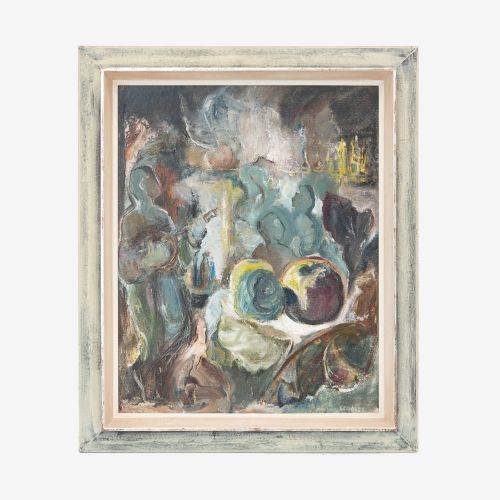
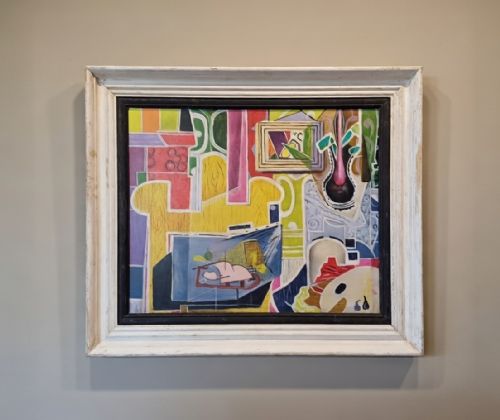
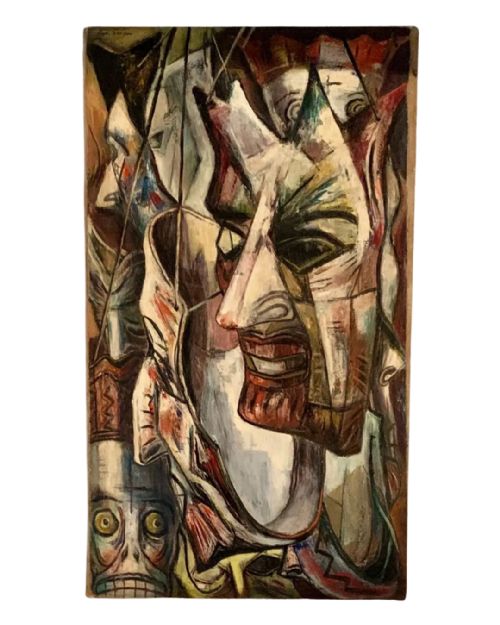
When you search for vintage abstract expressionist painting, you encounter mid-century wall art spanning the 1930s to the 1960s. These works take the form of paintings and oil paintings on canvas, board, and paper, alongside mixed media pieces.
The version most commonly met on this page is the mid-century oil painting on board or canvas, often framed and created during the 1950s or 1960s. These pieces include cityscapes, still life scenes, figurative studies, and pure abstract compositions.
Originating from English, French, and broader twentieth-century contexts, the works often align with mid-century modernism, mid-century expressionism, and art deco styles. They reflect a period of artistic experimentation away from strict representation towards expressive form.
How they were made
Artists built these surfaces using oil paint and impasto techniques on supports of wood, board, canvas, and paper, sometimes incorporating glass or ink in mixed media. The application of thick pigment created physical relief and texture across the picture plane.
Supports were selected to hold heavy layers of oil and mixed media, with wooden boards and stretched canvases providing the rigid or flexible foundations required for expressive brushwork.
Spoken vows and French crêperies quietly anchor two very different mid-century minds to canvas.
What varies in quality
Quality rests in the conviction of the brushwork and the internal coherence of the composition, where colour and form balance without relying on literal depiction. Stronger works demonstrate a sure handling of pigment and structural depth.
The sophistication of the palette and the handling of the medium separate standard decorative pieces from more compelling artistic statements. Works that integrate texture and colour with purpose command greater visual weight.
Lilian Colbourn·Tony Giles·Derek Latimer Sayer·William McCance·Peter Jackson·Lester Epstein·Burr Singer·Richards Rubin·William Ernst Burwell·Murphy
The Vintage Abstract Expressionist Painting Glossary
- Impasto
- Paint applied thickly to a canvas or board, standing out in relief from the plane and retaining the marks of the brush or palette knife.
- Canvas
- A closely woven fabric stretched across a wooden frame to serve as a durable support for oil paint.
- Board
- A rigid flat panel of wood or composite material used as an alternative to canvas for mounting oil paintings.
- Mixed media
- An artwork combining two or more distinct artistic materials, such as oil, ink, and paper, within a single composition.
Vintage Abstract Expressionist Painting: Frequently Asked Questions
What periods do these paintings cover?
The pieces span from the 1930s through to the 1960s, capturing the shift towards mid-century modernism and expressionism. Most examples originate from the post-war decades of the 1950s and 1960s.
This era saw painters embrace abstraction, texture, and non-representational forms across various European studios.
What materials are used in these works?
Artists worked primarily with oil paint on stretched canvas, wooden board, and heavy paper supports. Some compositions incorporate mixed media, ink, and glass elements.
Impasto techniques frequently build up thick layers of pigment to create tactile surfaces on the panels.
How should I frame an unframed painting?
Select a frame that complements the depth and period of the work without competing with its active brushwork. Simple wooden profiles often suit mid-century canvases and boards.
Ensure the painting is secured with appropriate spacers if glass is applied, particularly for works featuring heavy impasto.
How do I identify a cityscape composition?
Cityscape works use abstracted vertical forms, block colours, and heavy textures to suggest urban architecture and streetscapes. Artists translated buildings and streets into dynamic planes of oil paint.
These pieces often date from the 1950s and 1960s, reflecting modern metropolitan subjects.