




Vienna Porcelain Urns
Vienna porcelain urns are decorative ceramic vessels spanning the nineteenth century, sought after for grand neoclassical forms and elaborate hand-painted decoration.
Vienna Porcelain Urns
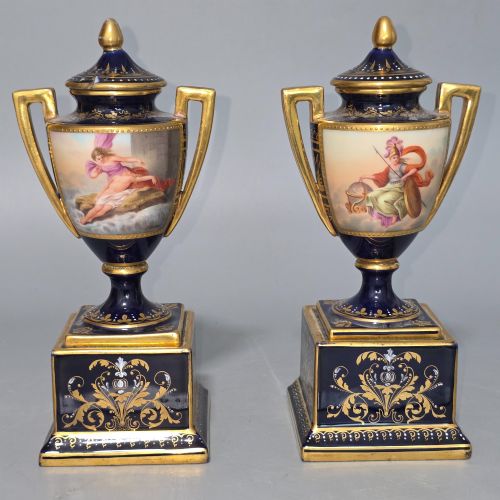
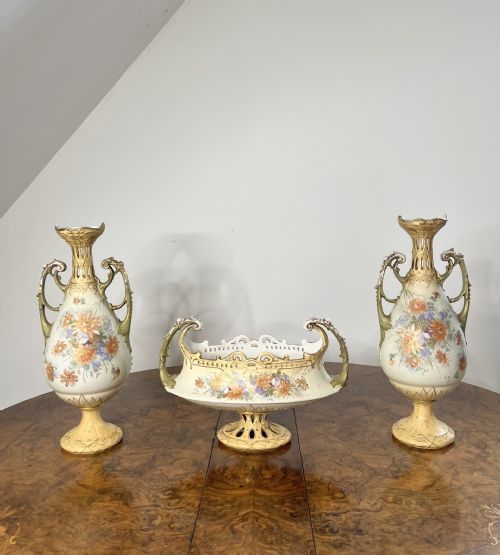
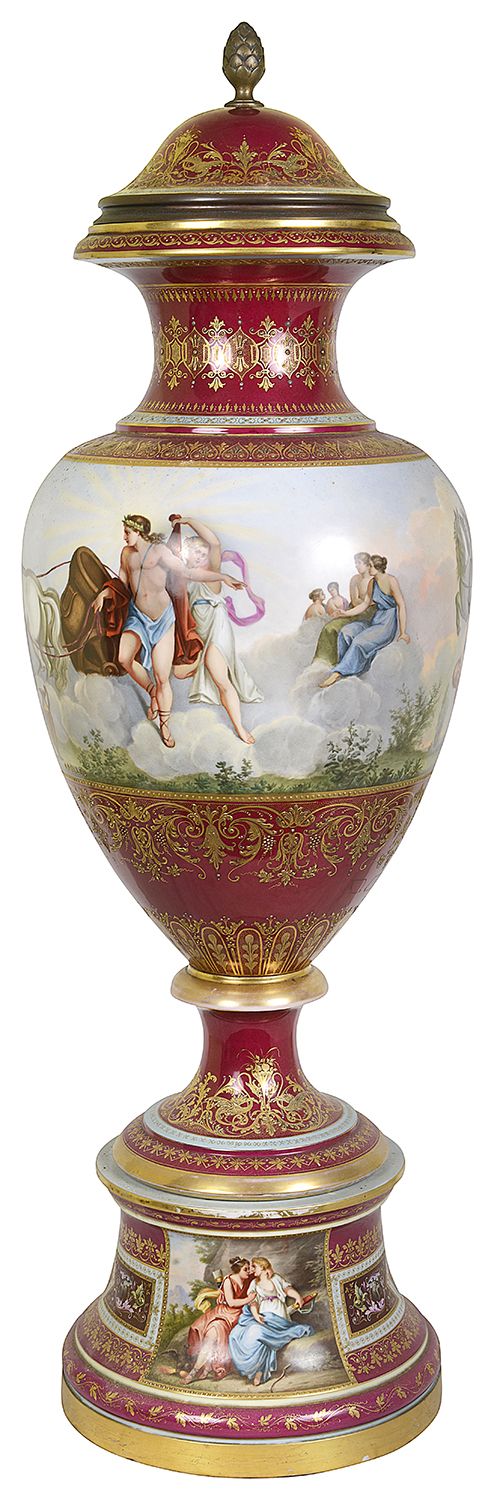
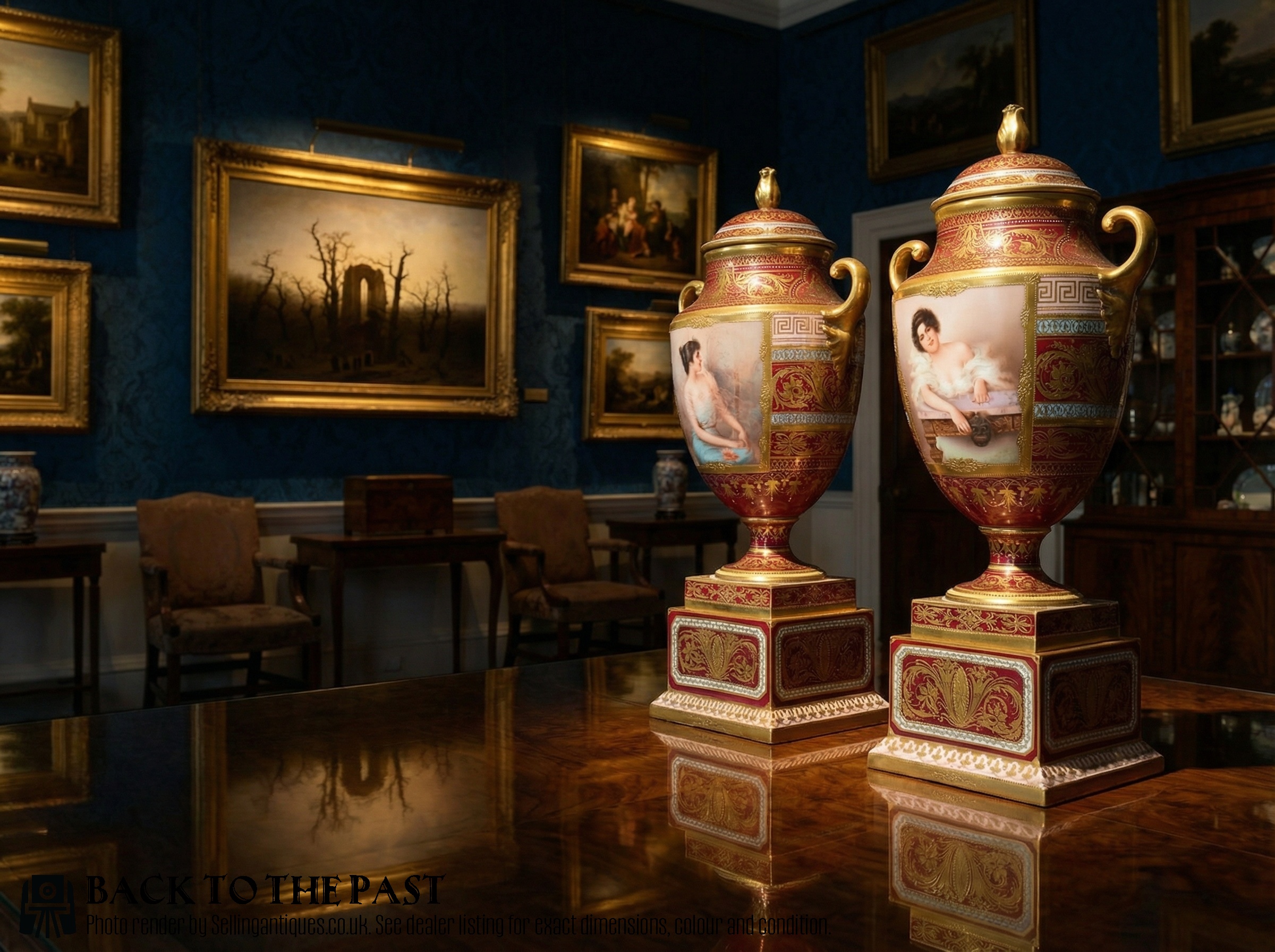
When you search for Vienna porcelain urns, you encounter nineteenth-century decorative pieces that range from single lidded vessels to large multi-piece garniture sets. These objects take the form of amphora vases, classical urns, decorative ewers, and centrepieces designed for display rather than utility.
The pieces appearing on this page predominantly date from the Victorian era and the turn of the twentieth century, showing influences from neoclassical revival, empire, art nouveau, and rococo styles. You meet pairs and individual vases displaying classical proportions alongside ornate handles and covers.
Forms vary from large lidded urns to side vases and jugs, often decorated with hand-painted portraits or classical scenes. The selection captures the shifting aesthetic tastes across the decades, moving from strict neoclassical lines towards flowing art nouveau curves.
What varies in quality
Quality in these pieces depends on the execution of the hand-painted details and the precision of the gilding applied across the porcelain surface. Fine examples demonstrate exceptional control in portraiture and classical motifs, alongside balanced proportions in the modelled handles and covers.
The distinction between standard production wares and top-tier pieces lies in the crispness of the moulded forms and the depth of the enamel work. Maker attribution and artist signatures further separate standard decorative items from superior collector pieces.
Materials recorded across the inventory include porcelain, ceramic, enamel, gold leaf, gilt, and wood.
F. Koller·Ernst Wahliss
The Vienna Porcelain Urns Glossary
- Garniture
- A set of three or more matching vases or urns designed to be displayed together on a mantelpiece or sideboard.
- Amphora
- A two-handled jar with a narrow neck, modelled on ancient Greek and Roman vessel shapes.
- Ewer
- A large jug with a wide spout and a shaped handle, often produced as a decorative partner to urns.
- Gilding
- The application of gold leaf or gold paint to highlight specific decorative elements on the porcelain surface.
- Neoclassical
- A revival style drawing inspiration from the classical art and architecture of ancient Greece and Rome.
Vienna Porcelain Urns: Frequently Asked Questions
How are Vienna urns displayed?
These urns and vases serve as focal points on mantelpieces, sideboards, and large tables, often arranged as balanced pairs or three-piece garniture sets.
Their substantial scale and gilded surfaces allow them to anchor a room's decorative scheme without needing surrounding objects.
What styles define these pieces?
The pieces span neoclassical, empire, rococo revival, and art nouveau aesthetics, reflecting the changing design priorities of the nineteenth century.
Strict classical lines and portrait medallions give way to flowing organic curves in the later art nouveau examples.
Are these urns functional vessels?
Most pieces function purely as decorative art rather than utilitarian containers, designed specifically for visual display.
Lidded urns and ewers are constructed with delicate painted surfaces and intricate handles unsuited for holding liquids.
How do I identify the period?
Dating relies on stylistic clues such as the presence of neoclassical motifs, Victorian proportions, or art nouveau sinuous lines.
Signatures, painted marks, and specific material combinations like heavy gilding help narrow the decade of production.