
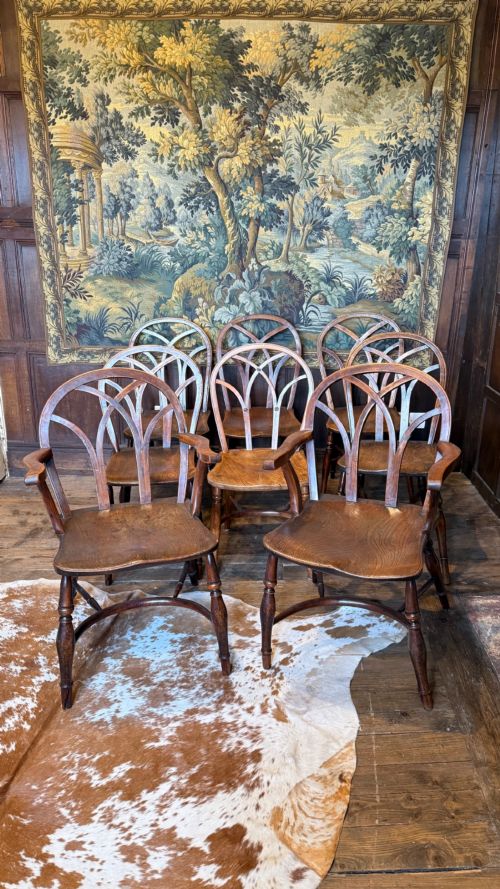

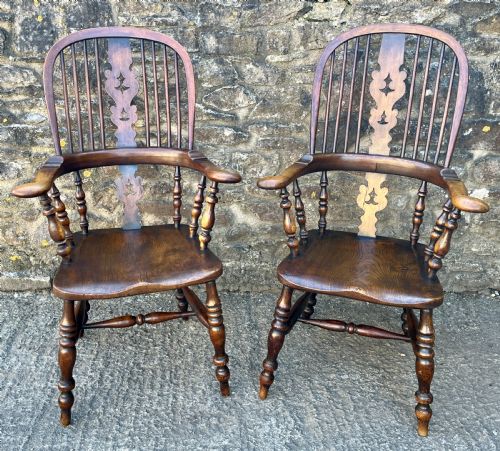


Victorian Yew Armchair
A victorian yew armchair brings warmth and distinct country character to a room.
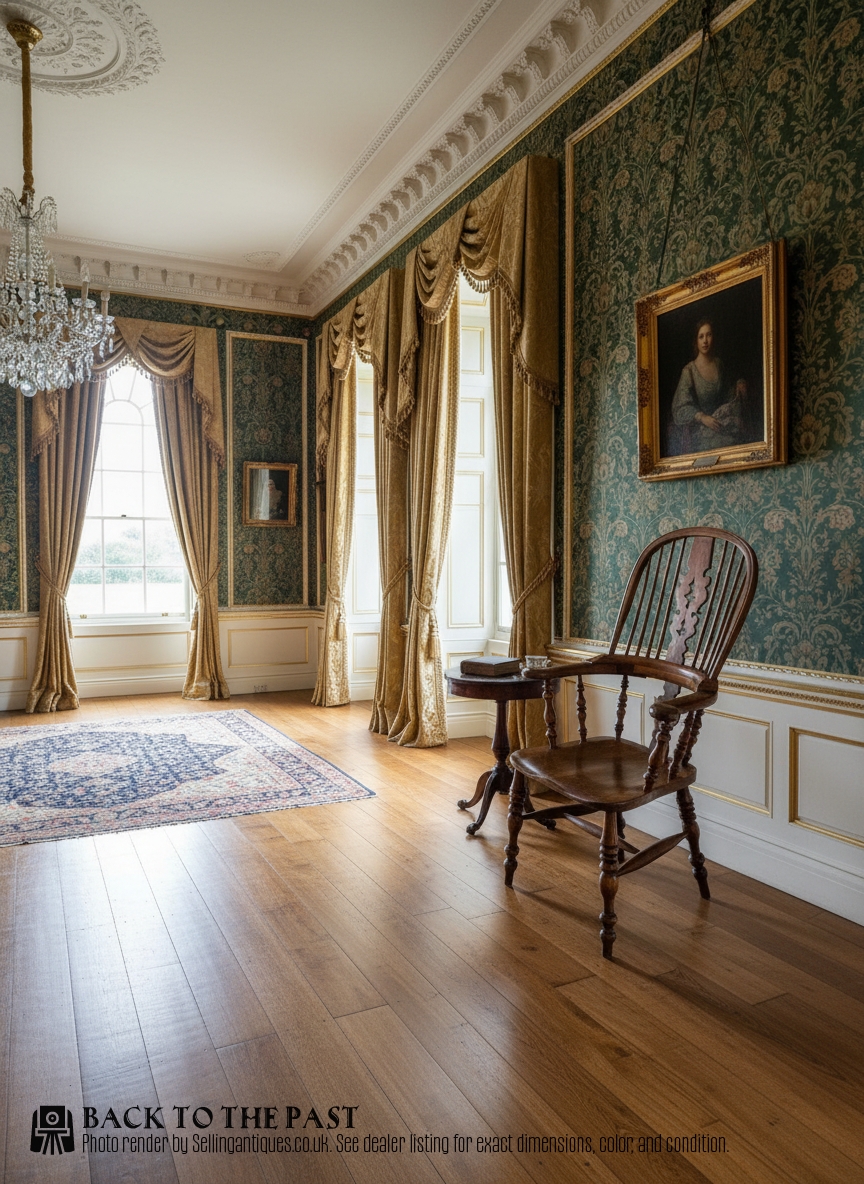
Victorian Yew Armchair
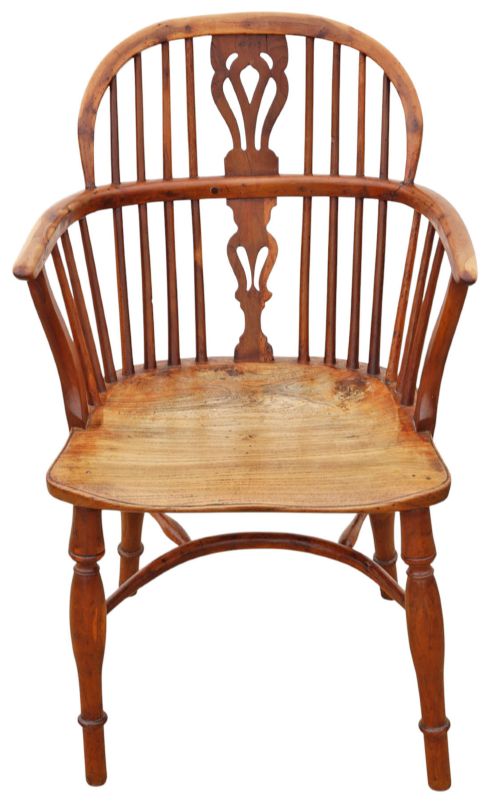
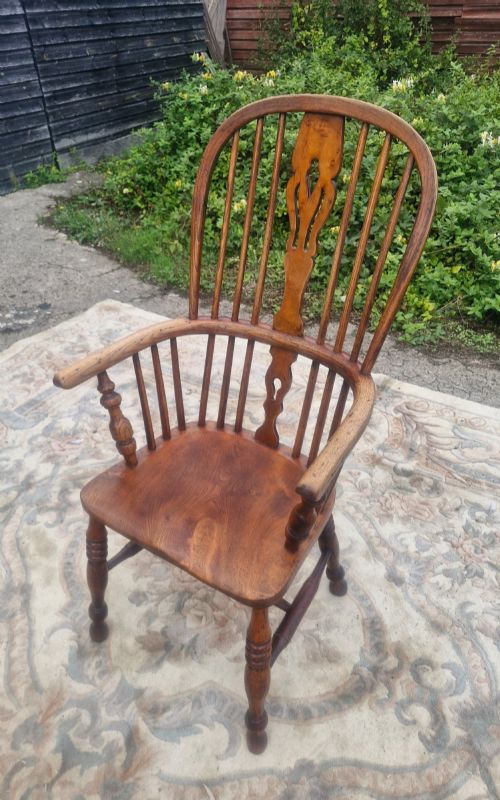
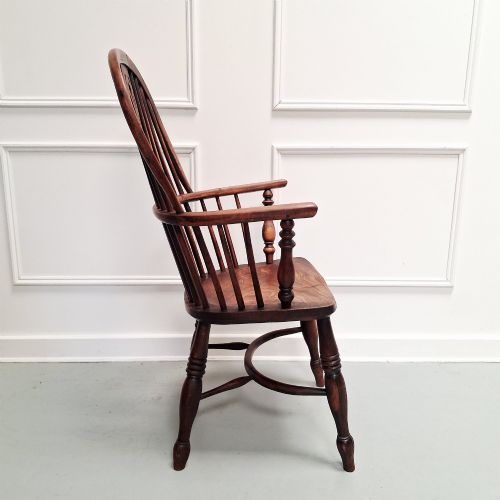
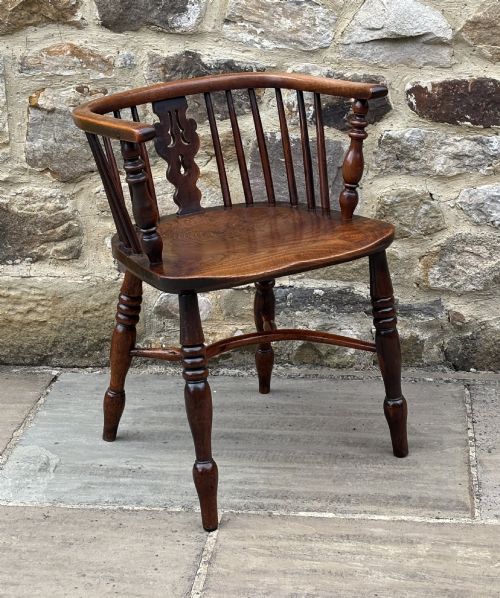
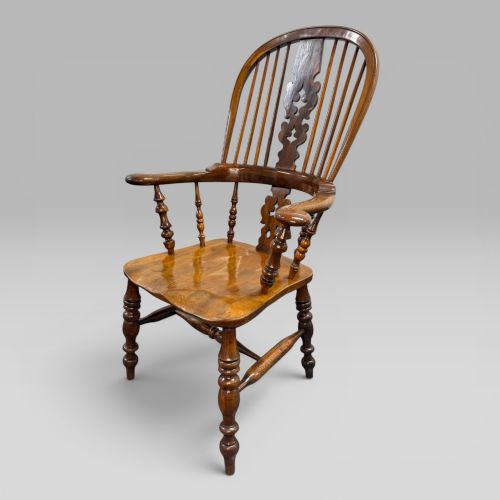
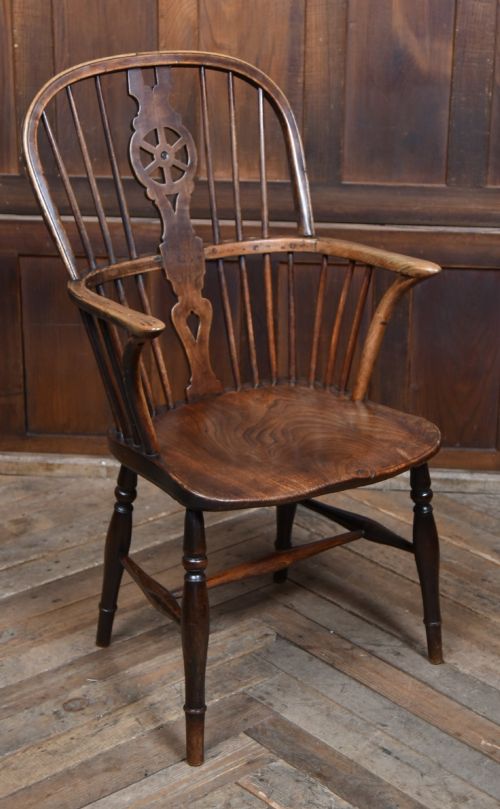
A victorian yew armchair is a traditional wooden seating form belonging to the wider family of Windsor chairs, defined by a distinct combination of a solid shaped seat and a stick-back construction. The version met most frequently on this page originates in the nineteenth century, spanning periods from the Georgian era through to 1900, with an emphasis on Victorian examples.
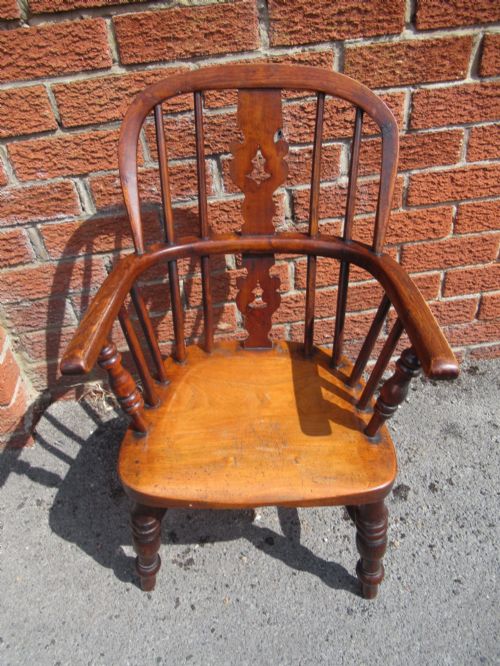
The regional variations include high-back, low-back, wheel-back, and broad-arm forms, alongside childs chairs and rocking chairs. Makers shaped these pieces in English provincial workshops, producing practical seating that combined several native timbers.
The dominant timber pairing seen across these listings combines yew wood with elm, often supplemented by beech, ash, or oak. This regional vernacular style reflects the rural woodworking traditions of English country districts during the nineteenth century.
How They Were Made
Makers constructed these chairs using a combination of turned spindles and solid plank seats, typically utilising elm for the seat because its interlocking grain resisted splitting under the stress of the legs and bow. Yew wood provided the bent bow, arms, and upper spindles, chosen for its flexibility and rich grain.
Additional timbers such as beech, ash, and fruitwood appear in the underframes and stretchers, selected for strength and turning properties. Joinery relied on wedged tenons passing entirely through the seat plank, creating a rigid frame without metal fastenings.
Several listings include child-sized Windsor armchairs, proving that miniature Victorians took their fireside seating just as seriously as the adults.
What Varies in Quality
Quality rests in the grace of the turning, the depth of the saddle in the seat, and the boldness of the yew grain. A heavier, more expansive steam-bent bow paired with generous broad arms denotes superior workshop production.
Surface character also separates examples, as pieces retaining a deep timeworn patina differ from those stripped down through over-restoration. The balance of the proportions and the crispness of the spindle turnings dictate the distinction between standard vernacular chairs and pieces of finer craftsmanship.
J SPENCER·Prior
The Victorian Yew Armchair Glossary
- Windsor chair
- A chair built with a solid wooden seat into which the legs and back spindles are separately bored and wedged. This form relies on stick construction rather than a traditional joined frame.
- Crinoline stretcher
- A curved under-stretcher joining the legs of a Windsor chair, resembling the shape of a nineteenth-century crinoline skirt. It adds rigidity to the lower frame.
- Broad arm
- An armchair featuring wide, flat elbow rests shaped from a single thick piece of timber or an extended bent bow. These wide arms provide a comfortable resting place.
- Carver elbow-chair
- A nineteenth-century term for an armchair used at the head of a dining table or as a fireside seat. It distinguishes an armchair from standard dining chairs in a set.
- Mendlesham chair
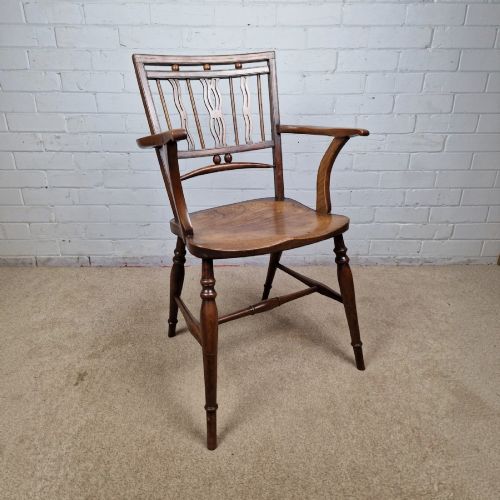
- A regional type of Windsor chair originating from Suffolk, characterised by a distinct central splat and delicate stick back. These chairs represent specific provincial English woodworking traditions.
Victorian Yew Armchair: Frequently Asked Questions
What is a yew Windsor chair?
A yew Windsor chair is a traditional wooden armchair featuring a solid sculpted seat, a stick or spindle back, and components fashioned from yew wood. These pieces were produced primarily in English provincial workshops during the nineteenth century.
The use of yew timber gives these chairs a distinctive golden-brown hue and varied grain pattern. They served as sturdy, everyday seating in country homes and farmhouses.
How do I tell a high back from a low back?
High-back chairs feature a tall steam-bent bow or comb-piece that reaches above the shoulders of the sitter, often incorporating a central splat or numerous spindles. Low-back models finish at elbow height, presenting a continuous rail that serves as both armrests and back support.
Low-back versions offer a more compact silhouette suitable for positioning around a table. High-back variants provide greater head and neck support for fireside placement.
How do I live with an antique Windsor chair?
Living with a nineteenth-century armchair involves placing it away from direct heat sources and sudden temperature changes, which can dry out the timber. Regular dusting and occasional waxing help maintain the surface patina of the yew and elm.
These chairs remain functional seating when used with care. Their robust construction allows them to integrate easily into modern living spaces alongside contemporary furniture.