





Victorian Writing Chest
A victorian writing chest brings solid nineteenth-century timber, brass corners, and fitted writing surfaces together for practical letter-writing.
Victorian Writing Chest
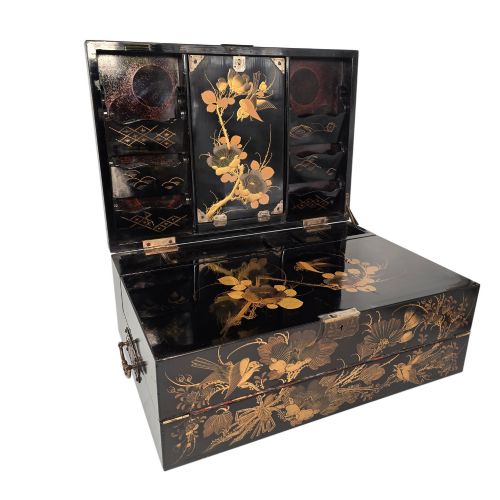
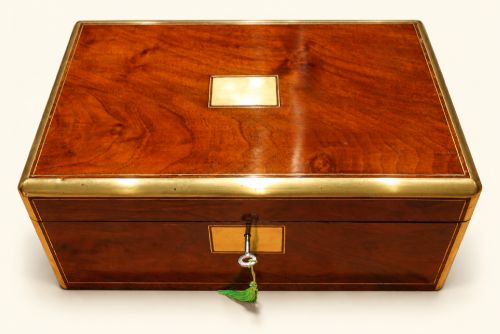
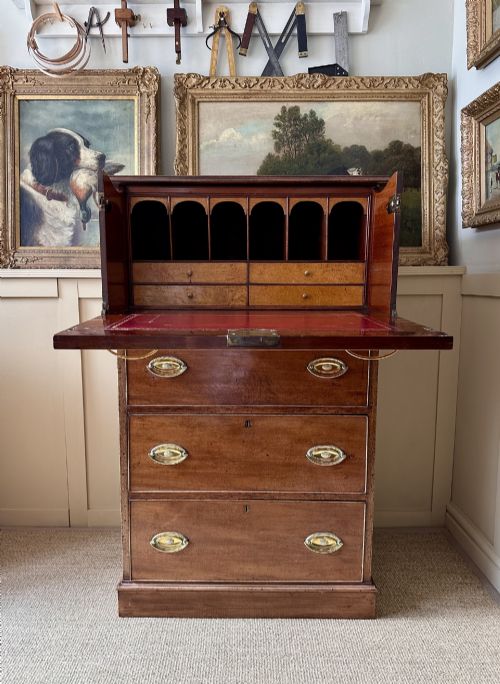
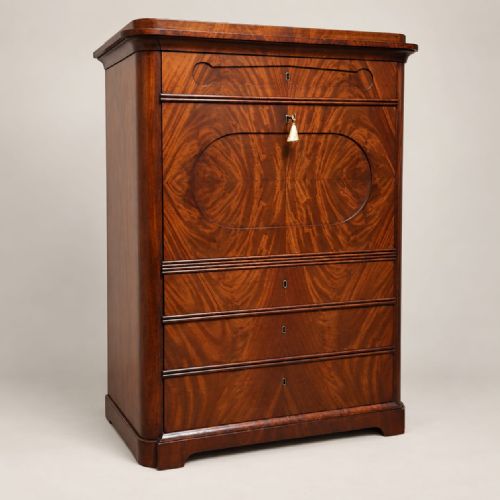
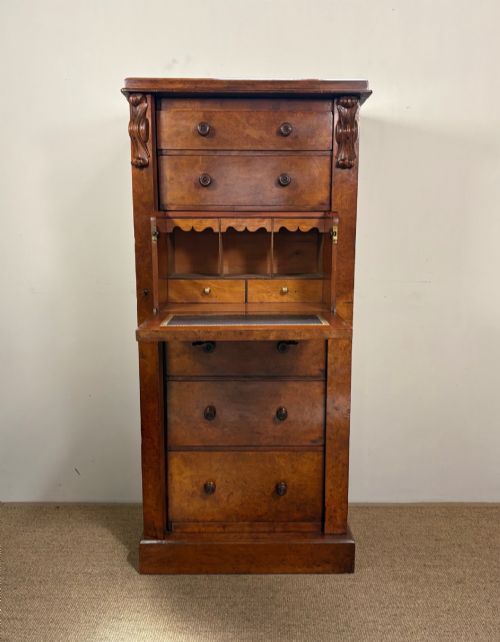
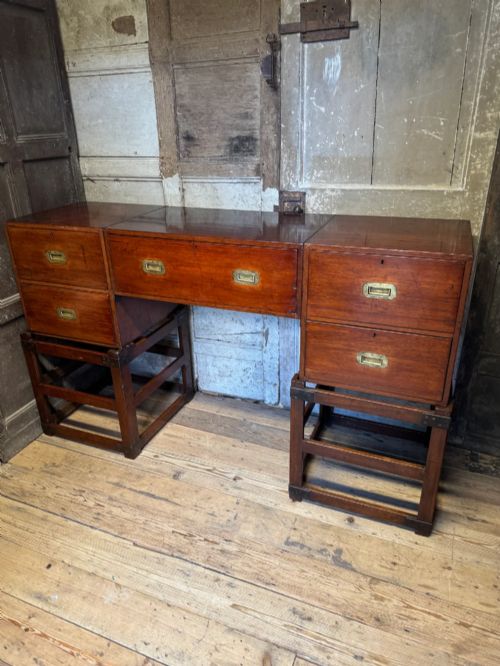
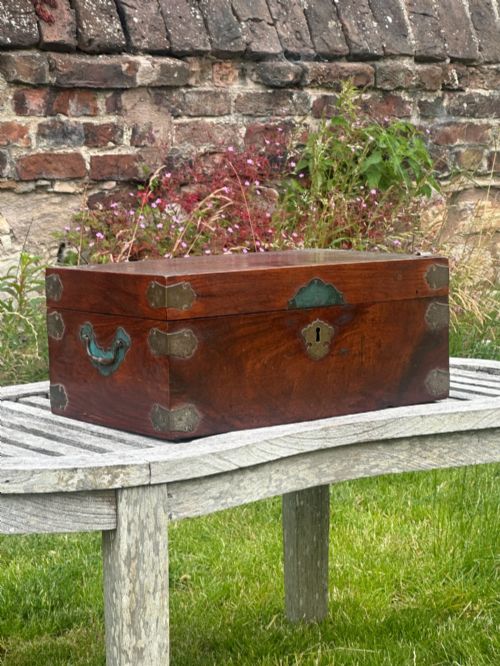
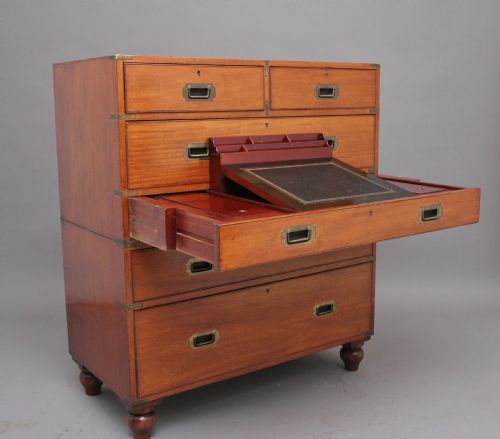
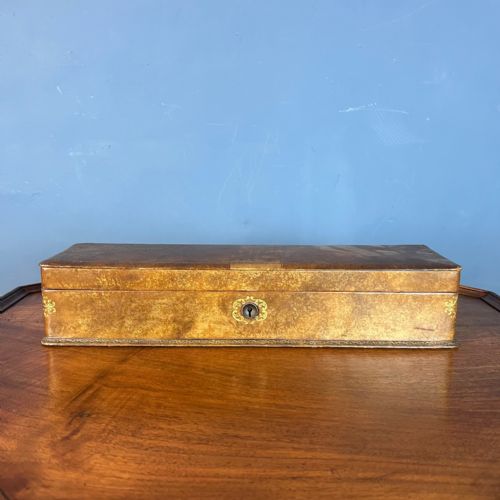
A victorian writing chest encompasses campaign furniture, secretaire chests of drawers, and folding writing boxes designed for travel or domestic correspondence. Buyers encounter tall mahogany secretaire chests alongside two-part camphor wood military chests and smaller rosewood or walnut stationery boxes.
The selection here draws primarily from nineteenth-century forms, featuring fold-down writing flaps that reveal pigeonholes, small drawers, and secret compartments. These pieces merge the storage capacity of a chest of drawers with the slope of a writing desk.
Materials and Construction
Cabinet makers utilised dense hardwoods including mahogany, teak, camphor wood, rosewood, and walnut, frequently housing them in two sections for military transport. Brass corners, flush-fitting handles, and bound edges protected the timber from knocks during transit.
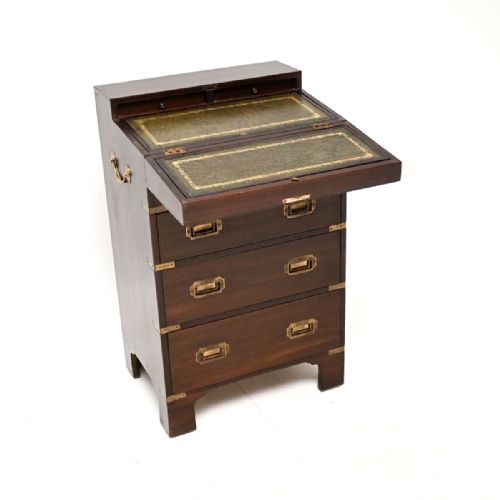
Interiors incorporate tooled leather writing surfaces, satinwood drawer linings, and hidden mechanisms operated by small wooden pins or secret release catches. Joinery relies on tight dovetailing and solid secondary timbers like pine to maintain structural stability.
Victorian Writing Chest Retail Price Guide 2026
Typical asking prices for victorian writing chest among the pieces listed under this phrase on Sellingantiques today, from the lower quarter to the upper quarter. They describe what is for sale here now, not the wider market.
Several camphor wood chests retain faint traces of aromatic resin that still scents the air when the drawers open.
Judging Quality
Quality rests on the selection of figured timber, such as burr walnut, pollard oak, or flame mahogany, matched cleanly across the drawer fronts and writing flaps. The crispness of brass binding and the smooth action of internal secret drawers indicate superior workshop execution.
Original fitted interiors with matching inkwells, intact tooled leather, and uncompromised structural brasswork elevate certain pieces above standard utility furniture. Maker signatures on drawer locks or stamped brass pulls provide further distinction.
Edwards & Roberts
The Victorian Writing Chest Glossary
- Secretaire chest
- A chest of drawers featuring a fitted top drawer that drops down on hinges to reveal a writing surface and pigeonholes. This hybrid form conceals its desk function behind standard drawer fronts.
- Campaign chest
- Portable furniture built in two separate stacking sections with recessed brass handles and corner brackets. Officers utilised these sturdy chests during nineteenth-century military deployments.
- Davenport
- A compact small desk featuring a sloping top with a leather writing surface and drawers opening to one side. Originating in the late eighteenth century, the form remained popular through the Victorian era.
- Stationery box
- A tabletop cabinet or lidded box designed to hold writing paper, envelopes, and documents. These pieces often feature sloping lids and internal dividers.
Victorian Writing Chest: Frequently Asked Questions
What is the difference between a secretaire and a writing slope?
A secretaire incorporates a writing compartment into a larger piece of furniture like a chest of drawers or cabinet.
A writing slope is a portable desktop box that opens at an angle to provide a writing surface.
How do I care for nineteenth-century leather writing inserts?
Leather surfaces require light waxing and protection from direct sunlight to prevent drying and cracking over time.
Avoid using liquid cleaners or heavy solvents on tooled gold leaf borders.
Why do some camphor wood chests lack brass corners?
Camphor wood pieces intended for domestic use frequently omitted exterior brass strapping in favour of polished wood.
Cabinet makers tailored the hardware to whether the chest was commissioned for travel or static home placement.