




Victorian Wool Embroidery
Victorian wool embroidery brings tactile texture and rich colour into rooms through framed wall art and footstools.
Victorian Wool Embroidery
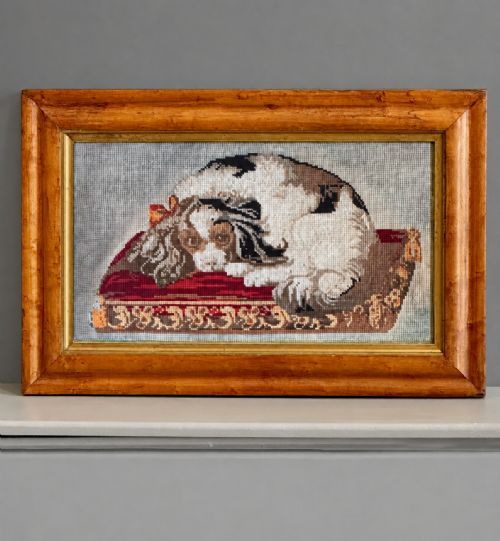
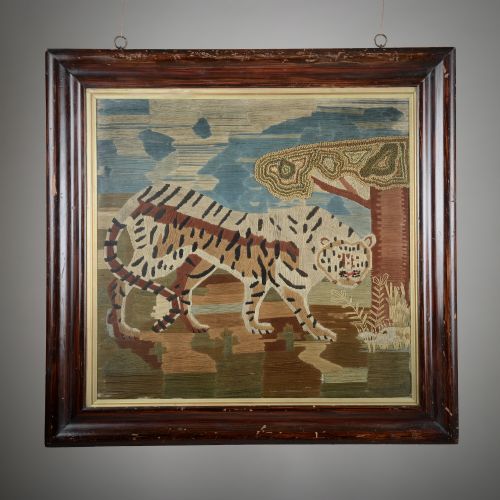
When you search for victorian wool embroidery, you encounter a varied assortment of textile art designed for domestic display. Pieces range from detailed Berlin wool work and samplers to maritime folk art woolies and framed portraits.
You are most likely to meet framed wall art and textile panels housed in burr maple, rosewood, oak, or giltwood frames. Functional items such as walnut x-frame stools and mahogany footstools with original needlepoint seats also appear.
The objects originate from diverse settings including British domestic interiors, Scottish households, Italian workshops, and Kashmiri looms. Subjects span botanical studies, animals, religious scenes, and historical narratives.
Quality differences
Execution clarity and colour retention set the higher tier apart from standard examples. Fine shading in wool and silk creates realistic depth in portraiture and animal subjects.
The choice of original housing influences the overall standard. Contemporary rosewood, burr maple, or giltwood frames complete the visual presentation more successfully than later replacements.
Victorian Wool Embroidery Retail Price Guide 2026
Typical asking prices for victorian wool embroidery among the pieces listed under this phrase on Sellingantiques today, from the lower quarter to the upper quarter. They describe what is for sale here now, not the wider market.
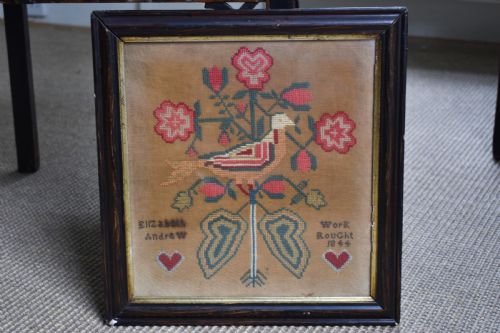
Stitch errors left by young hands remind us that precision occasionally took second place to youthful enthusiasm.
The Victorian Wool Embroidery Glossary
- Berlin work
- A style of needlepoint charted on squared paper using coloured wools. It became widely popular during the nineteenth century for domestic embroidery projects.
- Woolie
- A form of maritime folk art embroidery made by sailors using wool threads. These pieces often depict naval ships and maritime scenes.
- Gros-point
- A coarse needlepoint stitch used for large areas of background or heavy detail. It provides a sturdy and textured surface.
- Plushwork
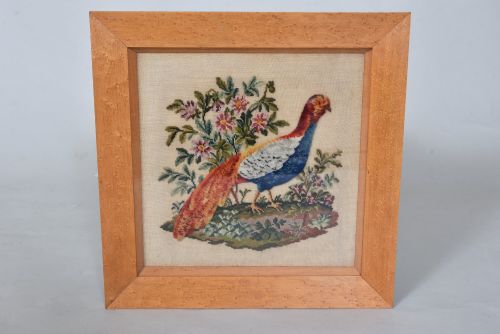
- A raised embroidery technique using looped stitches that are often cut to create a velvet-like pile. Pheasants and animals frequently utilise this method.
Victorian Wool Embroidery: Frequently Asked Questions
How were these embroideries displayed?
Most pieces were framed behind glass in rosewood, burr maple, oak, or giltwood to protect the wool from dust and moisture in domestic interiors.
Larger wall hangings and tapestries were hung directly on parlour and drawing room walls as decorative focal points.
How do I care for wool embroidery?
Keep framed textiles out of direct sunlight to prevent the dyed wool yarns from fading over time.
Ensure the hanging environment remains dry to protect both the delicate fabric fibres and the antique wooden frames.
What subjects are most common?
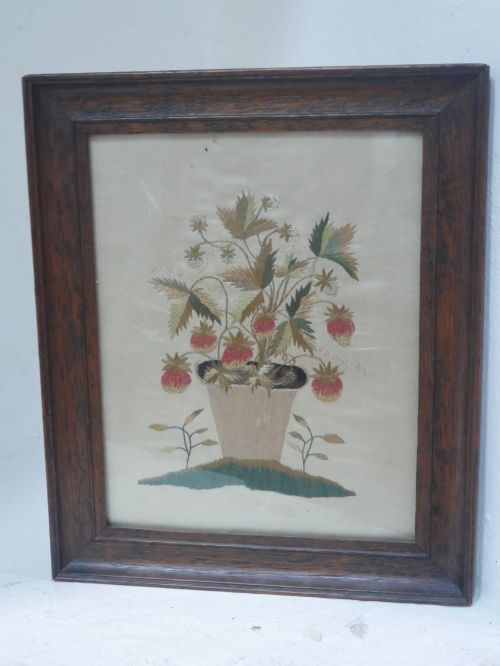
Domestic animals, birds such as pheasants, and botanical studies like pots of strawberries appear frequently across the pieces.
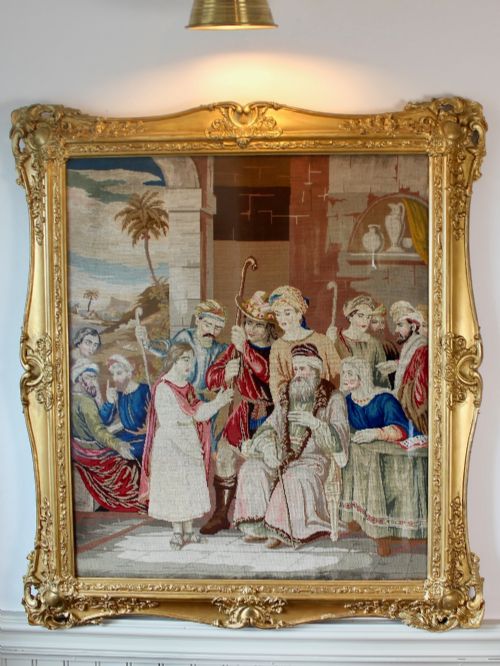
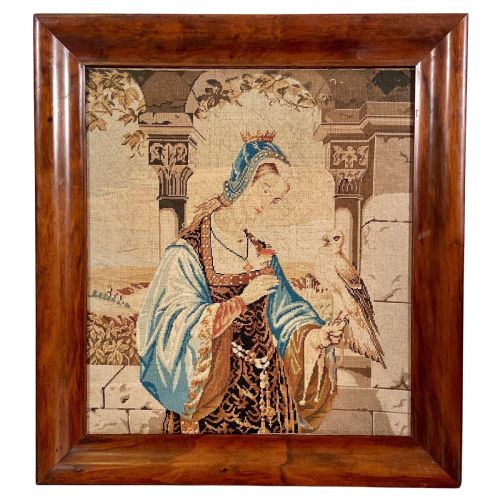
Religious narratives, classical portraits, literary characters, and commemorative samplers also form a significant portion of the designs.