



Victorian Wooden Memory Box
These Victorian wooden memory box pieces are enduring repositories for personal keepsakes, combining rich timber grains with intricate brass and mother-of-pearl detailing.
Victorian Wooden Memory Box
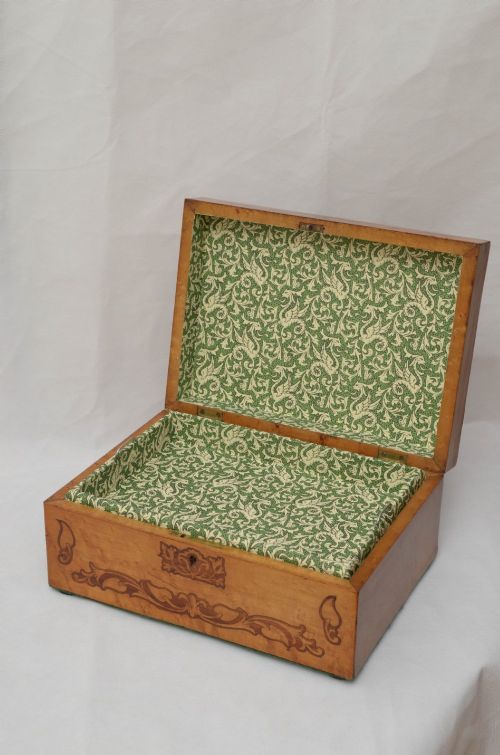
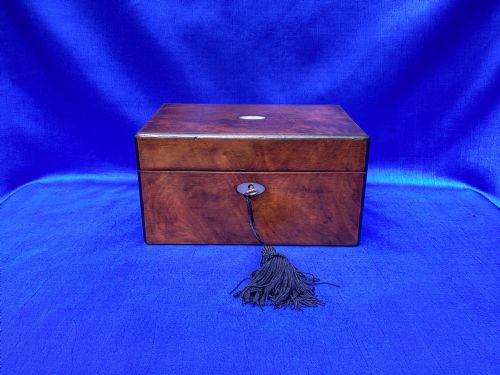
A victorian wooden memory box encompasses a diverse group of receptacles designed for safekeeping, ranging from compact jewellery caskets to substantial writing slopes and sewing boxes. The selection on this page leans heavily towards polished rosewood, mahogany, and burr walnut, frequently ornamented with marquetry, parquetry, or wood inlay.
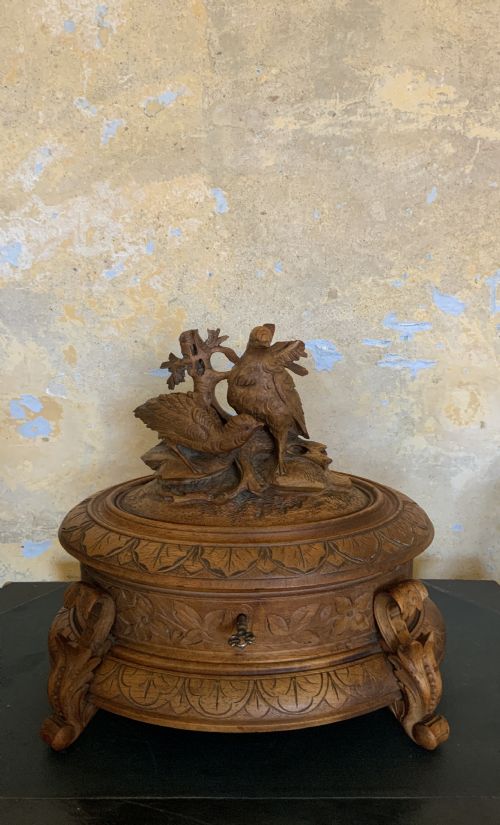
Forms span simple rectangular vessels to fitted dressing boxes complete with internal compartments and mirrors. Alongside British Victorian pieces, one encounters Black Forest carvings, Italian Sorrento ware, and Anglo-Indian or Burmese works, each reflecting regional craftsmanship of the nineteenth century.
Most examples date from the mid to late nineteenth century, capturing a period when personal storage items received meticulous attention from cabinet makers. Buyers select these objects to display on dressers or tabletops while housing letters, trinkets, and correspondence.
Materials and construction
Construction relies upon dense hardwoods such as rosewood, mahogany, and walnut, chosen for stability and deep natural grain. Cabinet makers shaped these timbers into robust carcases, often reinforcing corners and edges with brass mounts or studwork.
Surface embellishment involves contrasting veneers, wood inlay, and parquetry geometric patterns. Artisans also integrated delicate mother-of-pearl plaques and relief carvings, particularly seen in Black Forest and Burmese specimens.
Many a Victorian writer kept small secrets hidden behind secret panels inside these very slopes.
Distinctions in craftsmanship
Quality reveals itself in the precision of the timber joints and the crispness of inlay work. Superior items maintain alignment across complex parquetry and securely anchor brass escutcheons and mother-of-pearl insets without gaps.
Internal fittings dictate utility and value, distinguishing standard storage from elaborate dressing boxes and writing slopes equipped with functional compartments, secret drawers, and original mirrors.
The Victorian Wooden Memory Box Glossary
- Marquetry
- The art of applying decorative pieces of veneer to a structure to form intricate pictorial or geometric designs. This technique defines many nineteenth-century lids and box surfaces.
- Parquetry
- A geometric mosaic of wood pieces used for decorative floors and box surfaces. It creates repeating patterns like cubes or chequers.
- Writing slope
- A desk accessory featuring a slanted writing surface that often folds open to reveal compartments for stationery and inkwells. These slope inwards towards the user.
- Burr walnut
- Wood taken from a tree growth where the grain has grown in a deformed manner, producing intricate swirling patterns. It is highly prized for decorative veneer.
- Sorrento ware
- Woodwork originating from Sorrento in Italy, characterised by micro-mosaic inlay and olive wood construction. It often depicts scenic views or floral motifs.
Victorian Wooden Memory Box: Frequently Asked Questions
What fits inside these boxes?
These boxes accommodate letters, photographs, jewellery, and small personal keepsakes within their lined or divided compartments.
Larger variations like writing slopes and dressing boxes offer dedicated slots for pens, ink, and grooming instruments.
How should I clean the wood?
Maintenance requires only a soft, dry cloth to remove dust from the carved surfaces and polished timber grain.
Avoid liquid cleaners or excessive moisture, which can damage historic polish, veneers, and mother-of-pearl inlay.
Are keys usually included?
Original working keys are uncommon for nineteenth-century boxes, as locks and keys were frequently lost over generations.
Many boxes remain unlocked, serving primarily for display and accessible everyday storage rather than secure containment.
What is bird's eye maple?
Bird's eye maple is a figure in maple wood where the grain resembles tiny, swirling eyes disrupting the smooth surface.
Cabinet makers utilised this pale timber as a contrasting veneer alongside darker woods like rosewood and walnut.