

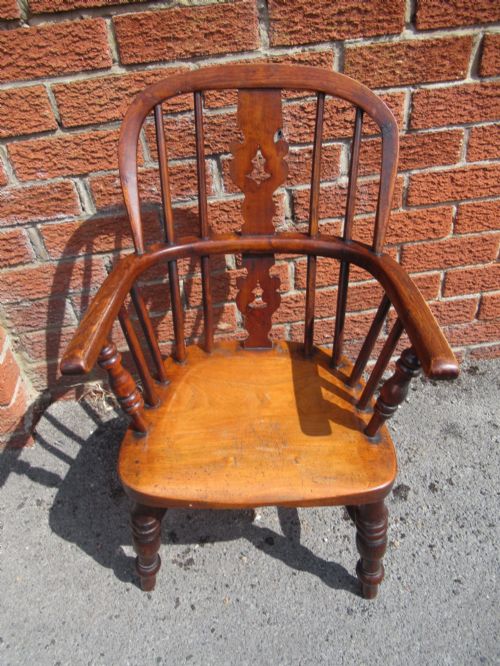
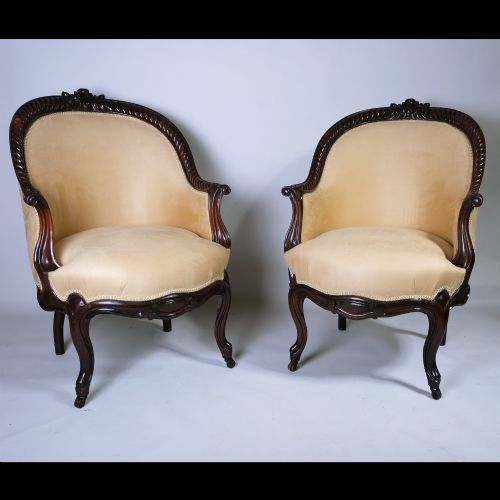
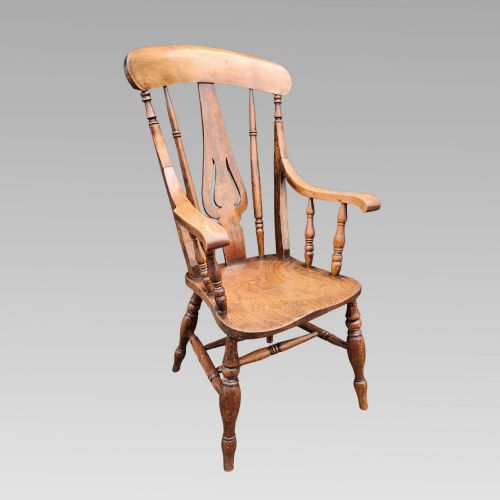
Victorian Wooden Arm Chair
A victorian wooden arm chair brings honest nineteenth-century construction and timber character into a room.
Victorian Wooden Arm Chair
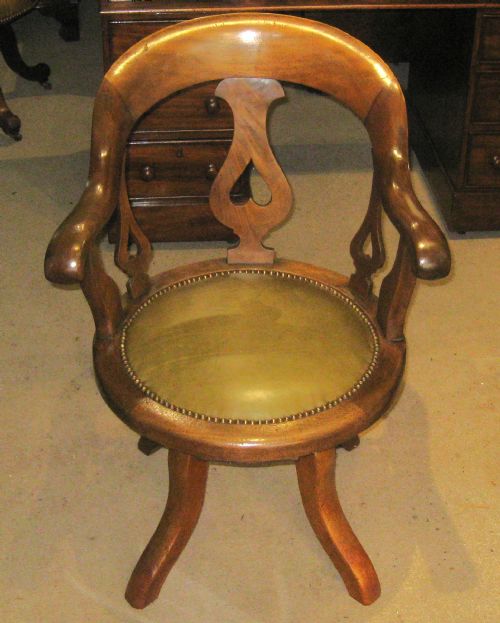
Buyers seeking a victorian wooden arm chair encounter a diverse selection of seating shaped by nineteenth-century domestic, office and vernacular traditions. These pieces range from substantial country Windsors and smokers bows to refined mahogany gentleman chairs and revolving desk seats.
The versions most frequently met on this page combine traditional timber frames with functional forms intended for everyday use, such as library armchairs, rocking chairs and carver seats. Many reflect regional English country craftsmanship utilising locally sourced hardwoods.
Makers and workshops of the period utilised specific structural layouts to suit the intended function, whether high-backed fireside seating or low-slung desk chairs. The variety spans multiple decades from the mid nineteenth century into the Edwardian era.
Materials and Construction Methods
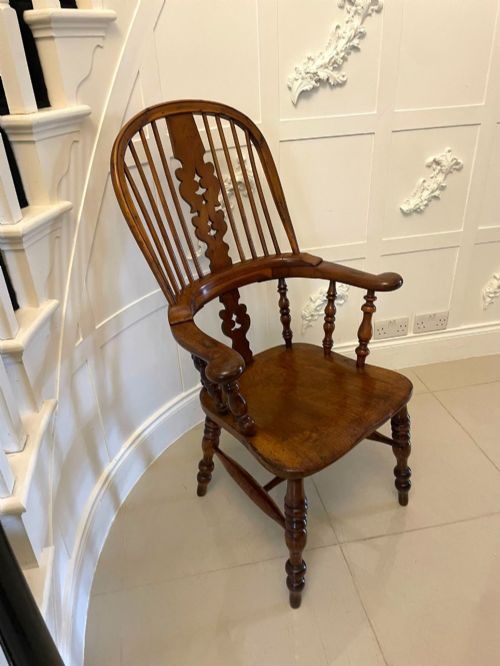
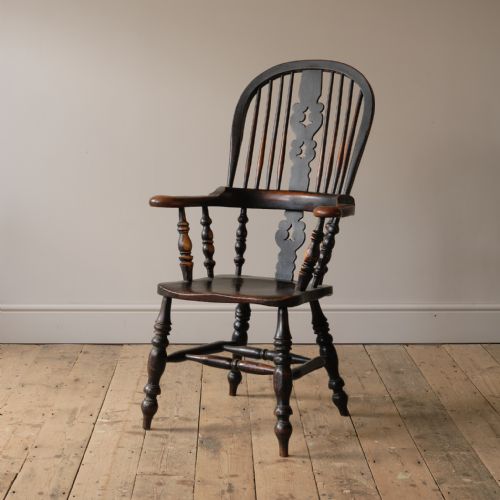
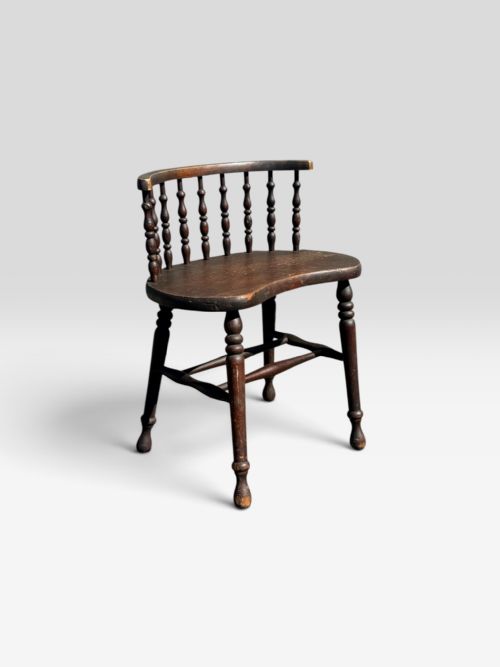
Constructors relied heavily on native timbers such as elm, ash, beech and oak, frequently pairing different woods within a single piece to balance strength and flexibility. Windsor chairs often paired bowed ash frames with solid elm seats and spindle turnings.
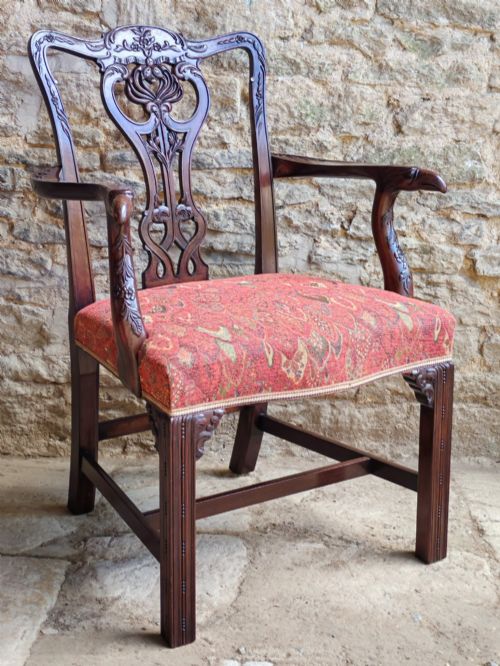
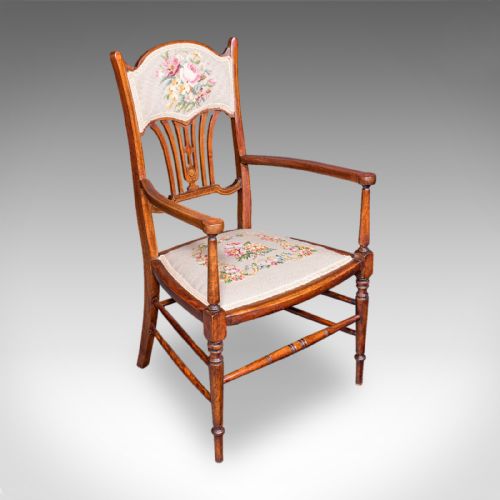
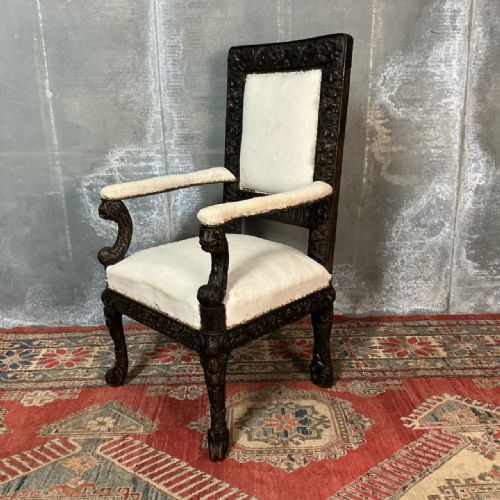
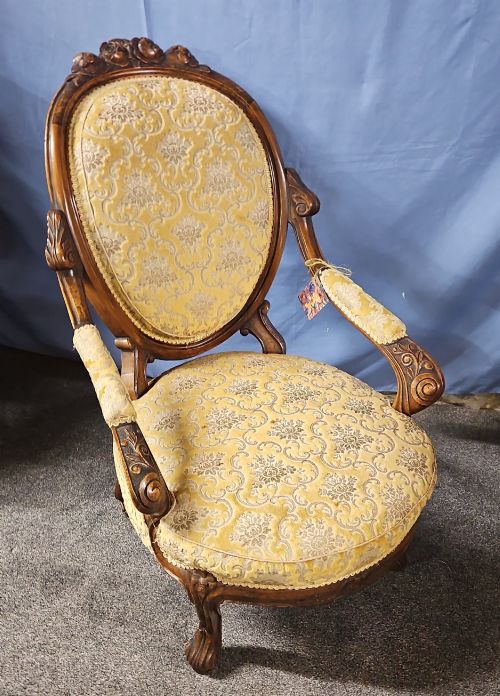
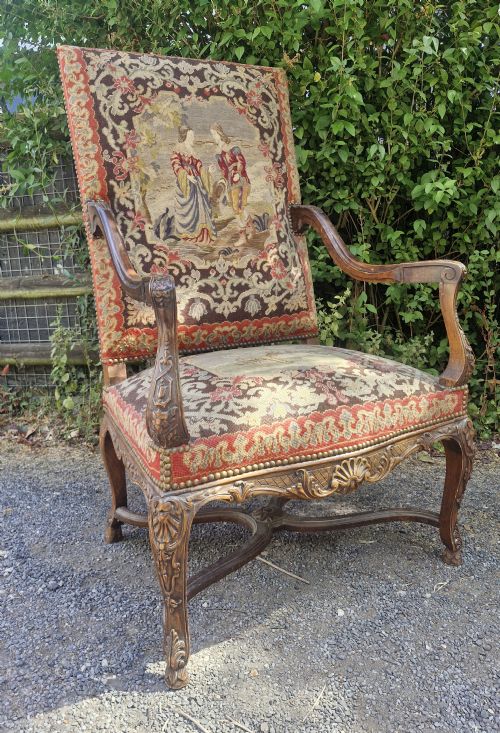
Cabinet makers utilised dense hardwoods like mahogany and walnut for formal parlour and library seating, incorporating carved details and upholstered panels of needlework, leather or fabric. Steam bending techniques shaped components for bentwood desk chairs and curved backs.
Distinctions in Quality
Quality rests upon the selection of timber and the integrity of the joinery, particularly in vernacular pieces where natural grain and sturdy peg construction dictate endurance. Superior examples display balanced proportions, crisp turnings and thoughtful integration of varied woods.
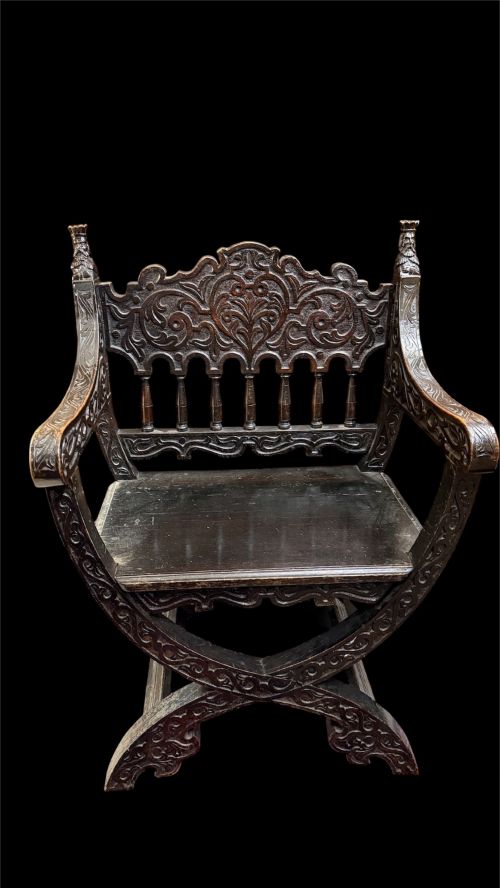
Refined pieces show depth in the carving and careful finishing of the timber surface, whereas lesser items rely on simpler mass production methods with less attention to detail and timber selection.
Howard and Sons
The Victorian Wooden Arm Chair Glossary
- Windsor chair
- A wooden chair built with a solid saddle-shaped seat into which the legs and back spindles are directly inserted. This form evolved through regional English traditions using ash, elm and yew.
- Smokers bow
- A low-backed Windsor variant with a continuous curved arm rail supported by turned spindles, commonly found in captain chair and pub seating formats.
- Carver chair
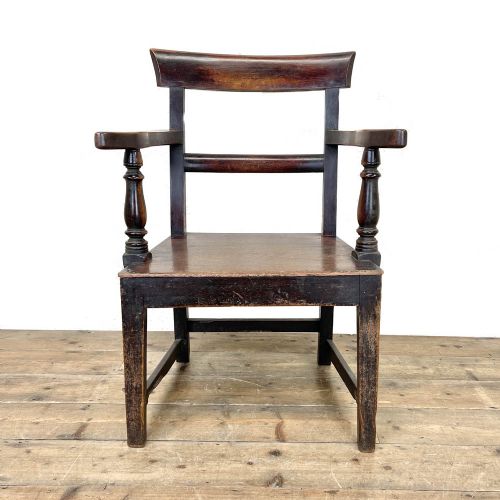
- An armchair designed in a similar style to a set of dining chairs, traditionally placed at the head of a table or used as a parlour seat.
- Bobbin framing
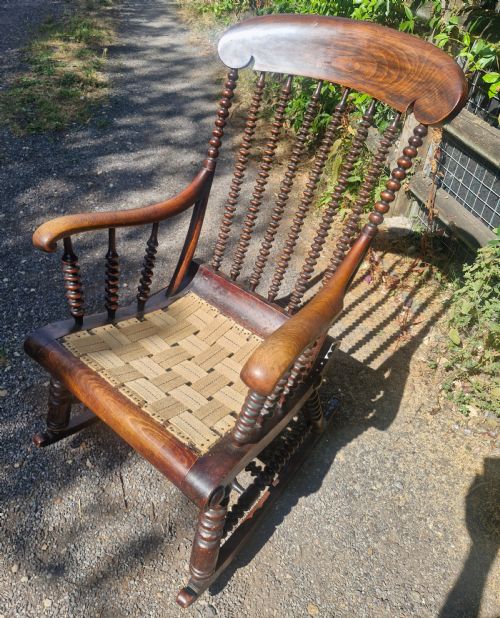
- A decorative turning technique utilising cylindrical lathe work that resembles a series of wooden reels or bobbins joined together.
- Broad arm
- A chair design featuring one significantly widened wooden armrest intended for writing or resting books.
Victorian Wooden Arm Chair: Frequently Asked Questions
What is a smokers bow chair?
A smokers bow is a low-backed Windsor arm chair featuring a continuous curved arm rail and turned spindles.
These pieces were widely utilised in domestic studies and commercial spaces during the nineteenth century.
How do I identify a Windsor chair?
A Windsor chair is characterised by a solid wooden seat into which the structural legs and back components are tenoned.
Craftsmen often combined flexible woods like ash for the hoops with dense elm for the carved seats.
What woods were used for these chairs?
Common timbers include elm, ash, beech, oak and mahogany, selected for their specific structural and aesthetic properties.
Country pieces frequently mixed native hardwoods to provide strength where needed most.
Where were these armchairs placed?
These seating forms served multiple domestic functions in libraries, morning rooms, bedrooms and studies.
Specific designs catered to writing desks, firesides and informal lounging.