
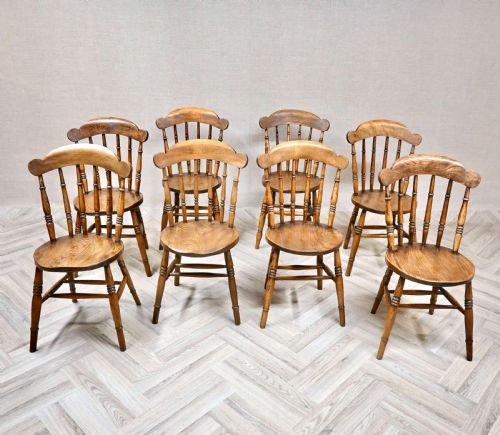
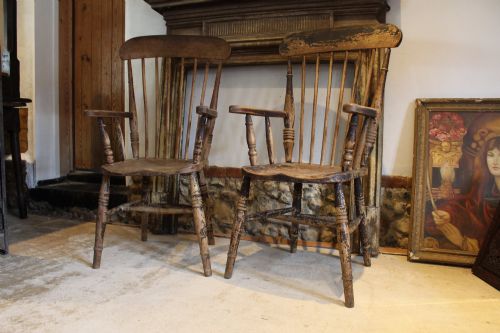
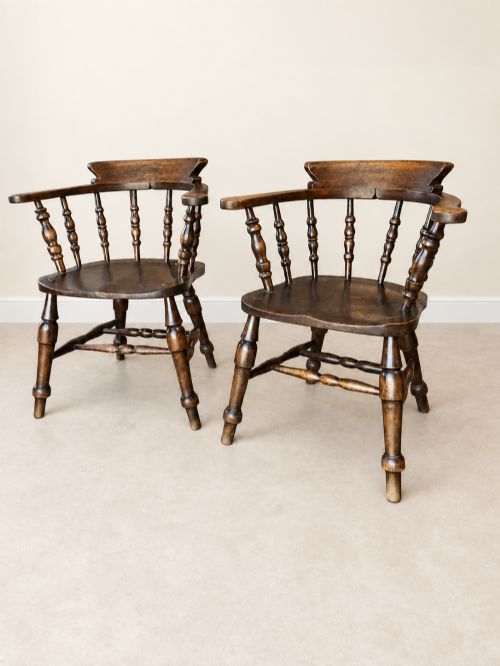
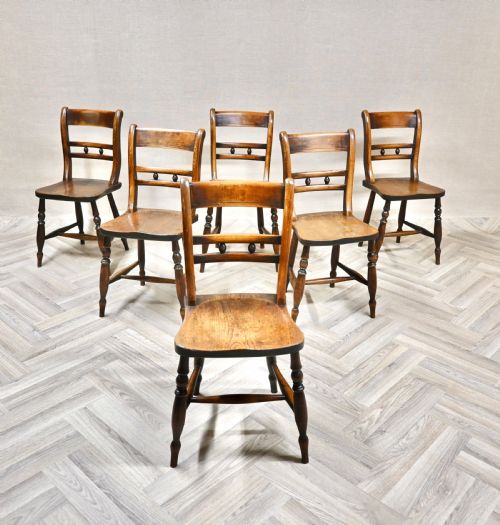
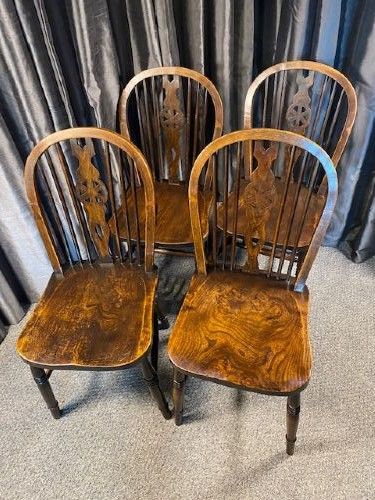
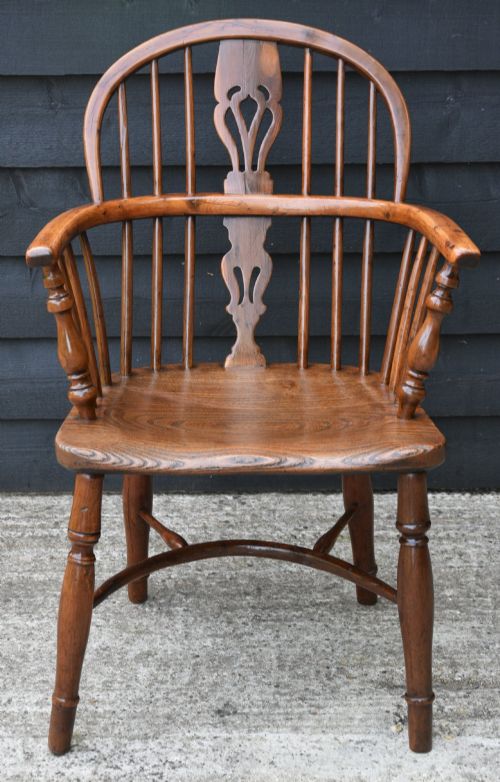
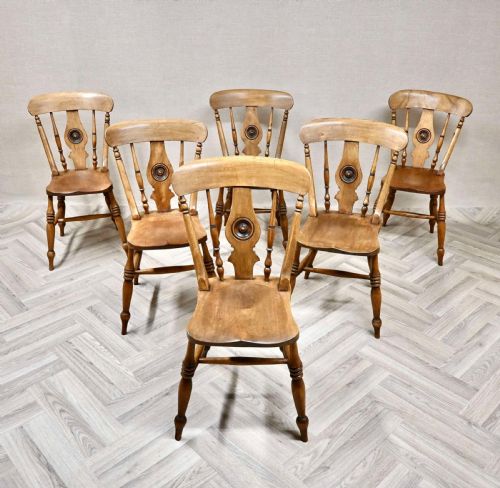
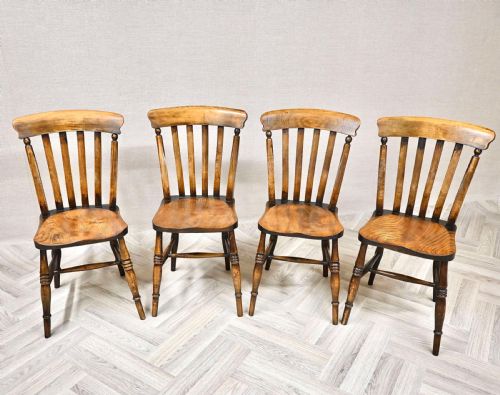
Victorian Elm Windsor Chair
When you select a victorian elm windsor chair, you bring home a sturdy piece of English country seating shaped by regional traditions.
Victorian Elm Windsor Chair
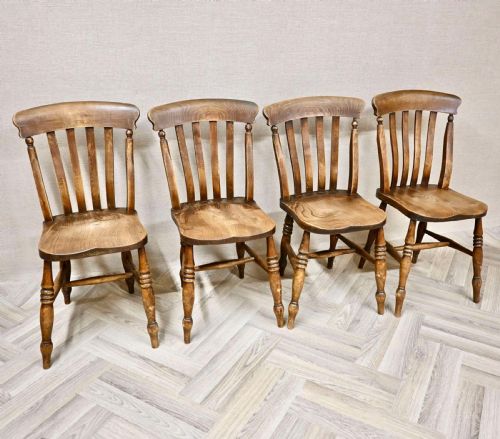
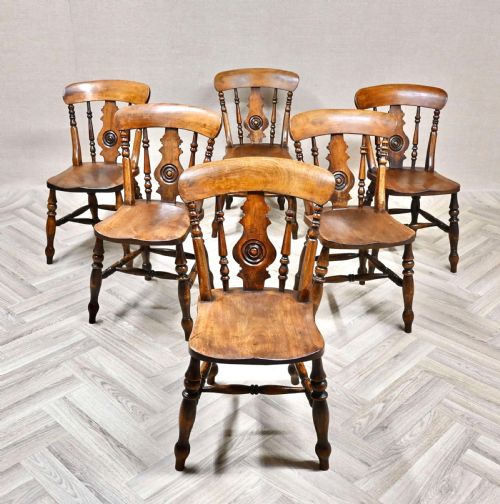
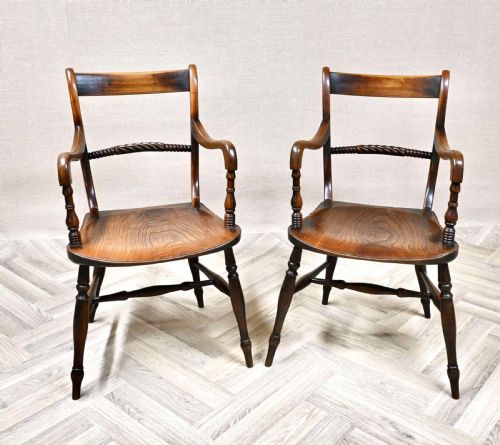
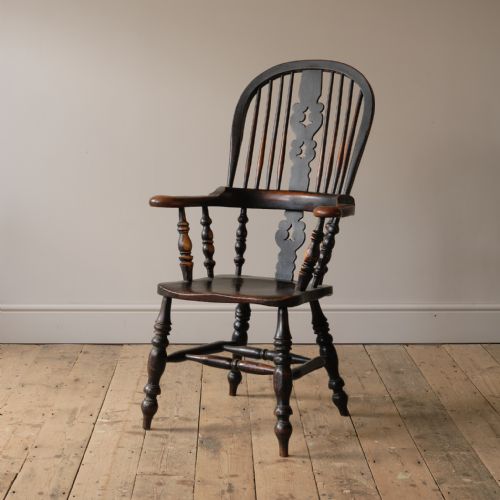
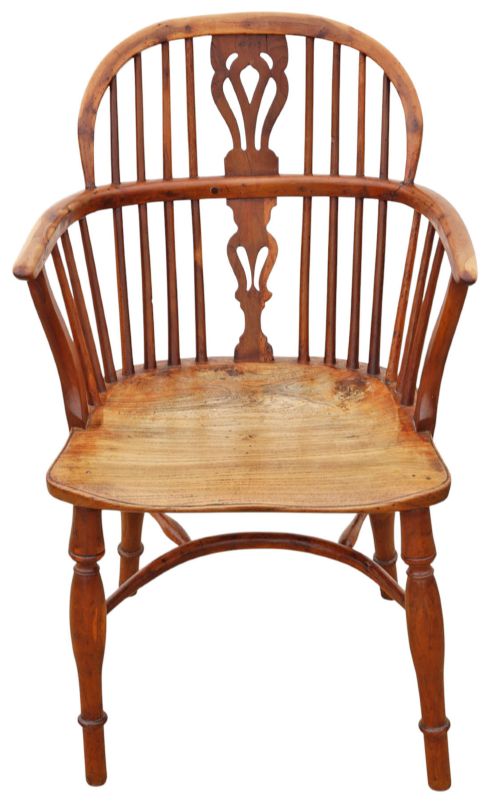
A victorian elm windsor chair is a traditional wooden seat defined by a solid plank saddle seat into which the legs, back spindles, and bow are independently wedged.
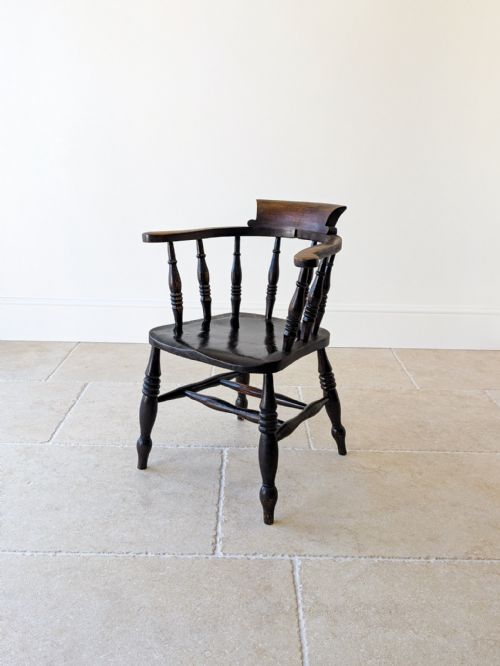
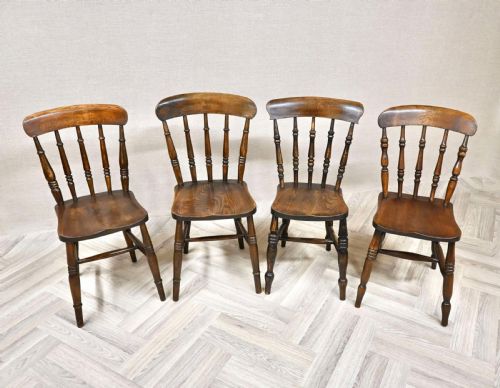
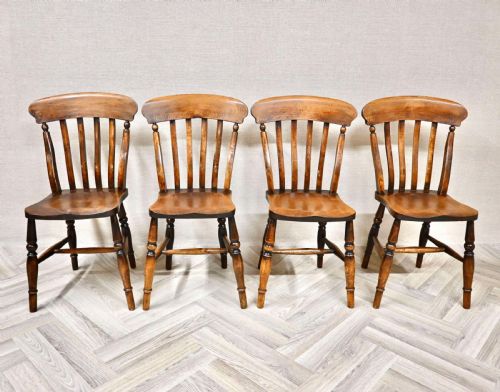
You will most frequently encounter armchairs, captain's chairs, and matching sets of kitchen dining chairs originating from nineteenth-century workshops.
How They Were Made
Maker's hands combined multiple timbers within a single frame, pairing sculpted solid elm seats with bent ash or beech for hoops, stems, and spindles.
Makers shaped heavy timber using drawknives and spokeshaves at the shaving horse, hollowing the elm seat planks into deep saddle forms before securing the components with wedges and dowels.
Listings feature timbers including elm, ash, beech, oak, and yew wood across the nineteenth century and Edwardian period.
What Varies in Quality
The distinction between ordinary utility seating and finer examples rests on the grace of the bentwood bow, the boldness of the turning on the legs and stretchers, and the depth of the sculpted elm seat.
The choice of secondary woods also marks the grade, with select specimens featuring richly figured yew wood alongside the elm rather than standard beech or ash.
J Spencer
The Victorian Elm Windsor Chair Glossary
- Saddle seat
- A thick plank of elm hollowed out by hand into a shallow, comfortable dip for the sitter. This carved seat forms the heavy central hub of every Windsor construction.
- Hoop back
- A continuous piece of steam-bent timber, often ash, forming the outer frame of the chair back. It sweeps upward from the seat to enclose the vertical spindles.
- Smoker's bow
- A low-backed armchair with a rounded, continuous rail serving as both armrest and back support. These low chairs were common fixtures in nineteenth-century parlours and public houses.
- Wheelback
- A Windsor back featuring a pierced wooden splat carved in the shape of a spoked carriage wheel. This decorative motif was particularly popular in nineteenth-century dining chairs.
- Comb back
- A Windsor style where the vertical spindles extend upward to a horizontal headrest resembling a hair comb. This high-backed form provides additional support for the head and shoulders.
Victorian Elm Windsor Chair: Frequently Asked Questions
What is a Windsor chair?
A Windsor chair is a distinct form of seating where all the structural parts - legs, back spindles, and arms - are socketed directly into a heavy solid wooden seat plank rather than joined to an independent frame.
Elm was chosen for the seats because its interlocking grain resisted splitting under the stress of the wedged legs and vertical spindles.
How do I tell an old Windsor chair apart?
Examination of the seat underside reveals the tool marks of the adze and spoon bit used by nineteenth-century chair bodgers to shape the timber by hand.
Older examples display subtle asymmetries and wear patterns that distinguish genuinely antique vernacular seating from later reproductions.
Where were these chairs used?
These seating forms served as everyday workhorses in nineteenth-century farmhouse kitchens, country inns, and provincial dining rooms. Their robust construction suited the demands of large households and busy communal spaces.
Armchairs often stood beside hearths as fireside seats, while sets of matching chairs gathered around kitchen tables for daily meals.
How do I live with a wooden chair?
Placing a wooden chair away from direct heat sources and sudden temperature shifts protects the aged elm and ash timbers from drying and splitting. Maintaining stable indoor humidity preserves the original joints.
Regular dusting with a soft cloth and occasional treatment with suitable furniture wax keeps the historic finish nourished without altering the patina accumulated over generations.