




Victorian Wire Fireguard
These victorian wire fireguard examples are protective nursery screens built to keep children and stray sparks safely away from open hearths.
Victorian Wire Fireguard
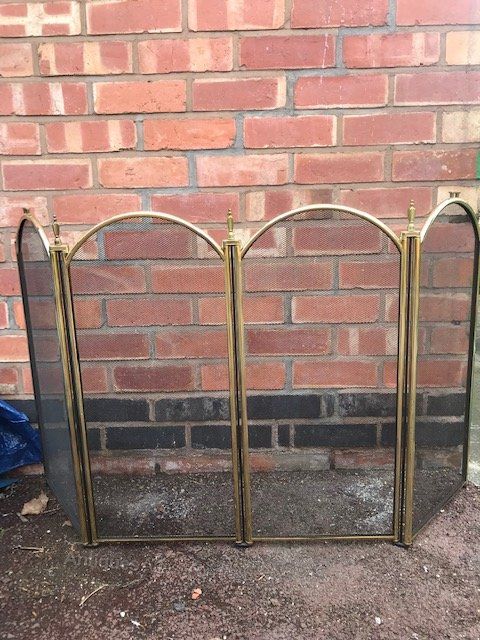
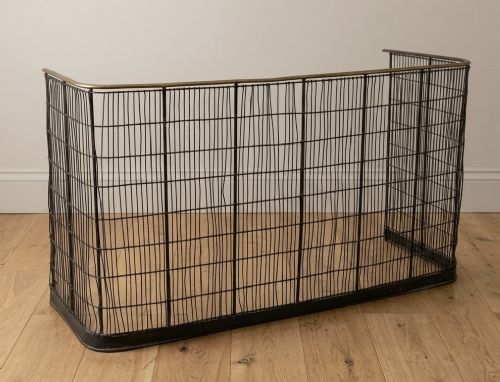
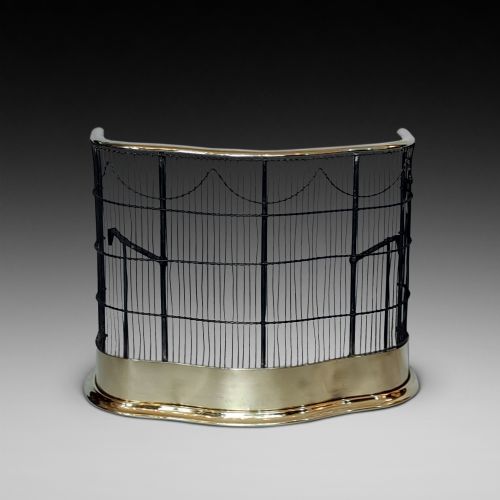
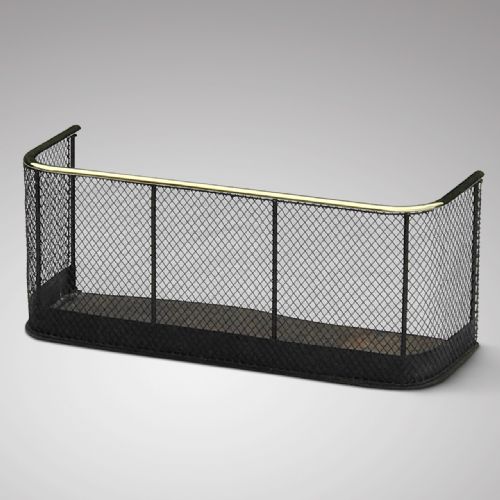
When you search for a victorian wire fireguard, you are looking at practical hearth furniture designed to secure domestic firesides during the nineteenth century and into the Edwardian period. The pieces seen here span the nineteenth century, Victorian era, Edwardian period, and nineteen-twenty, taking forms such as nursery fenders, bowed fire guards, serpentine guards, and folding fire screens.
You are most likely to meet low nursery fenders and spark guards framed in brass with wire mesh bodies. Many examples include a sturdy top rail, sometimes combined with a clothes rail or finished with a black coating alongside the bright brass trim.
Materials and construction
Makers constructed these fire guards using sturdy iron and wrought iron frames to withstand daily fireside use. Steel wire and flexible wire mesh were then secured within these metal structures to form the protective barrier.
Brass formed a crucial element of the construction, appearing as heavy top rails, decorative rims, and framing elements. Some pieces combined this bright metal with embossed brass panels or black-finished iron surfaces.
Listings for this phrase frequently combine brass framing with iron wire mesh, spanning the nineteenth century through the Edwardian era and into nineteen-twenty.
Judging quality and craftsmanship
Quality reveals itself in the weight of the metal framework and the neatness of the wire mesh attachment. Substantial brass top rails and well-formed bowed or serpentine shapes separate robust workshop pieces from simpler utility items.
The integration of functional additions, such as integrated clothes rails or heavy brass rims, demonstrates higher-tier domestic production. Finer examples maintain rigid structural integrity across multiple folding sections or wide spans.
The Victorian Wire Fireguard Glossary
- Nursery fender
- A low protective barrier placed around a hearth to prevent children from touching the fire. These guards often feature a raised top rail and fine wire mesh.
- Wire mesh
- A woven metal web that allows heat to radiate into the room while stopping sparks from escaping. It forms the main protective body of these guards.
- Serpentine
- A gentle undulating curve shape seen along the front edge of certain fire guards. This profile added elegance to utilitarian hearth safety items.
- Spark guard
- A specialised screen designed specifically to catch flying embers from coal or wood fires. They are constructed from tight wire mesh within a metal frame.
Victorian Wire Fireguard: Frequently Asked Questions
How do I use a fire guard safely?
Place the metal screen firmly on the hearth stone to completely enclose the open fire opening. Ensure the stable frame sits squarely on the floor so it cannot be pushed over by children or pets.
Keep combustible items away from the outer wire mesh during use. Regularly brush away soot and ash from the wire to maintain clear airflow and visibility.
What is the difference between a fire screen and a fire guard?
Fire guards generally feature enclosing wire mesh sides or low nursery fender shapes designed for physical safety and spark protection. They surround the hearth perimeter to keep children at a distance.
Fire screens often utilise solid brass or embossed panels rather than mesh. These are traditionally positioned directly in front of the grate to block radiant heat when the fire is dying down.
How do I date an antique fire guard?
Examine the construction methods and metal types used in the frame and wire mesh. Nineteenth-century examples frequently employ heavy brass top rails and hand-wrought iron components.
Later pieces from the Edwardian era or nineteen-twenty often show standardised wirework techniques and alternative finishes like black paint combined with brass trim.
Can I polish the brass parts?
Use a gentle metal polish specifically formulated for brass to restore the shine on top rails and rims. Apply the cleaner carefully with a soft cloth to avoid staining the surrounding wire mesh or iron frame.
Many collectors prefer to leave a darker patination on older iron and brass surfaces. Clean only when necessary to preserve the historical appearance of the piece.