
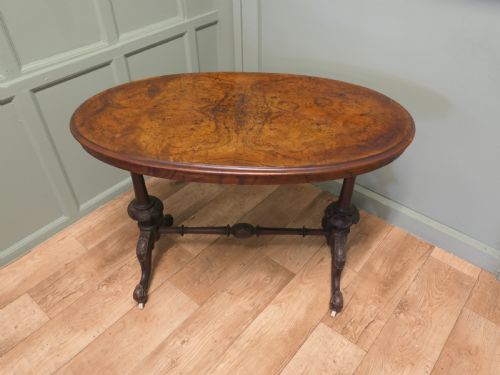
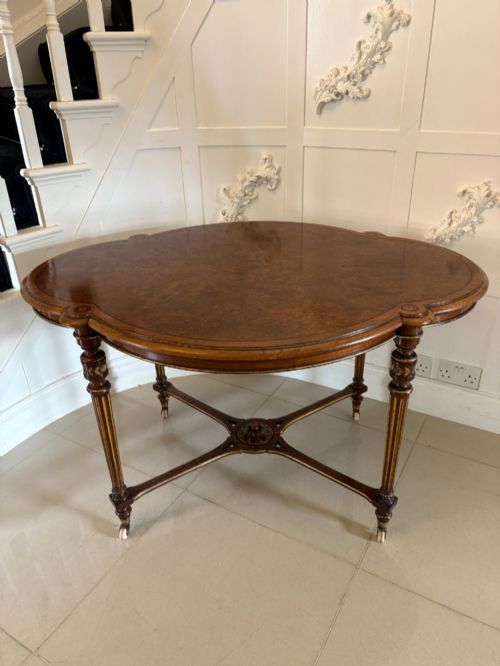
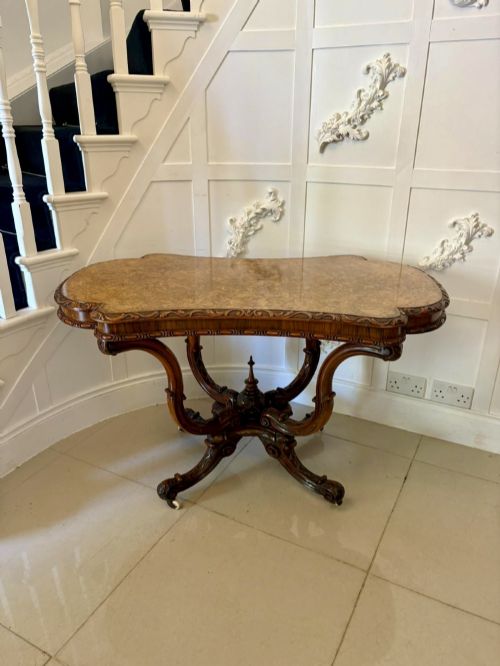
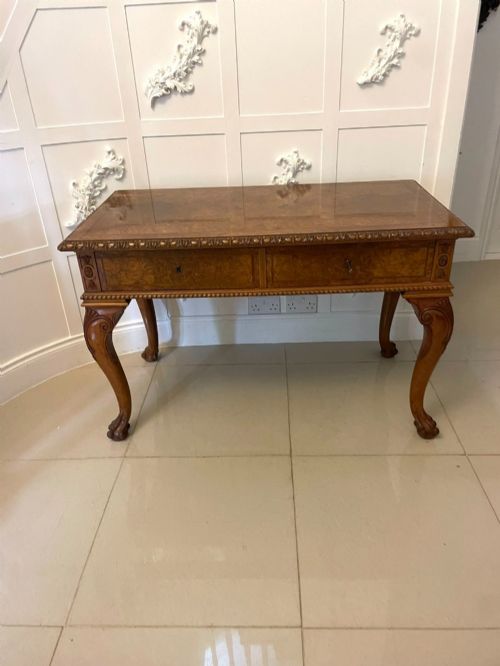



Victorian Walnut Foyer Table
A victorian walnut foyer table brings rich timber grain and architectural presence directly to your entrance hall.
Victorian Walnut Foyer Table
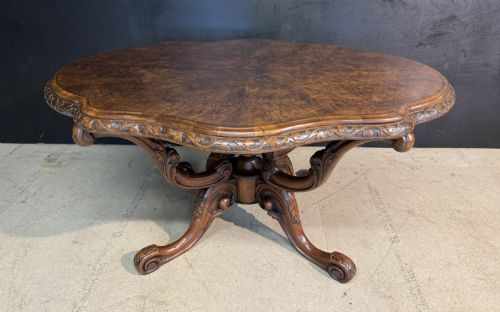
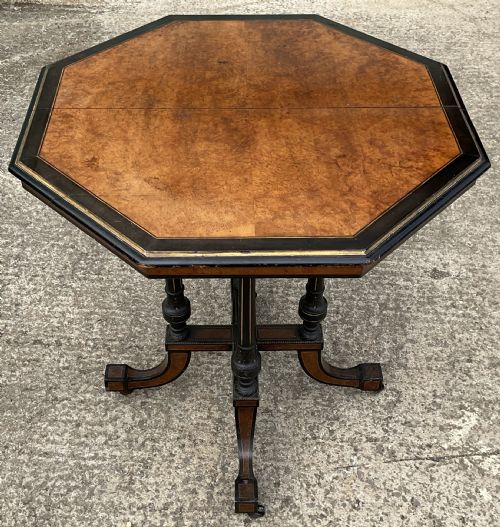
When you search for a victorian walnut foyer table, you are looking at substantial nineteenth-century timber furniture designed to stand freely in a hallway or reception space. Centre tables, console tables, and occasional tables dominate the selection, often featuring circular, oval, or octagonal tops.
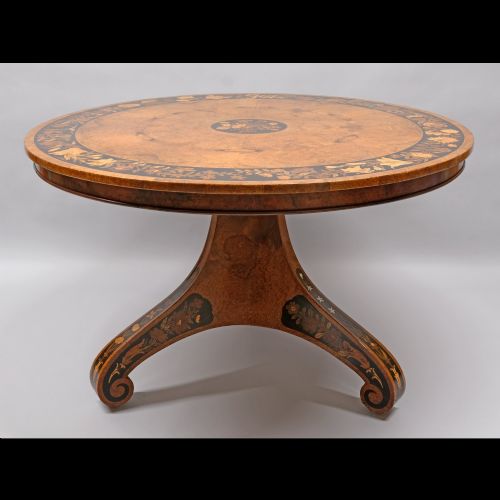
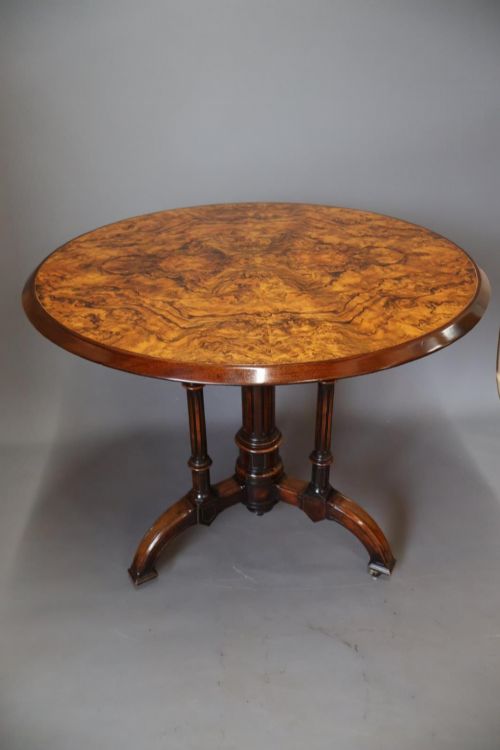
The most common version you will meet on this page is the walnut or burr walnut centre table, frequently detailed with marquetry inlay or supported by a carved pedestal base. These pieces reflect the varied stylistic revivals of the period, from Rococo curves to Aesthetic Movement lines.
Originating primarily from the nineteenth century, these tables serve practical uses as surfaces for lamps or calling card trays while establishing a strong decorative tone upon entering a home. Their forms range from small side tables to large freestanding console tables.
How they were made
Cabinet makers utilised solid walnut and decorative burr walnut veneers applied to stable secondary timbers to create rich, figured surfaces. Marquetry and boxwood inlay decorate many of the tabletops, forming intricate geometric or floral patterns.
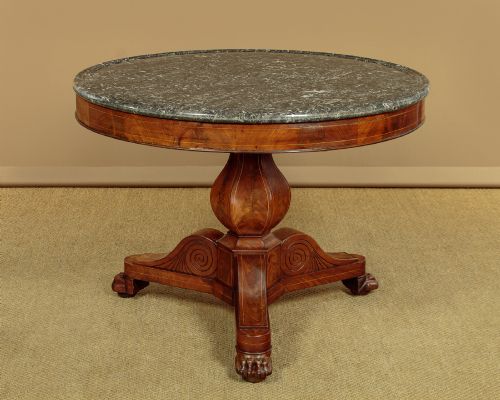
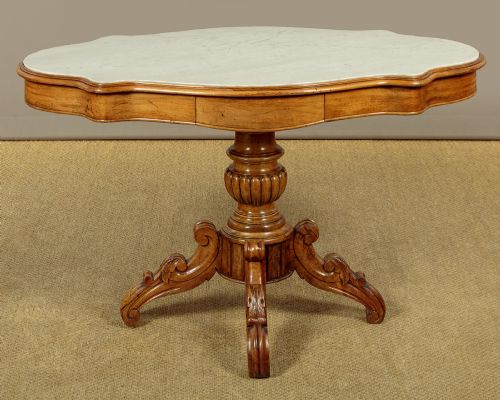
Structural elements frequently include brass fittings, ceramic components, and carved wooden supports, while select tops incorporate heavy marble slabs or specimen marble sections. Pedestal bases, basket bases, and turned legs provide the foundational support for these heavy pieces.
Victorian callers left cards on these tables; today yours will safely hold keys, post, and the occasional stray glove.
What varies in quality
The fineness of the burr walnut grain and the complexity of the marquetry or boxwood inlay set individual pieces apart. Superior examples display crisp, deep wood carving and precise joinery that remains stable across large tabletops.
Proportion and material selection dictate the tier of craftsmanship, particularly where heavy marble tops or elaborate pedestals meet the main body. Maker attribution or documented workshop origin further elevates the standing of a piece.
Holmes Baldock·Holland and Sons·James Winter
The Victorian Walnut Foyer Table Glossary
- Burr walnut
- A prized timber harvested from the wart-like growths on walnut trees, yielding turbulent, highly figured grain patterns. Cabinet makers sliced this wood into thin veneers for tabletops.
- Marquetry
- The art of applying decorative veneer pieces in wood, ivory, or shell to form pictorial or geometric designs. It requires immense precision to fit each element flush into the surface.
- Centre table
- A freestanding piece designed to be viewed from all sides, placed in the middle of a room or grand hallway rather than pushed against a wall.
- Console table
- A table fixed to a wall or supported by front legs, frequently placed in entrance halls beneath mirrors or paintings.
- Aesthetic Movement
- A late nineteenth-century design style emphasising visual beauty over narrative meaning, often incorporating simpler forms and contrasting dark woods.
Victorian Walnut Foyer Table: Frequently Asked Questions
Where should I place a foyer table?
These tables suit entrance halls, reception rooms, and large corridors where they can stand freely or rest against a wall. Their finished backs and detailed pedestals allow them to anchor a space effectively.
Ensure you measure your hallway clearance carefully, as nineteenth-century proportions can be surprisingly generous and require adequate walking room around the perimeter.
How do I care for walnut veneer?
Keep walnut furniture away from direct sunlight and heat sources to prevent the burr veneers from drying out or lifting. Dust regularly with a dry, soft cloth and avoid modern silicon polishes.
Feed the timber periodically with appropriate wax to maintain the depth of the grain and protect the historical finish from moisture damage.
What is the difference between a console and a centre table?
A centre table stands entirely on its own with finished detailing on all four sides, intended to sit prominently in an open space. A console table traditionally rests against a wall and may rely on wall brackets for total stability.
Both forms served similar social functions in nineteenth-century homes, acting as decorative surfaces for lighting and calling cards.
How do I identify Aesthetic Movement pieces?
Aesthetic Movement tables typically feature ebonised elements, contrasting light inlays, and simpler structural lines that break away from heavy Victorian revival curves. They often incorporate exotic secondary woods like coromandel alongside walnut.
Look for refined geometric decoration and a focus on abstract visual harmony rather than traditional floral motifs.
Are marble top tables original?
Many nineteenth-century console and centre tables were constructed specifically to carry heavy marble or specimen marble tops. These stone surfaces provided durable, water-resistant tops for practical hallway use.
Check that the marble sits flush within the wooden frame and matches the structural proportions of the base.