


Victorian Walnut Display
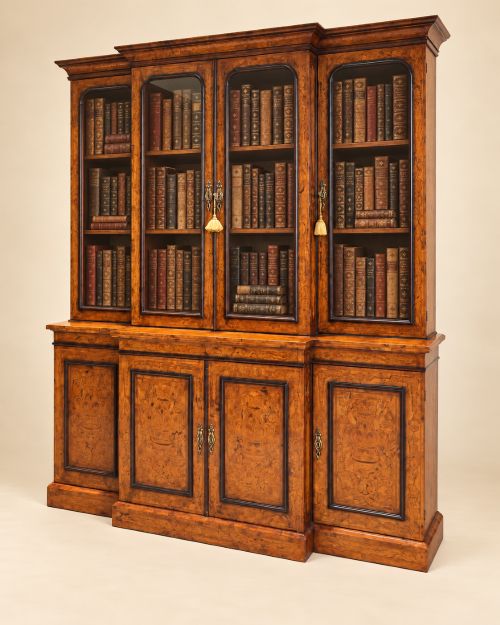
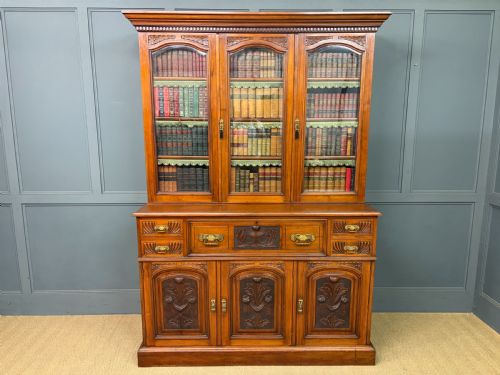
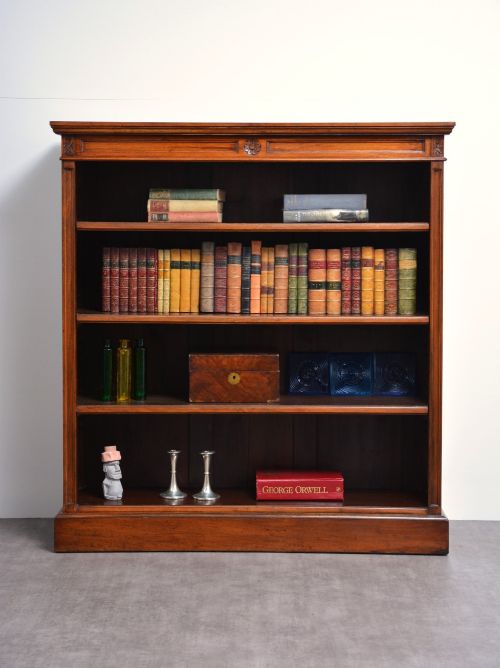
A victorian walnut display piece brings rich grain and glazed elegance into a room, offering both storage and a stage for treasured possessions.
Victorian Walnut Display
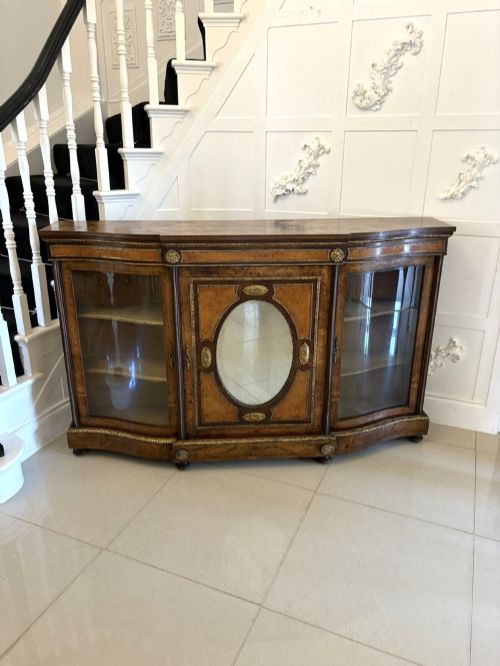
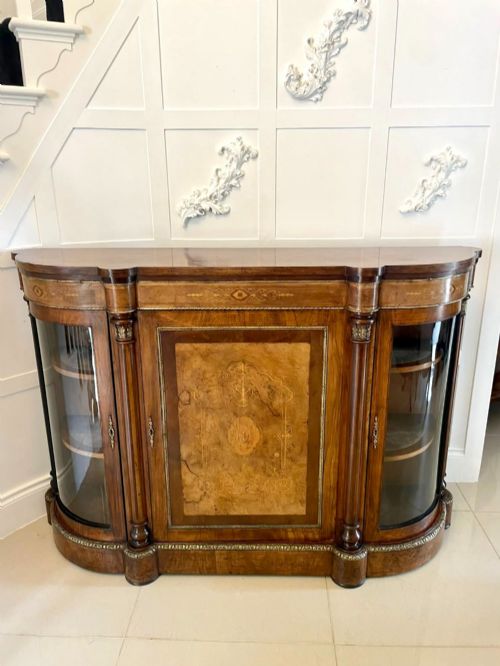
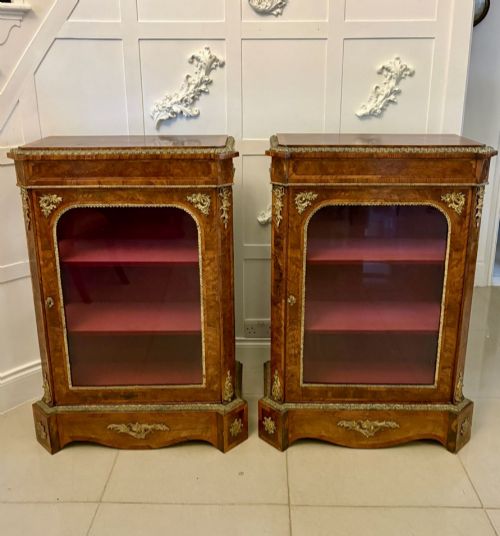
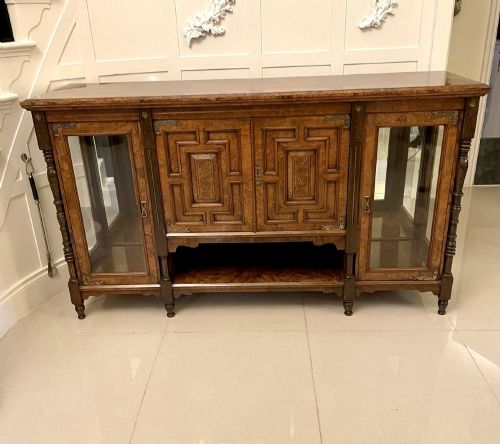
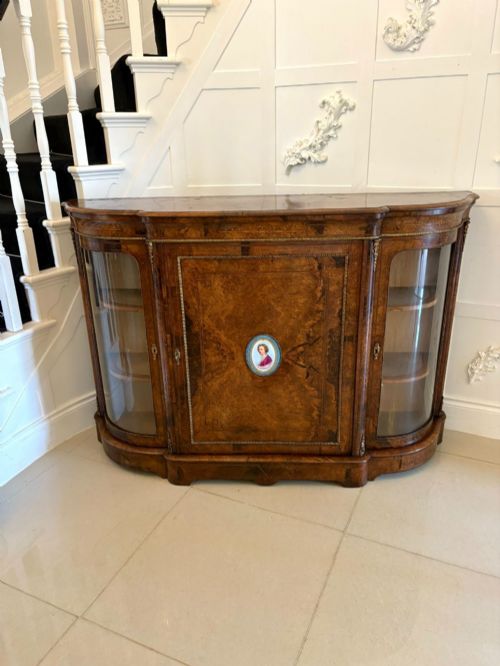
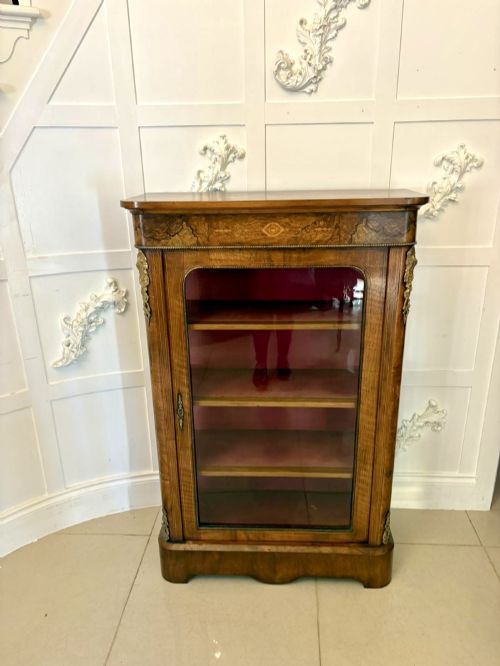
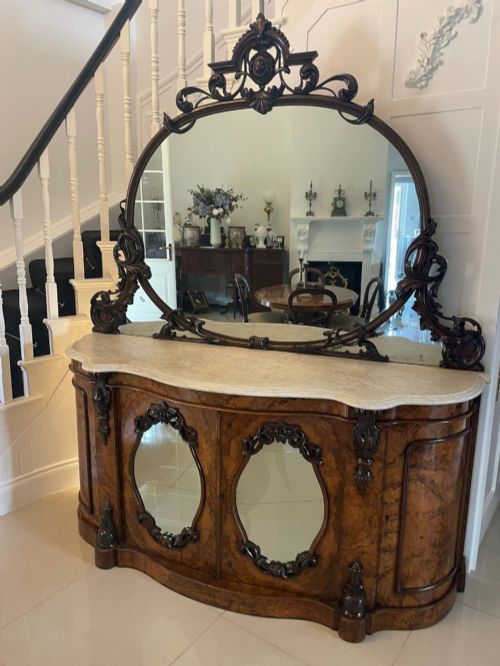
A buyer investigating a victorian walnut display encounters a rich variety of nineteenth-century forms designed for formal rooms, ranging from low credenzas and compact pier cabinets to tall glazed bookcases and tiered whatnots.
The credenza and the pier cabinet dominate the available selection, often featuring glazed doors and velvet linings tailored for showcasing porcelain and collectibles.
The selection extends to open library bookcases and decorative wall brackets, reflecting the broad nineteenth-century interest in displaying literature and objects.
Assessing craftsmanship
The distinction between standard production and top-tier pieces rests on the complexity of the marquetry, the symmetry of the burr walnut grain, and the weight of the bronze or ormolu mounts.
Master cabinetmakers ensured precision in the fit of curved serpentine glass doors and integrated maker signatures, such as stamps from established workshops.
Secondary timbers, the crispness of hand-carved walnut details, and the quality of internal mirror glass further separate ordinary items from exceptional examples.
One unusual survivor carries historical advertising for champagne producers Moet and Chandon right inside the display case.
Gabriel Viardot·Gillows
The Victorian Walnut Display Glossary
- Burr walnut
- A figured veneer sliced from the knotty growths of the walnut tree, prized for its swirling grain patterns. It provides a decorative surface on cabinet doors and tabletops.
- Credenza
- A low, freestanding display cabinet or sideboard, typically featuring a central glazed door flanked by curved side cabinets. It serves as a formal drawing-room centerpiece.
- Pier cabinet
- A narrow, glazed display cabinet designed to fit into the wall space between windows. It houses small collections behind a single glass door.
- Marquetry
- The art of applying decorative veneer pieces to a structure to form intricate pictorial patterns. Floral designs appear frequently on nineteenth-century walnut furniture.
- Ormolu
- Gilt bronze mounts cast and chased to ornament furniture corners, friezes, and door frames. It adds a metallic contrast to dark timber surfaces.
- Whatnot
- An open, multi-tiered shelving unit used for displaying ornaments and small objects. It stands on slender upright supports.
Victorian Walnut Display: Frequently Asked Questions
What rooms suit a credenza?
Drawing rooms and large dining spaces accommodate low credenzas well, utilising their surface and internal shelves for presentation.
Their elongated horizontal proportions allow them to sit effectively beneath large mirrors or paintings without dominating the vertical wall space.
How do pier cabinets differ?
Pier cabinets are built narrow and tall to occupy specific wall sections between architectural openings.
Their single-door format and compact footprint distinguish them from wider credenzas and multi-section bookcases.
What is burr walnut?
Burr walnut is a decorative veneer derived from the knotted growths of the tree, creating intense swirling patterns.
Cabinetmakers selected these sections to cover primary display surfaces like cabinet doors and tabletops.
Are shelves usually adjustable?
Many bookcases and cabinets feature adjustable wooden shelving supported by rack-and-pinion systems or traditional wooden battens.
This adaptability allows the display of volumes and objects of varying heights within the same case.