

Victorian Wall Table
These pieces include a victorian wall table, solid consoles and ledge-fixed ledges designed to save floor space in period rooms.
Victorian Wall Table
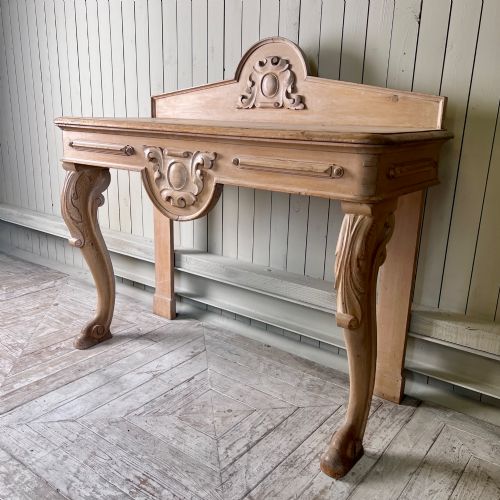
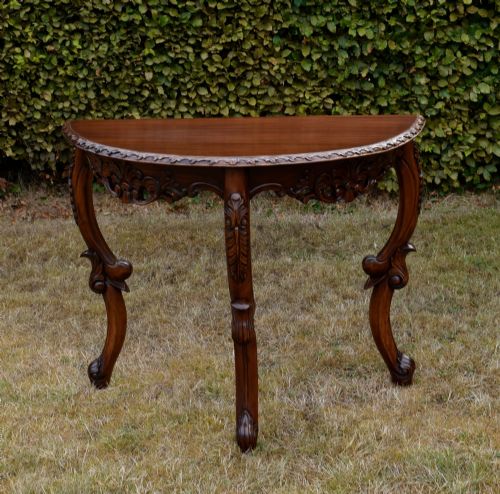
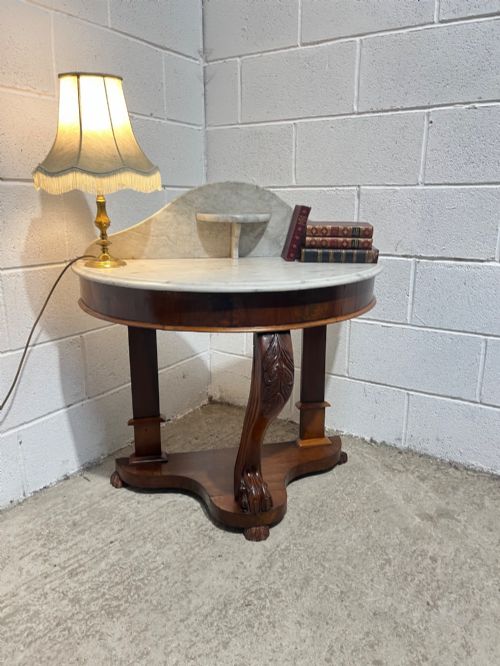
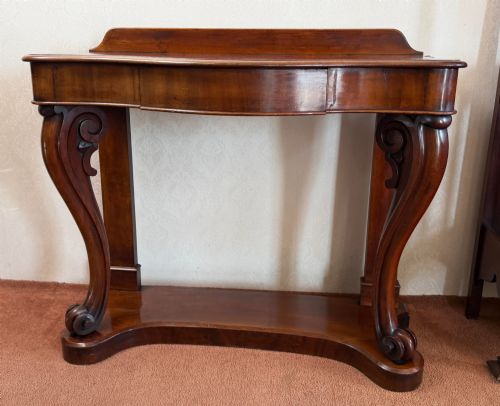
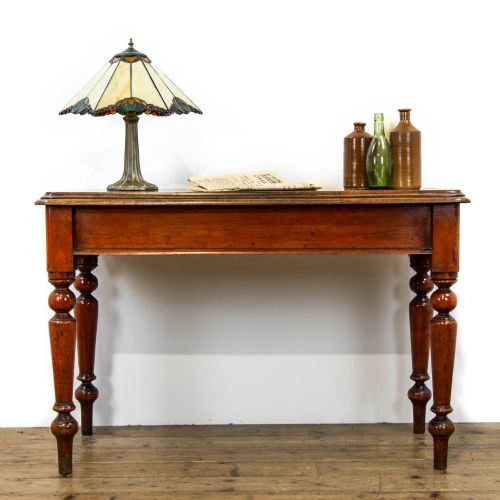
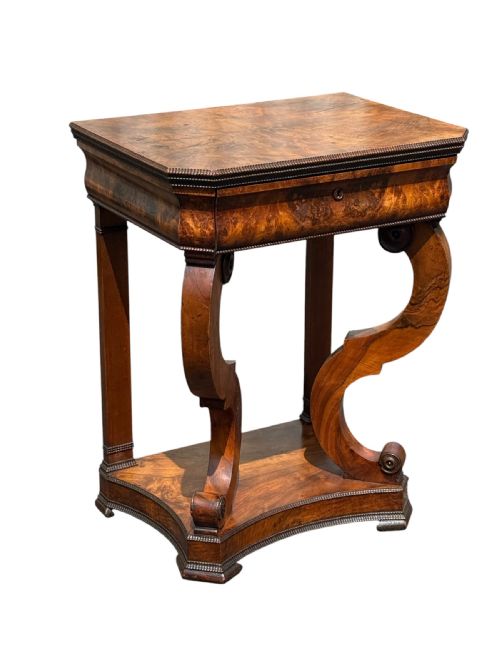
A victorian wall table serves as a slim surface anchored directly to vertical masonry or panelled rooms, functioning primarily as a console or pier support. Most examples appearing here span the nineteenth century, adopting architectural demi-lune, serpentine or rectangular profiles.
Makers designed these furniture forms to fit narrow halls, drawing rooms and alcoves where a standard four-legged table would obstruct movement. The surviving inventory balances plain timber country house pieces against elaborate carved giltwood and marble-topped variants.
How they were made
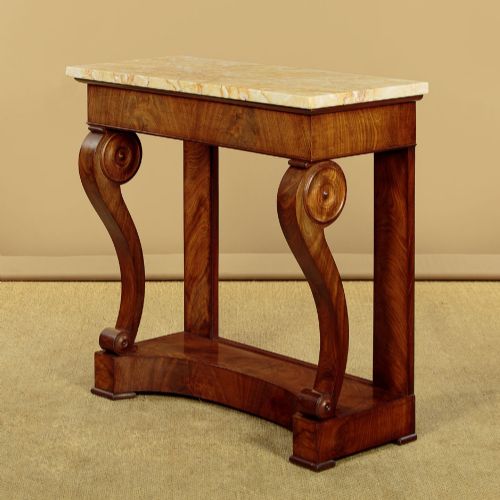
Cabinet makers utilised dense hardwoods including mahogany, walnut and oak for the structural frames, often shaping the timber into curved aprons and console brackets. Heavy stone slabs of white or veined marble frequently form the inset upper surfaces.
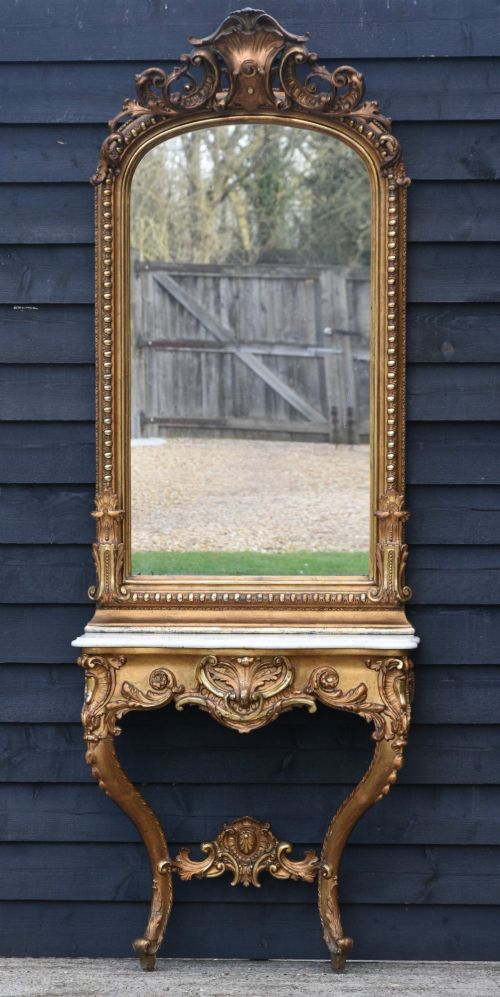
Giltwood applications involve delicate plaster or gesso layers built over carved timber frames before receiving gold leaf. Metal fixtures rely on cast brass and mixed metals secured with traditional joinery and screw fixings.
What varies in quality
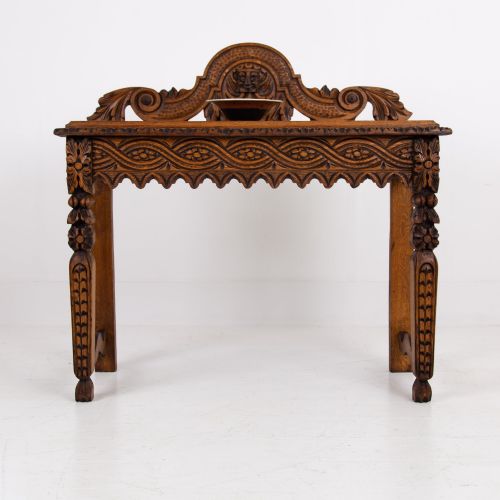
The distinction between standard utility items and high-end examples rests upon the depth of timber carving and the integrity of the marble top. Finely figured mahogany veneers and crisp, hand-chiselled foliage indicate superior workshops.
Structural rigidity defines the better specimens, where wall fixings integrate cleanly into the rear framing without auxiliary bracing. Integrated drawers with hand-cut dovetails and matching mirror frames further elevate the standing of a piece.
W.A.S. Benson·Padley Parkin & Staniforth·Frank Moss Bennett·Alexander Rosell
The Victorian Wall Table Glossary
- Console table
- A table designed to stand against a wall, frequently supported by wall brackets or two front legs rather than four.
- Demi-lune
- A half-moon shape utilised for table tops and furniture fronts to save floor space.
- Giltwood
- Timber coated with gold leaf or metallic powder applied over a prepared gesso ground.
- Serpentine
- A furniture edge or front characterised by a wavy contour with a convex centre flanked by concave curves.
Victorian Wall Table: Frequently Asked Questions
How do I secure a wall table safely?
These tables rely on secure mechanical fixings into masonry or timber studs behind the plaster to support the weight of marble tops and displayed objects.
Heavier console designs require professional wall brackets underneath the frame to ensure stability during daily use.
Where were these placed in period homes?
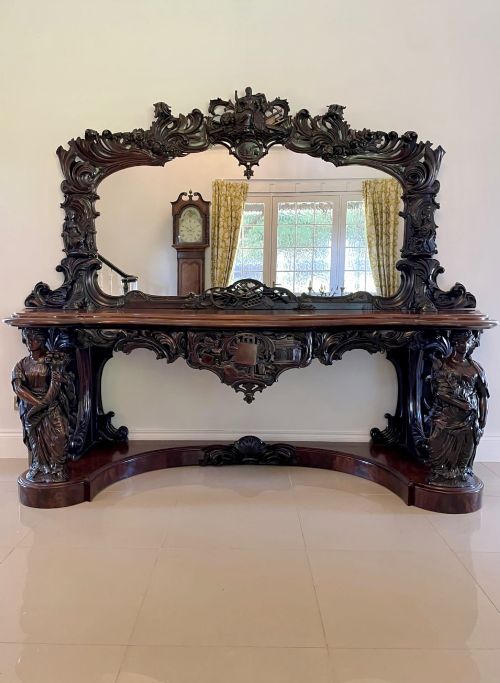
Victorian households positioned these narrow surfaces in entrance hallways, beneath pier mirrors, or along drawing room walls to display decorative items.
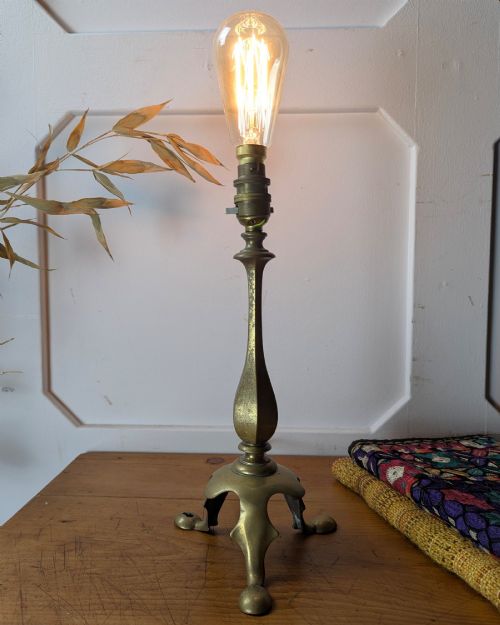
The slim profile kept walkways clear while offering a convenient surface for lamps and visiting cards.
How do I clean a marble top?
Wipe the stone surface using a soft cloth dampened with warm water and mild neutral soap, avoiding acidic cleaning agents that etch polished finishes.
Dry the marble thoroughly afterwards to prevent water spotting and maintain the original sheen.
Are these tables completely fixed to the wall?
Some variations feature wall brackets or rear fixing points, while others use front legs paired with wall anchors for stability.
Examining the underside reveals whether the piece requires permanent wall attachment or simply leans against the vertical surface.