

Victorian Vesta
When you search for a victorian vesta, you are looking at pocket match safes made for carrying safety matches safely in the nineteenth century.
Victorian Vesta
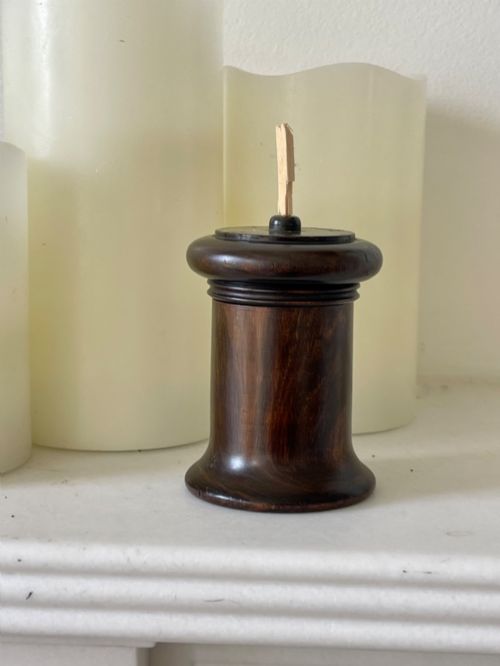
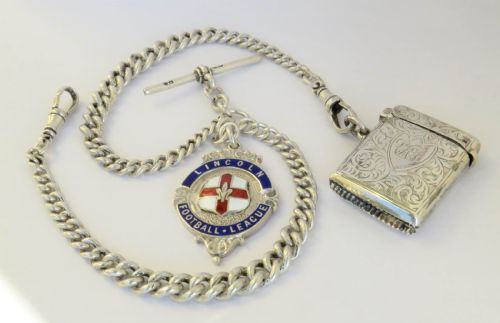
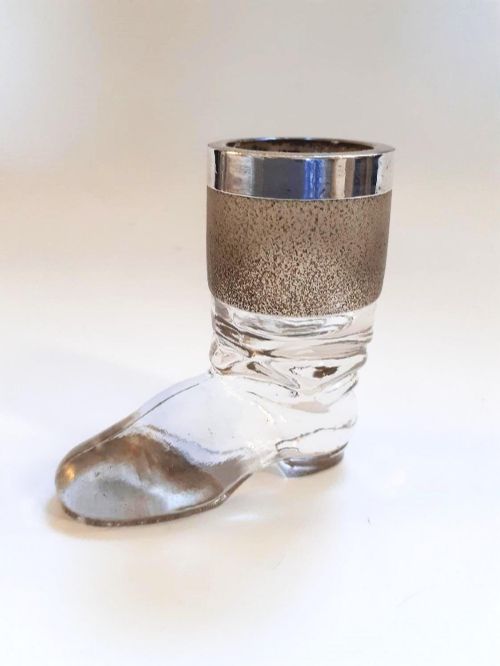
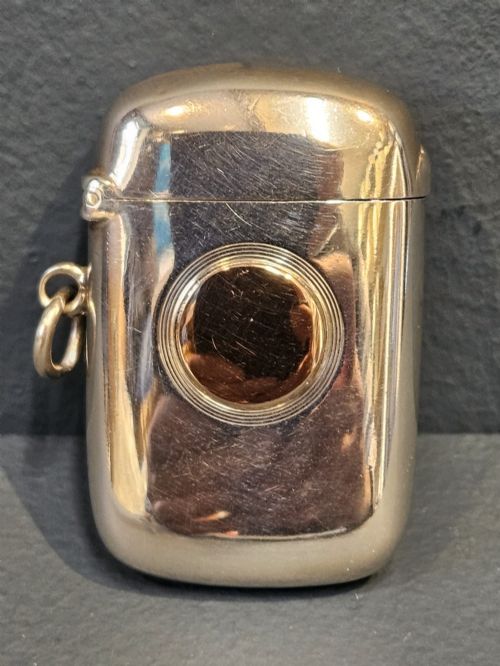
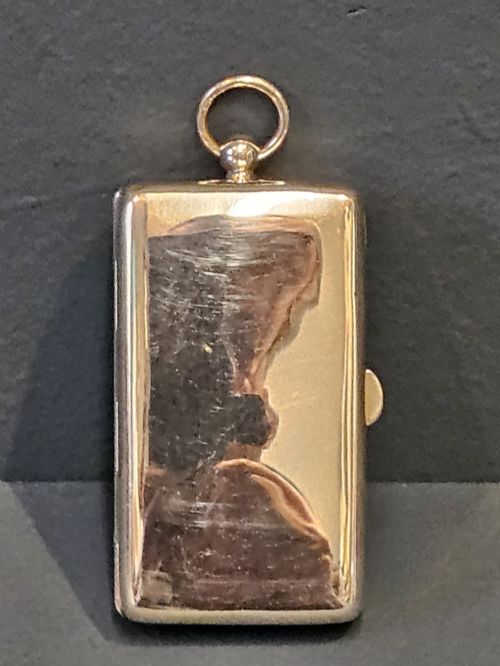
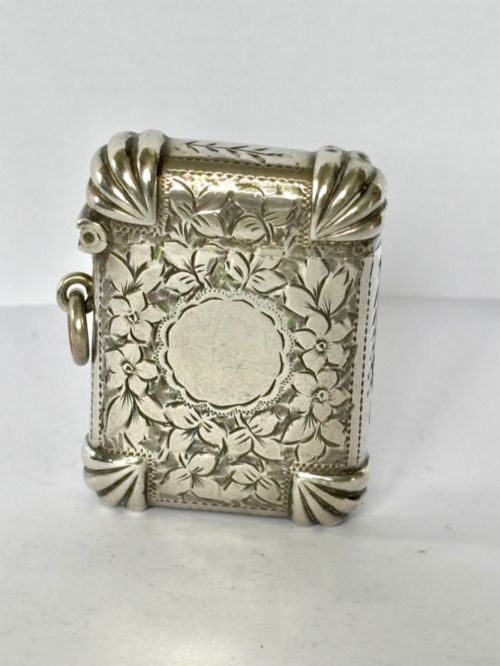
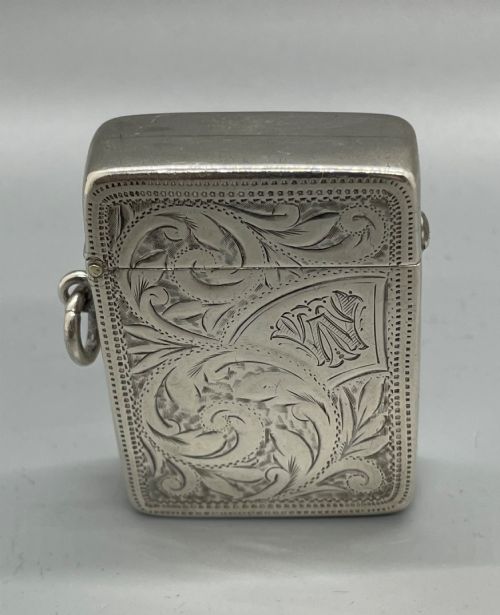
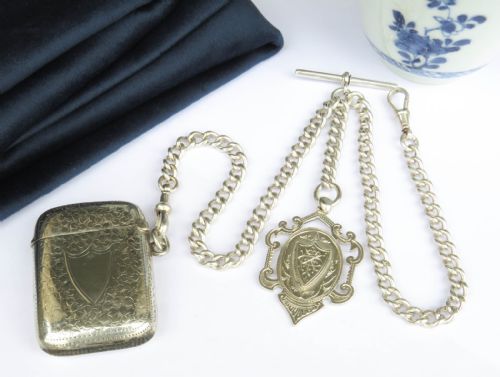
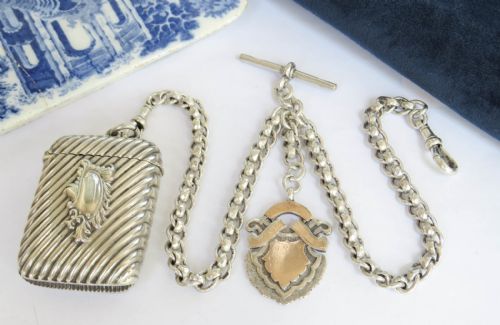
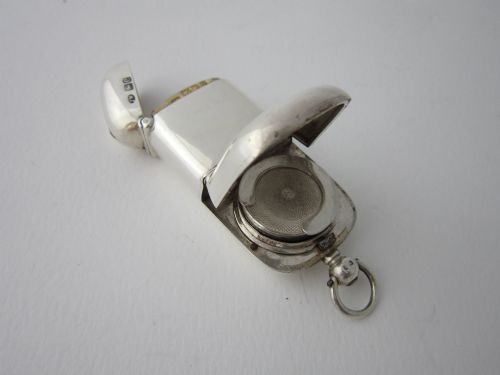
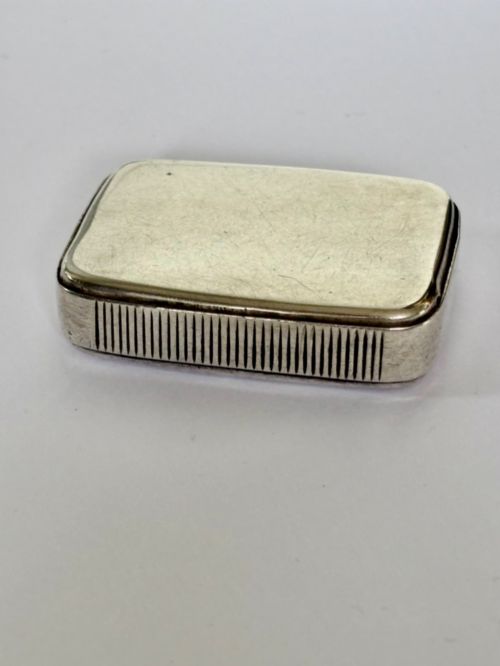
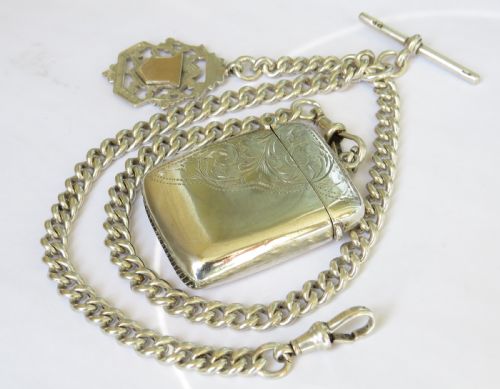
A victorian vesta is a small metal container designed to hold matches and strike them on an integrated serrated base, keeping them dry and secure in a pocket or on a watch chain. The forms span simple rectangular boxes to novelty shapes like animals, books and boots, alongside combination pieces that house sovereigns, stamps or photographs. Most examples found here originate from the nineteenth and early twentieth centuries, bearing hallmarks from major British assay offices like Birmingham and Chester.
The objects served a daily utilitarian purpose for gentlemen and ladies who smoked or needed to light gas lamps in an era before widespread electric ignition. Makers transformed these functional items into miniature sculptures using chased, engraved and enamelled decoration. While standard rectangular models appear frequently, collectors also encounter combination match holders paired with snuff boxes or pocket watch chains.
Materials and construction
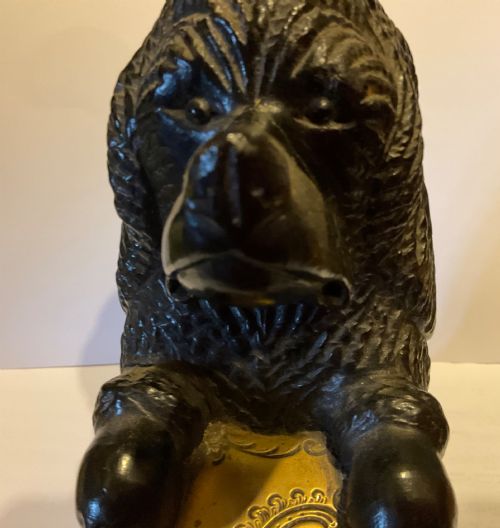
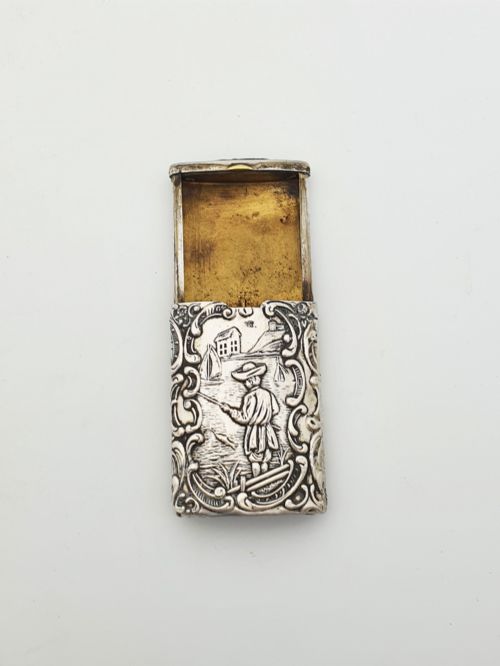
Sterling silver forms the primary material for these pocket containers, shaped through stamping, casting and hand engraving. Many pieces incorporate brass or gold highlights, while select examples utilise coloured enamel to render detailed motifs like dogs, horses and floral arrangements. Carved wood and ebonised materials also appear among match dispensers and novelty items.
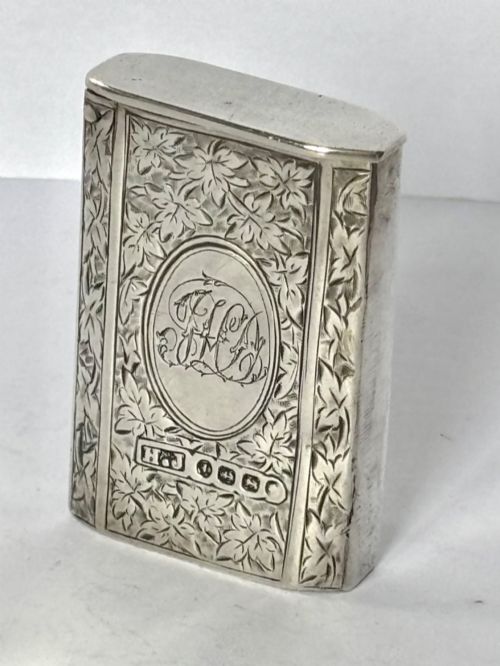
Makers utilised hinged lids fitted with internal springs to ensure the case snapped shut securely, protecting the contents from moisture. Surface decoration relied heavily on repoussé relief work, engine-turned patterns and hand-applied painted enamel. Hallmarks stamped directly into the metal provide precise records of the year of assay, the maker's mark and the town of origin.
Victorian Vesta Retail Price Guide 2026
Typical asking prices for victorian vesta among the pieces listed under this phrase on Sellingantiques today, from the lower quarter to the upper quarter. They describe what is for sale here now, not the wider market.
Listings span the Victorian and Edwardian eras, featuring sterling silver, 9ct gold, brass, carved wood and painted enamel.
What separates the grades
Quality in a victorian vesta rests upon the crispness of the casting and the depth of the hand engraving rather than mere weight of metal. Novelty shapes that depict identifiable subjects like animals or sentry boxes require superior artisanal skill compared to standard rectangular sleeves. The survival and condition of applied painted enamel or silver gilt interiors also distinguish high-tier examples from ordinary production pieces.
Mechanism precision dictates everyday utility and collector value alike. A well-made hinge operates smoothly without lateral play in the lid, and the integrated striker grooves on the base remain sharp and distinct from wear. Maker attribution to notable firms adds further distinction to the craftsmanship.
HOWARD JAMES BIRMINGHAM·EV PLEDGE & SON·Sampson Mordan & Co·A &J ZIMMERMAN·William Neale·Raphael Tuck & Sons·MINSHULL & LATIMER·William Hair Haseler
The Victorian Vesta Glossary
- Vesta
- A small pocket case designed to hold matches, named after the Roman goddess of the hearth. These containers featured a ribbed striking surface on the exterior base.
- Assay mark
- A stamp impressed into precious metal indicating the standard of purity and the official office that tested the piece. British silver items typically show a lion passant alongside town marks and date letters.
- Sovereign case
- A small round container engineered to hold British gold sovereign coins securely in the pocket. Many surviving examples are combined directly with vesta compartments.
- Repoussé
- A metalworking technique where the artisan hammers the design from the reverse side to form a raised relief on the front. This method created dimensional floral and figurative scenes.
- Silver gilt
- Sterling silver that has been coated with a thin layer of gold on its interior surfaces. This treatment prevented tarnishing from the chemical composition of matches.
Victorian Vesta: Frequently Asked Questions
What is a vesta used for?
A vesta was carried in a waistcoat pocket or attached to a watch chain to store safety matches safely. The rough surface at the bottom allowed the user to strike a match whenever a light was needed.
Beyond carrying matches, many designs doubled as sovereign holders, stamp cases or small photographic frames. They were essential everyday accessories for Victorians navigating a world reliant on gas lighting and smoking.
How do I read silver hallmarks?
British hallmarks typically include a maker's mark, a purity symbol like the lion passant for sterling, a town mark indicating the assay office, and a letter representing the specific year. These stamps provide a reliable method for dating the object.
Different assay offices used distinct symbols, such as an anchor for Birmingham or three sheaves for Chester. Comparing the date letter against official tables reveals the exact year the metal was tested and marked.
What is a novelty vesta?
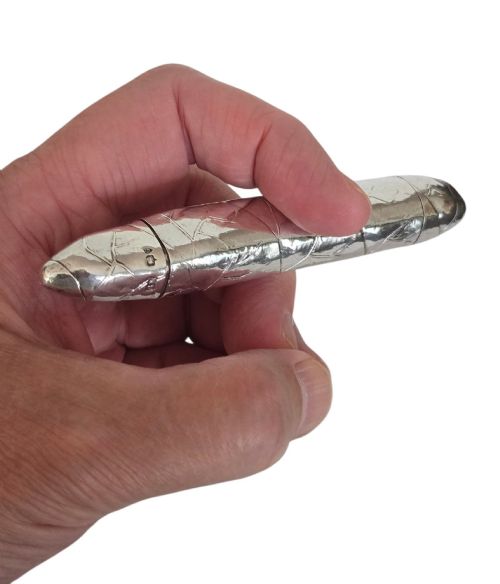
Novelty vestas are match cases shaped into playful or recognizable forms rather than standard rectangular boxes. Makers sculpted them to resemble animals, boots, books, and trick boxes that opened in unusual ways.
These pieces were conversation items reflecting Victorian humour and technical ingenuity. Because they demanded more intricate casting and hand finishing, novelty shapes are highly sought after by collectors today.
Can I still use an antique vesta?
Most antique vestas remain fully functional if the hinge and spring mechanism are intact. Modern matches can be trimmed to fit shorter compartments if necessary.
However, many collectors choose to display these pieces rather than carry them daily to preserve delicate enamel work, gilding and crisp exterior engraving from pocket wear.