
Victorian Upholstered Table
A victorian upholstered table brings tactile warmth and period character to any interior through rich timbers and soft textiles.
Victorian Upholstered Table
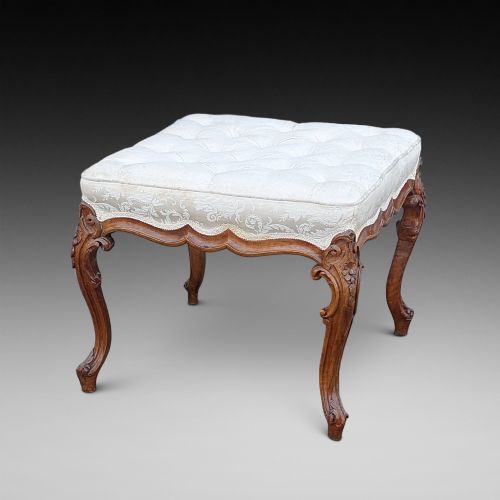
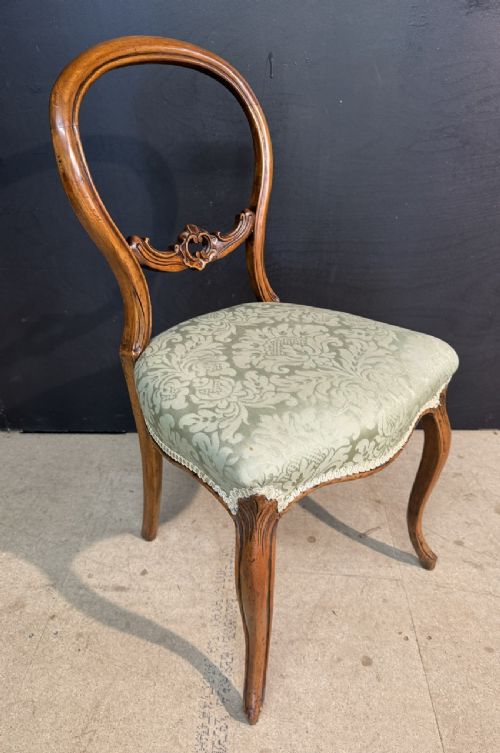
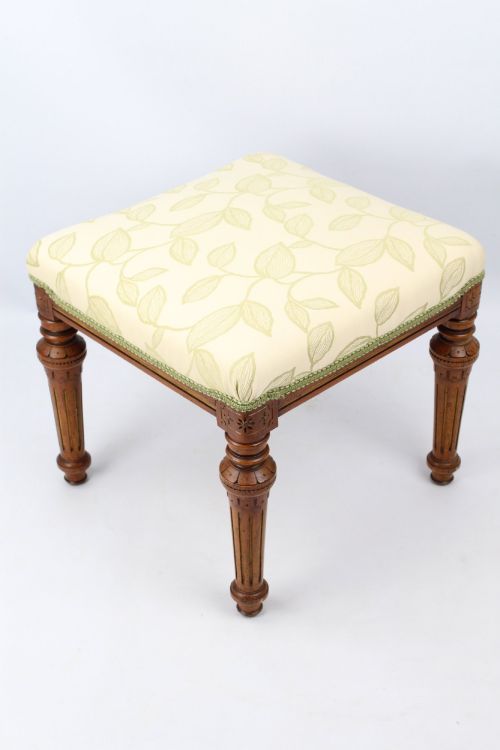
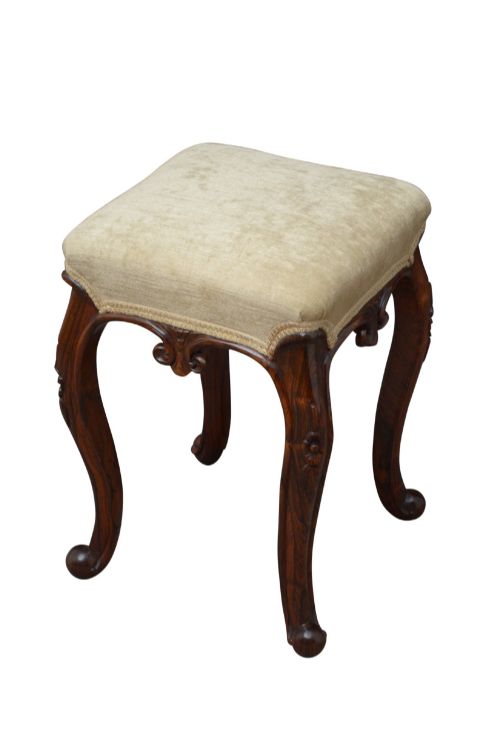
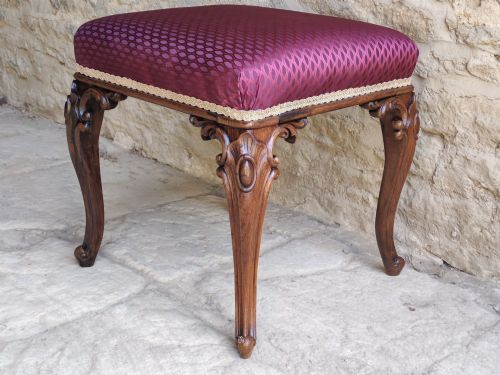
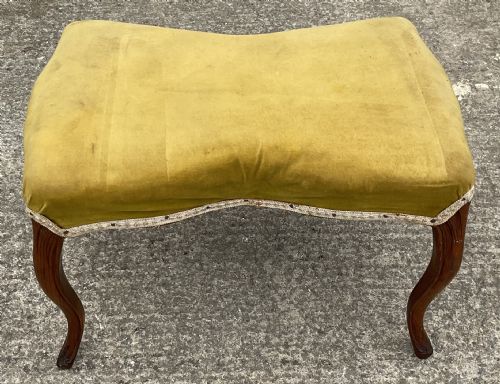
When searching for a victorian upholstered table, buyers encounter a diverse selection of nineteenth-century seating and occasional pieces designed for comfort and parlour display. The forms most frequently met include dressing stools, footstools, ottomans, centre stools, and occasional tables such as the distinctive gypsy table.
The material evidence spans the broader Victorian era alongside Regency and Napoleon III influences, capturing a period of eclectic design. Makers and craftsmen utilised substantial timbers to create sturdy frames intended to support heavy textiles, needlepoint, and velvet upholstery.
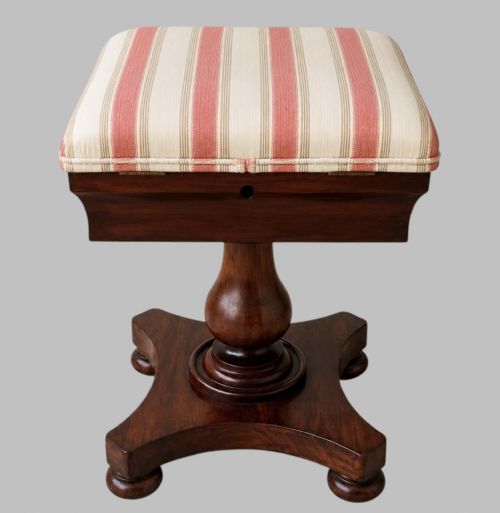
While some pieces function strictly as low seating or foot rests, others combine surfaces with soft upholstery or adjustable mechanisms like piano stools. These objects reflect the changing domestic habits of nineteenth-century households, prioritising versatile comfort in bedrooms and drawing rooms alike.
Materials and construction
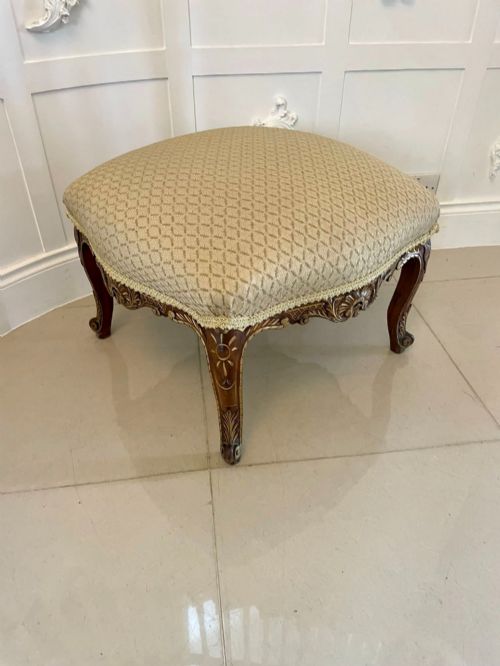
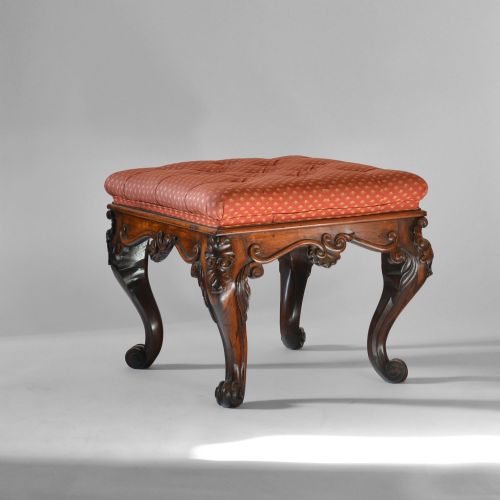
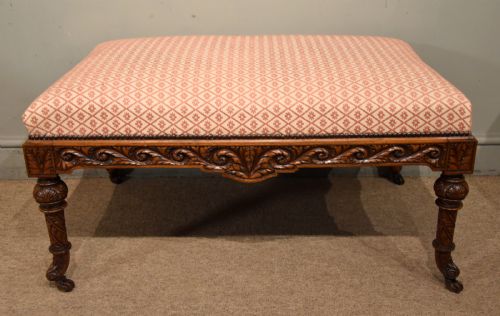
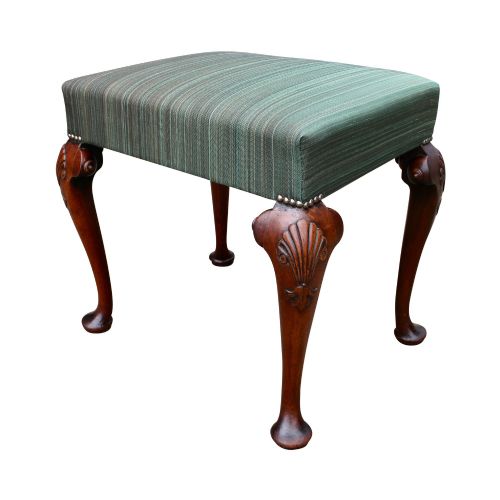
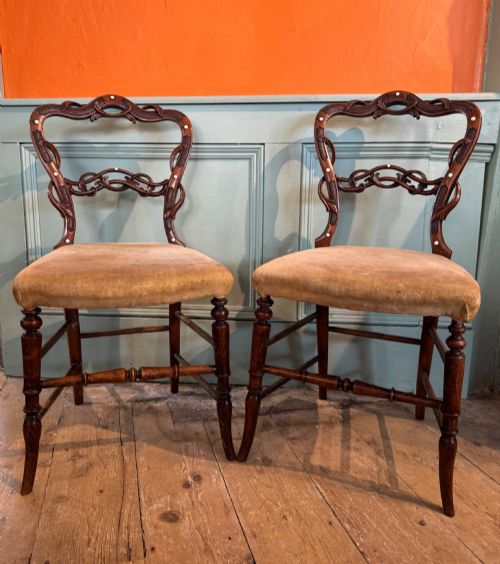
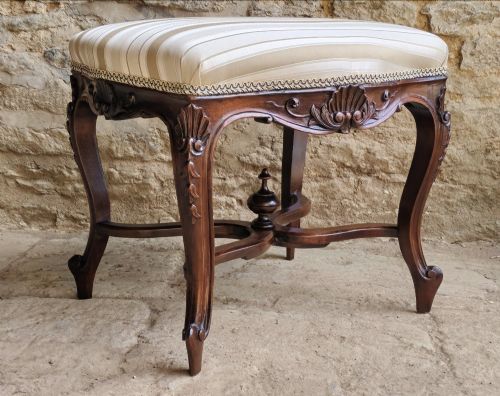
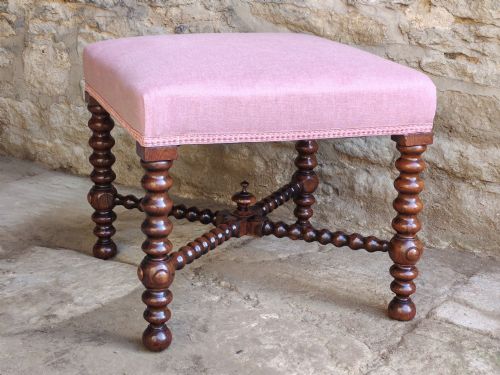
Cabinet makers constructed frames using dense hardwoods such as mahogany, walnut, rosewood, and goncalo alves, occasionally incorporating brass details or gilt finishes. These timbers provided the structural integrity required for carved cabriole legs, scroll backs, and twisted rope supports.
Upholstery techniques involved durable textiles, velvet, fabric, and needlepoint applied over padded internal structures. Adjustability in certain piano stools and rise-and-fall seats relied on functional mechanical screws and central columns hidden beneath the textile covers.
Object forms recorded here range from dressing stools and ottomans to gypsy tables and adjustable piano stools.
Markers of distinction
The standard of carving and the selection of timber dictate the primary tier of quality among these pieces. Denser woods like rosewood and figured walnut, combined with deeply carved details like cabriole legs or scrollwork, separate ambitious workshop output from simpler utilitarian furniture.
The integrity of the frame and the preservation or sympathetic renewal of traditional upholstery materials influence overall desirability. Pieces retaining original adjustable mechanisms or sophisticated textile coverings demonstrate the higher standards observed by nineteenth-century cabinet makers.
John Taylor Edinburgh·Whytock and Reid·James Shoolbred and Co
The Victorian Upholstered Table Glossary
- Cabriole leg
- A furniture leg that curves outward at the knee and tapers inward toward the foot, often ending in a scroll or pad. This stylistic element appears frequently on Victorian seating and tables.
- Gypsy table
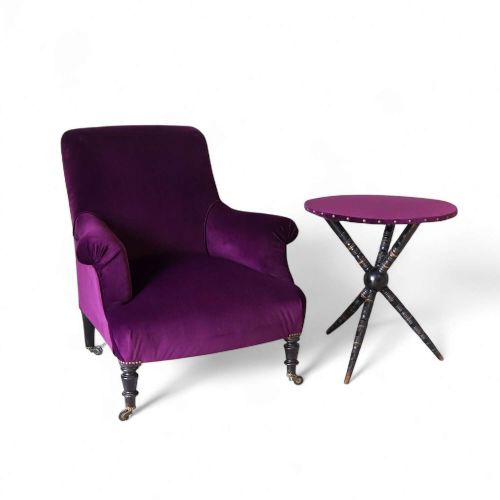
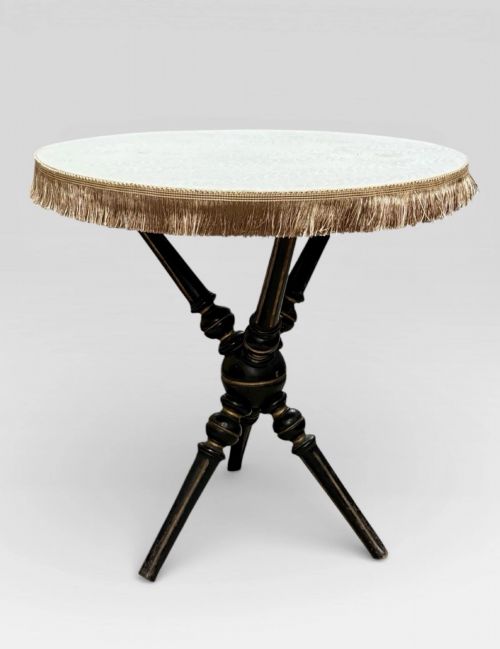
- A lightweight occasional table featuring three wooden legs, traditionally draped with a fabric cloth or velvet cover. These pieces gained popularity during the Aesthetic Movement.
- Ottoman
- A low, upholstered seat or footstool without a back or arms, designed for domestic lounging. Larger examples double as coffee tables or heavy footrests.
- Rise and fall
- A mechanical adjustment system allowing the seat height of a stool to be altered by turning a screw mechanism. This feature is common in piano and music stools.
- Needlepoint
- Hand-stitched canvas work utilised for durable and decorative furniture upholstery. It provides a textured surface characteristic of nineteenth-century textile arts.
Victorian Upholstered Table: Frequently Asked Questions
What is a gypsy table?
A gypsy table is a small occasional table supported by three slender legs, historically draped with a textile cover such as velvet. These versatile pieces emerged during the Aesthetic Movement.
They served as decorative accents in Victorian parlours, holding small ornaments, cards, or reading materials without occupying excessive floor space.
How were piano stools used?
Piano stools provided adjustable seating for musicians practicing or performing in nineteenth-century drawing rooms. Many featured mechanical screw mechanisms to alter height.
Their upholstered tops ensured comfort during extended periods of play while matching the surrounding cabinet furniture in wood tone and style.
What distinguishes an ottoman from a footstool?
Ottomons generally offer a larger upholstered surface area intended to support feet or serve as low seating. Footstools tend to be more compact.
Both forms utilise dense timbers like mahogany or walnut for their visible frames, concealed beneath buttoned leather, velvet, or needlepoint upholstery.
How do I identify a Victorian piece?
Victorian furniture is characterised by specific timber choices such as walnut, rosewood, and mahogany, alongside revival styles spanning Rococo, Queen Anne, and the Aesthetic Movement. Construction methods often rely on solid timber frames and hand-carved details.
Examining the underside, joinery, and textile types helps confirm nineteenth-century origin and manufacturing techniques.