
Victorian Upholstered Easy Chairs
Victorian upholstered easy chairs combine generous proportions with deep padding, offering comfortable seating shaped by nineteenth-century upholstery traditions.
Victorian Upholstered Easy Chairs
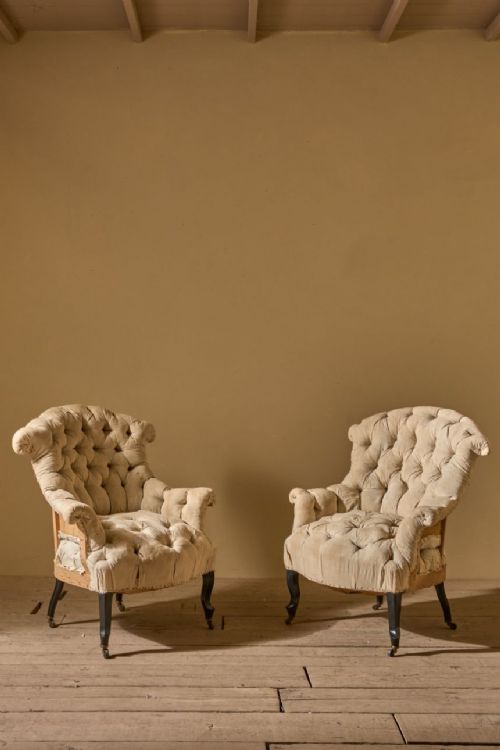
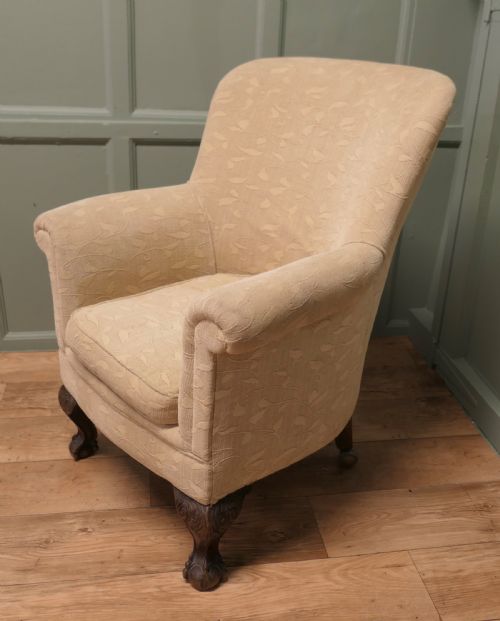
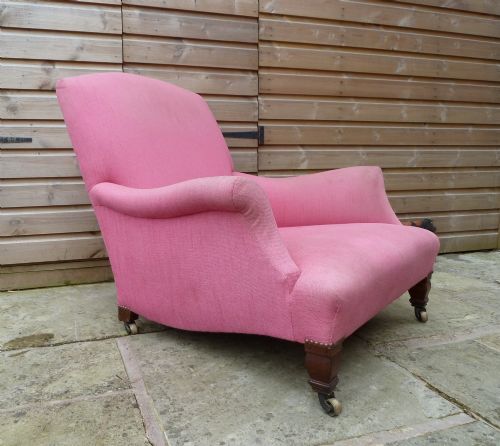
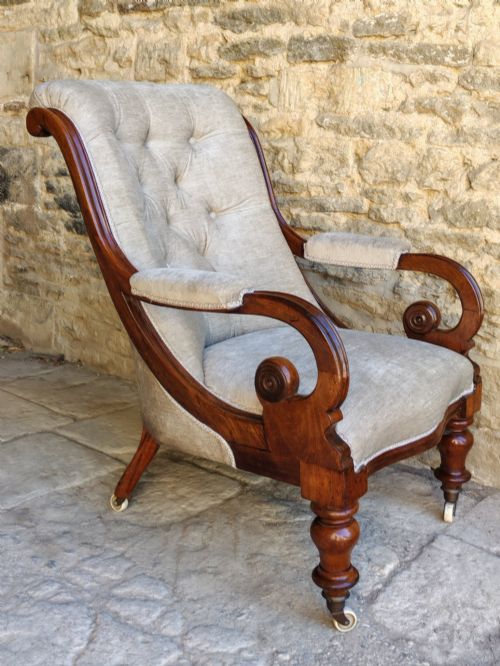
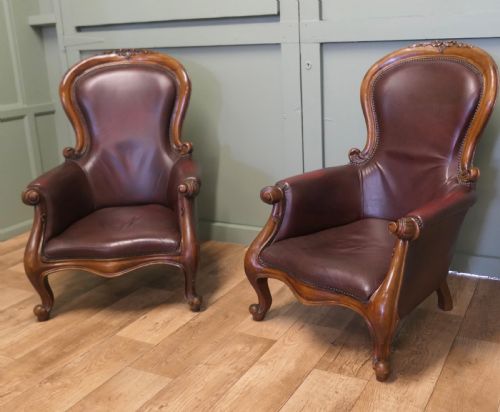
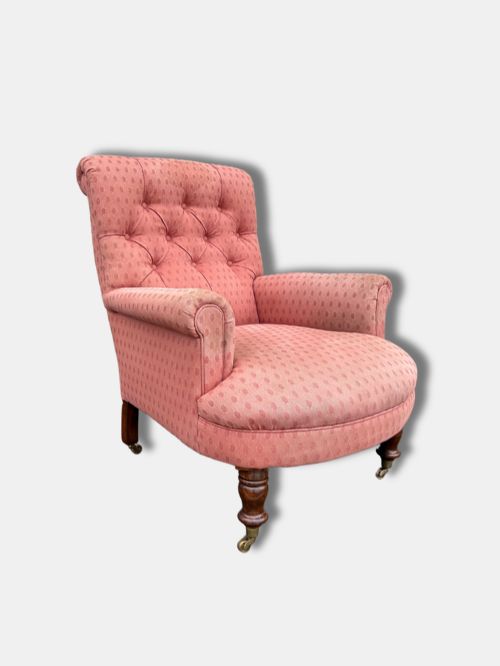
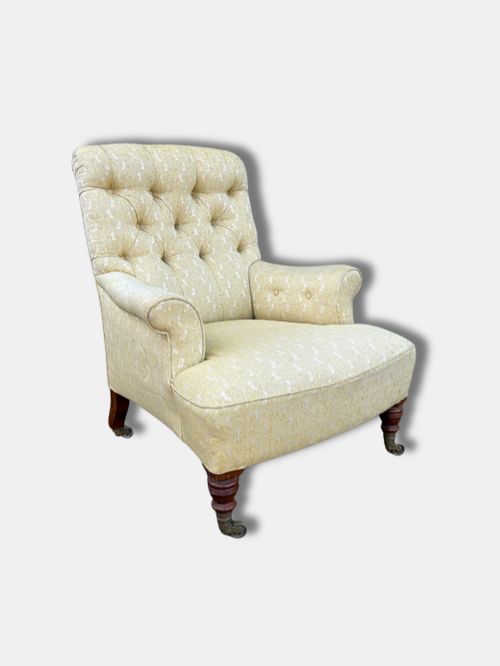
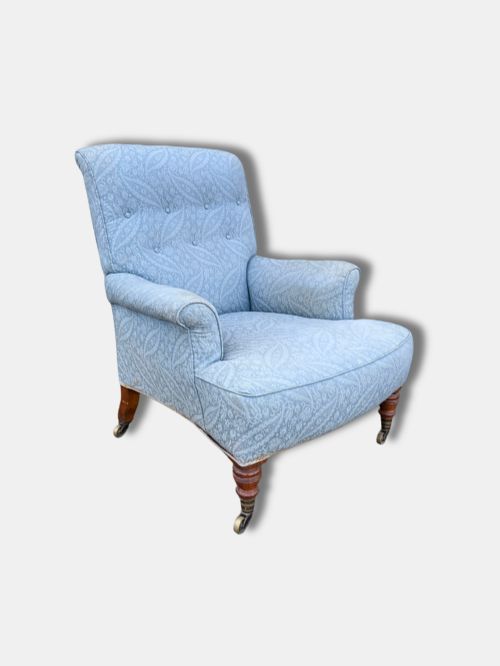
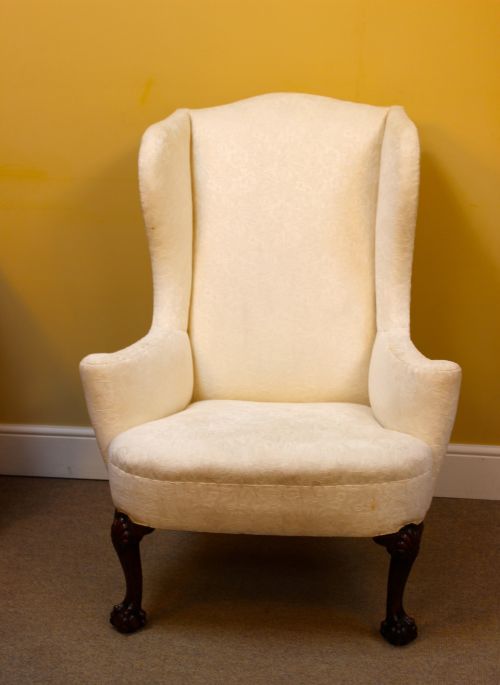
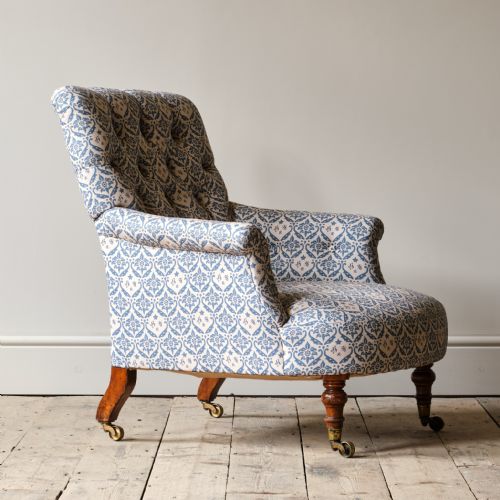
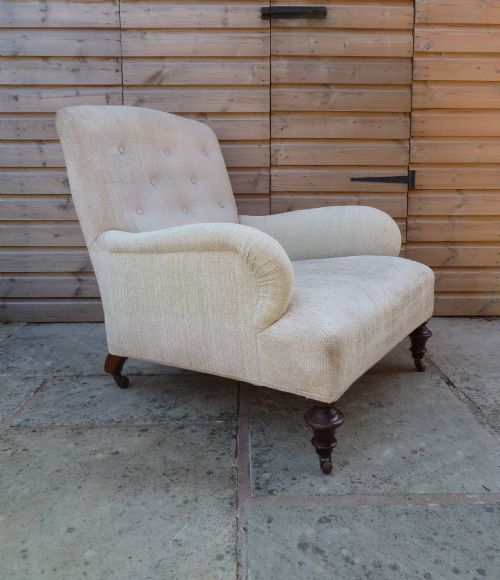
Victorian upholstered easy chairs encompass nineteenth-century seating forms designed primarily for comfort, including armchairs, wingback chairs, slipper chairs, and library chairs. These pieces originate from the 1850s, 1860s, 1880s, 1890s, and 1900, alongside revivals and related styles like William IV, Queen Anne Revival, and French Napoleon III.
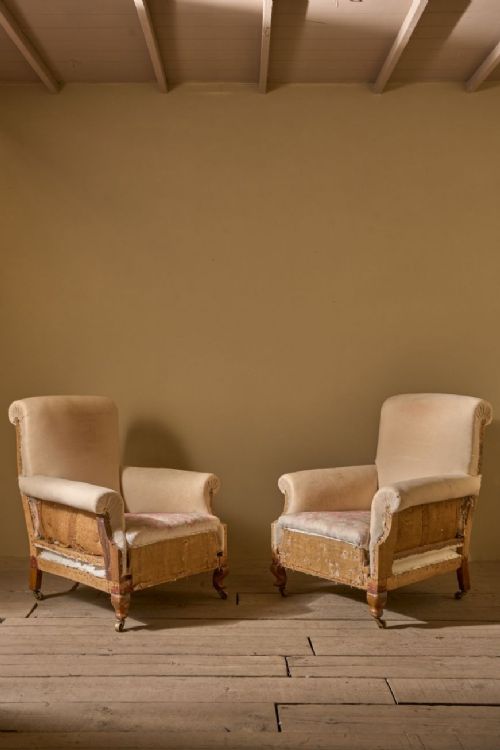
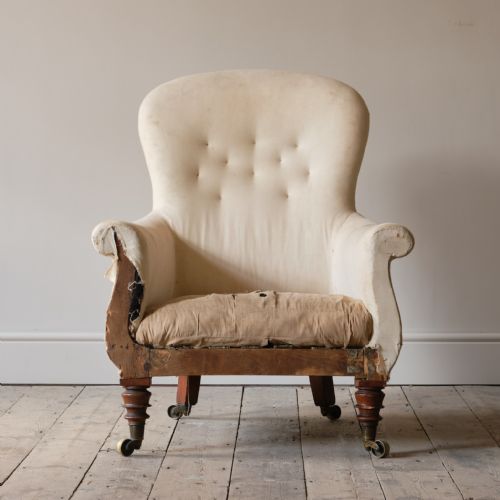
Buyers frequently encounter examples associated with prominent nineteenth-century makers and workshops, notably Howard and Sons, Gillows, Hampton and Sons, and Mellier and Co. Many items appear in specific covers such as calico, velvet, leather, or plain fabric, ready for final interior placement or bespoke recovering.
Construction and Materials
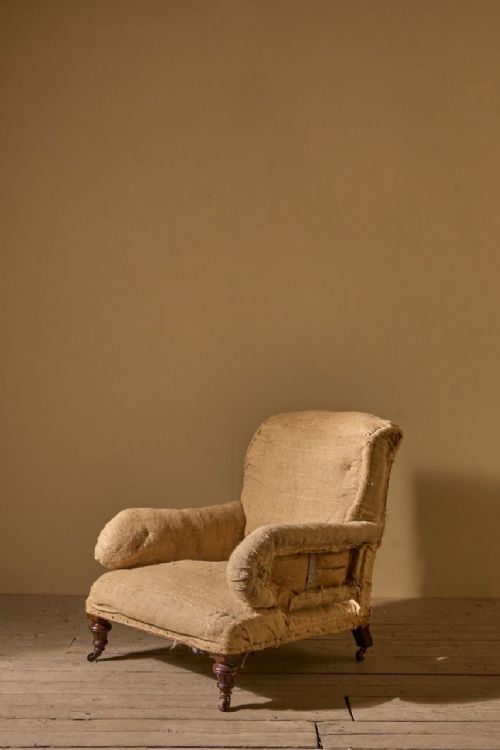
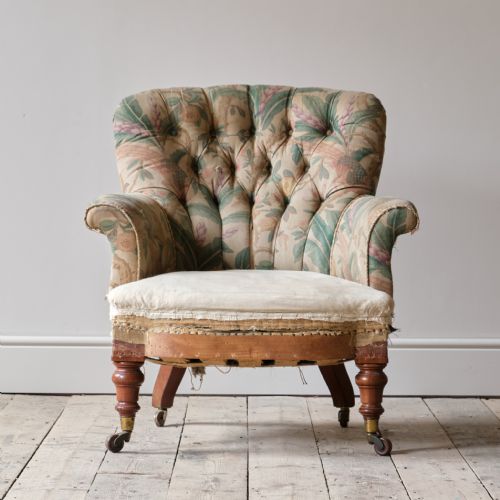
Frames rely on sturdy timbers such as mahogany, walnut, oak, and general wood, providing structural support beneath the heavy padding. Internal stuffing utilises traditional materials like hessian and calico to build up the sprung and stuffed forms.
Listings feature nineteenth-century materials including brass, mahogany, walnut, velvet, leather, hessian, and calico across multiple armchair forms.
Quality and Distinction
The distinction between standard production and fine workshop attribution rests in the precision of the frame timber and the integrity of the internal stuffing. Pieces bearing maker stamps or attribution to firms like Howard and Sons or Gillows demonstrate superior cabinetmaking and upholstery standards.
Proportion and silhouette dictate visual success, ranging from diminutive reading chairs to oversized library armchairs. The choice of secondary woods and the retention of original castors further distinguish higher-tier examples.
Howard and Sons·Gillows·Hampton and Sons·Mellier and Co·SF Cullen·Shoolbred
The Victorian Upholstered Easy Chairs Glossary
- Calico
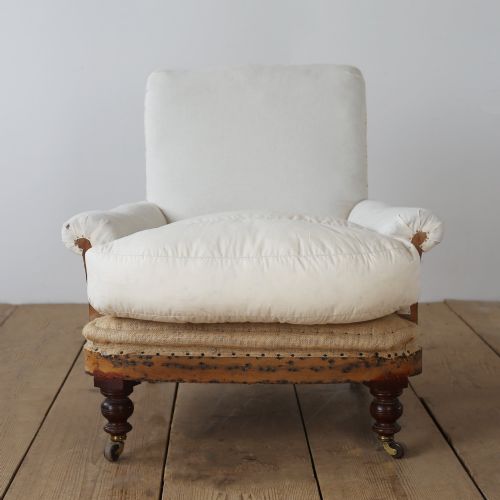
- A plain-woven cotton fabric often used as an under-upholstery layer or as a temporary outer covering on antique seating. Many nineteenth-century chairs are sold in this plain material so buyers can apply their own top fabric.
- Hessian
- A coarse woven fabric made from jute fibres, traditionally employed inside upholstered furniture to contain stuffing and support the internal springs.
- Spoon back
- An upholstered chair back shaped in a concave oval contour resembling the bowl of a spoon. This silhouette became popular during the mid-nineteenth century.
- Wingback
- An armchair featuring side panels or wings attached to the armrests, designed originally to deflect draughts and retain fireplace heat. The evidence includes nineteenth-century mahogany and wing arm chair variants.
- Castor
- A small wheel fitted to the base of furniture legs to permit easy movement across floor surfaces. Brass is a common material for these fittings on nineteenth-century seating.
Victorian Upholstered Easy Chairs: Frequently Asked Questions
Why are some chairs sold in calico?
Upholstering a frame in calico provides a clean, neutral foundation layer that holds the internal stuffing and springs securely in place. This allows buyers to select and apply their own decorative top fabric.
It also lets the underlying proportions and wooden frame remain clearly visible for inspection.
How do I identify a Howard and Sons chair?
Chairs in this tradition typically display generous proportions, low-slung seating, and careful attention to internal padding and sprung comfort. Genuine pieces often feature stamped markings on the wooden frame or brass castors.
Associated styles from the period also emulate these specific comfort-driven design traits.
What timber was used for the frames?
Frames were constructed using sturdy hardwoods such as mahogany and walnut, alongside oak and general structural wood. The choice of timber often depended on whether the frame remained concealed beneath upholstery or featured exposed carved elements.
Secondary woods were frequently utilised for internal frame components.
Are these chairs suitable for daily use?
Their robust nineteenth-century construction and thick internal padding make them well-suited for everyday seating. Many retain their original sprung systems or have been restuffed for modern comfort.
Their varied sizes, from diminutive to oversized library formats, fit different domestic spaces.