



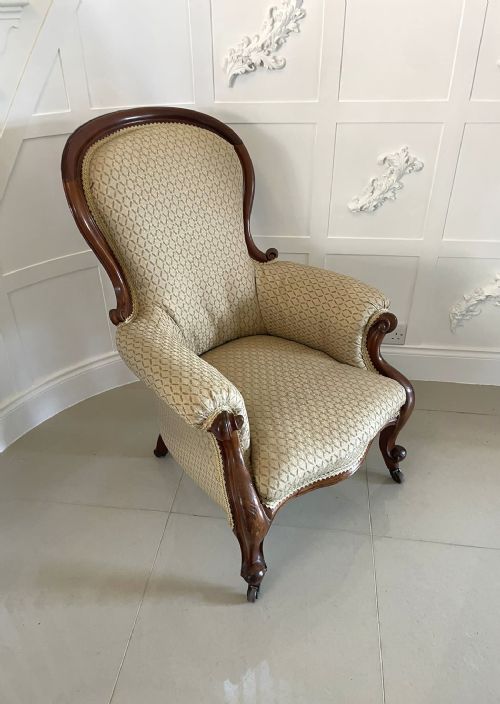


Spoon Back Easy Chairs
Spoon back easy chairs offer deep-sprung comfort wrapped in the curved timber frames that define mid-Victorian seating.
Spoon Back Easy Chairs
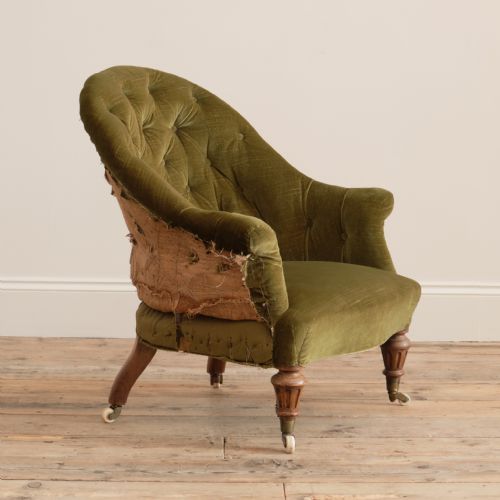
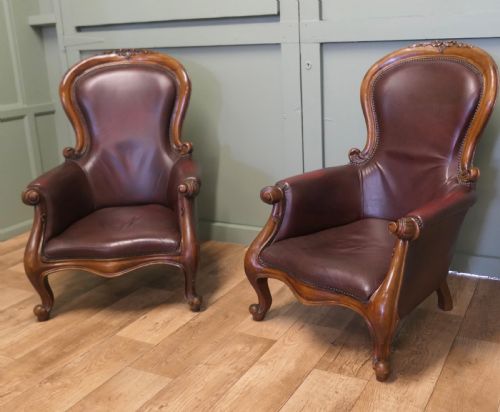
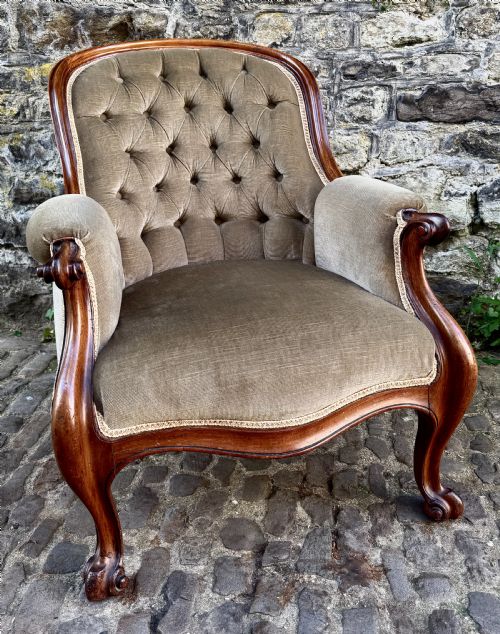
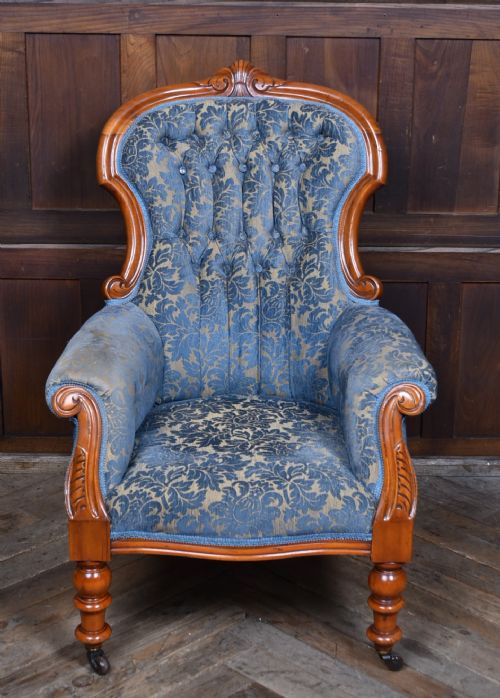
Spoon back easy chairs are upholstered armchairs designed with a concave, oval wooden backrest resembling the bowl of a spoon, providing ergonomic support for the spine. You will most frequently encounter Victorian examples in mahogany or walnut, spanning the 1850s to the 1860s, alongside later Victorian revival pieces.
The selection ranges from low fireside chairs and open armchairs to gentleman's armchairs fitted with scroll arms and library chairs. Frames are constructed from timber such as mahogany and walnut, while upholstery materials vary from leather and velvet to standard fabric.
Regional and stylistic variations include French nineteenth-century forms and pieces exhibiting Grand Regency influences, as well as pairs of armchairs designed for matching reception spaces. Dating stretches from early Victorian origins through to twentieth-century revivals.
How They Were Made
Timbers like mahogany and walnut are hand-carved to form the characteristic curved wooden frames, utilising exposed grain and polished surfaces to define the silhouette of each spoon back easy chair. Brass components and iron frameworks occasionally provide structural reinforcement and functional hardware.
Upholstery techniques involve securing velvet, leather, or woven fabric over deep internal padding, fixed directly to the timber frames with careful tacking. Open arms and scroll armrests are shaped from solid hardwoods to match the profile of the backrest.
Spoon Back Easy Chairs Retail Price Guide 2026
Typical asking prices for spoon back easy chairs among the pieces listed under this phrase on Sellingantiques today, from the lower quarter to the upper quarter. They describe what is for sale here now, not the wider market.
Victorian sitters appreciated lumbar support so much they turned dining spoons into furniture.
What Varies in Quality
Quality rests in the fluidity of the timber carving around the spoon back and the choice of primary wood, with deeply figured walnut and dense mahogany sitting at the upper end of the scale. Superior examples display balanced proportions in the scroll arms and refined turning on the front legs.
The choice and execution of upholstery materials also distinguish the pieces, where heavy-grade leather, rich velvet, or traditional fabric complement the architectural integrity of the frame rather than masking structural compromises.
The Spoon Back Easy Chairs Glossary
- Spoon back
- An upholstered chair back shaped with a concave, oval wooden rim resembling a spoon. This design emerged prominently during the Victorian period to fit the contours of the human spine.
- Gentleman's armchair
- A larger upholstered seat typically featuring padded arms and a robust timber frame designed for male comfort. These chairs often incorporate scroll arms and generous proportions.
- Open arm chair
- A seating form with unpadded wooden armrests supported by vertical posts. The exposed timber grain on the arms contrasts with the upholstered seat and back.
- Napoleon III
- A nineteenth-century French design style encompassing eclectic revivals and luxurious upholstery. Pieces from this aesthetic often emphasise comfort and ornate finishing.
- Grand Regency
- A revival style borrowing classical proportions and decorative motifs from the early nineteenth century. It appears in chair frames featuring architectural lines and disciplined woodwork.
Spoon Back Easy Chairs: Frequently Asked Questions
What is a spoon back easy chair?
A spoon back easy chair is a nineteenth-century upholstered seat featuring a concave, oval wooden backrest curved to fit the human spine.
These pieces typically date from the Victorian era and are constructed from timbers such as mahogany or walnut, often paired with low seats for domestic comfort.
How do I date a spoon back chair?
Dating relies on examining the timber species, frame construction methods, and stylistic cues such as early Victorian turnings or later revival details.
Pieces from the mid-nineteenth century frequently employ solid mahogany or walnut with hand-carved frames, while twentieth-century revivals display different internal assembly techniques.
Were these chairs used in libraries?
Certain larger examples were designated as library chairs, built with sturdy frames and comfortable padding for prolonged reading.
These chairs combined durable mahogany or walnut frameworks with supportive upholstered backrests suitable for study spaces.
What is the difference between walnut and mahogany frames?
Walnut frames tend to exhibit rich, variegated grain patterns and lighter warm tones, commonly found in mid-Victorian parlor seating.
Mahogany frames offer a denser, darker red-brown appearance that lends itself to the crisp carving seen on gentleman's armchairs and library chairs.