

Victorian Tripod Wine Table
A victorian tripod wine table offers a compact surface raised on three slender legs, combining practical household utility with nineteenth-century cabinet-making skill.
Victorian Tripod Wine Table
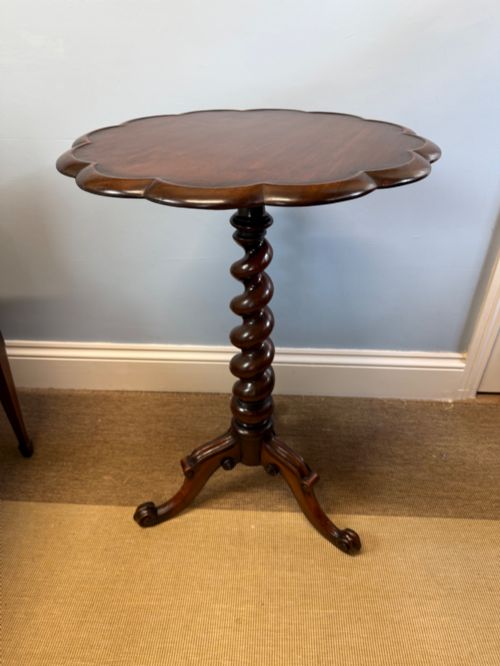
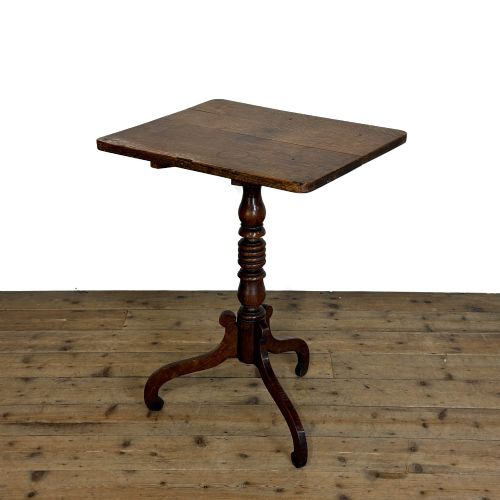
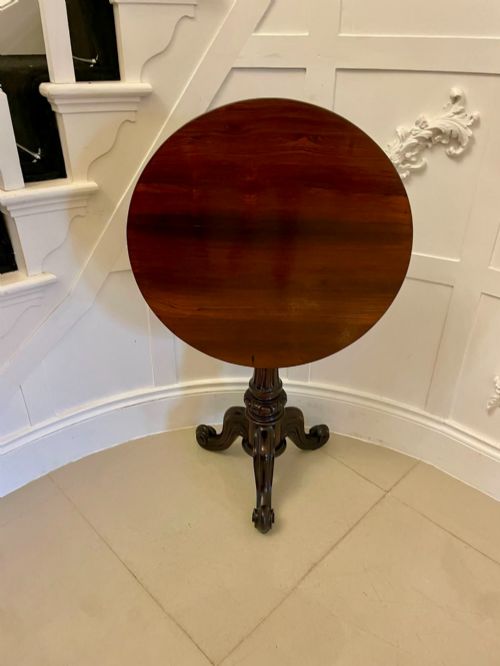
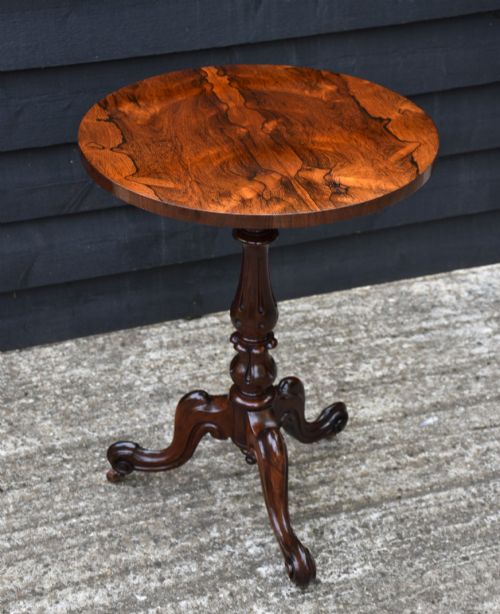
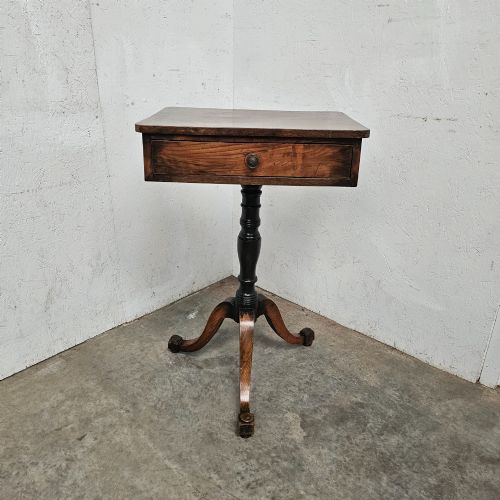
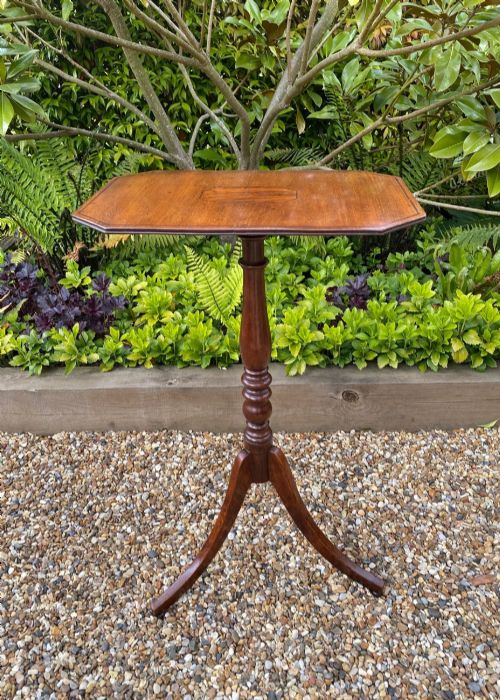
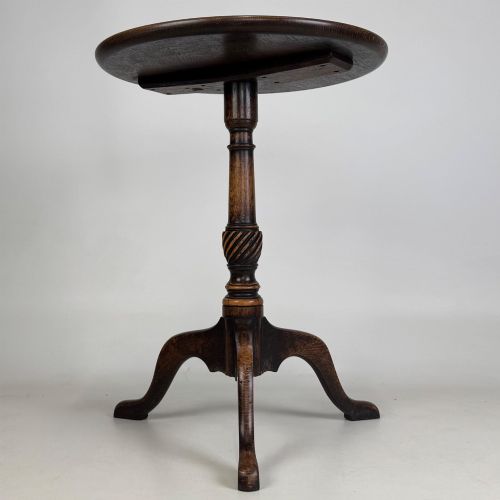
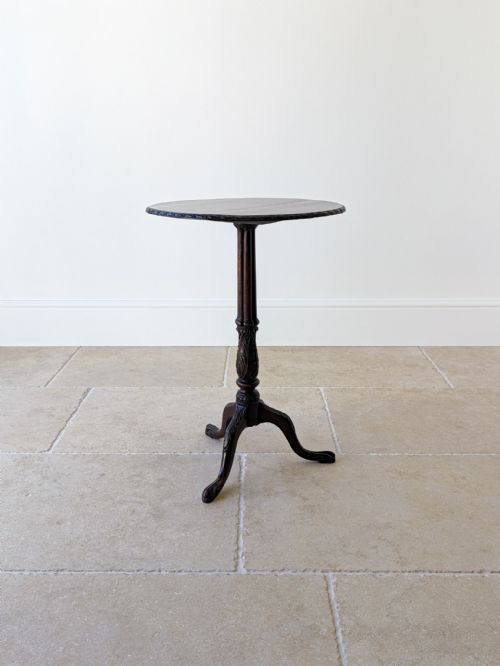
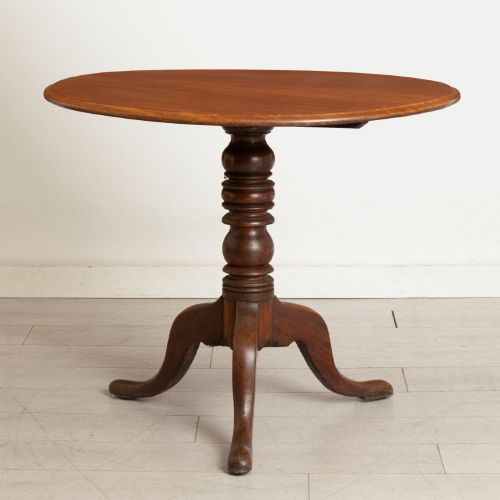
A victorian tripod wine table is a small, portable pedestal table designed to hold a glass, candle or decanter beside a chair. The form relies on a central turned pillar supported by three splayed legs, often fitted with a tilt-top mechanism to save space when not in use.
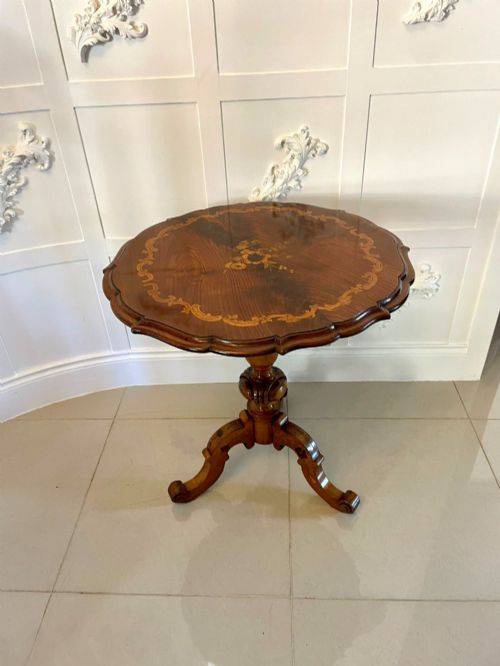
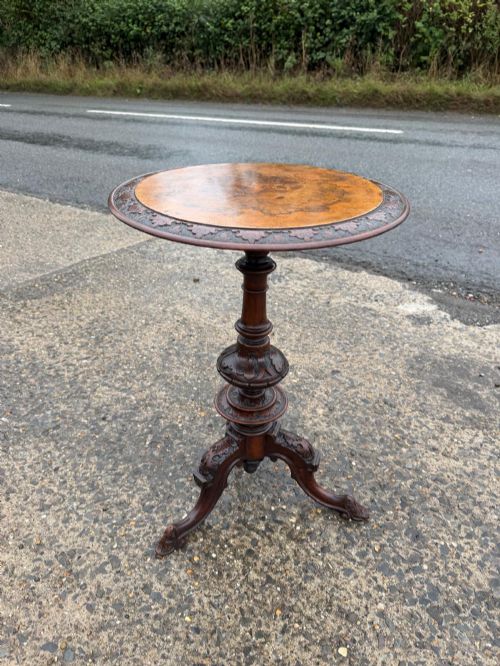
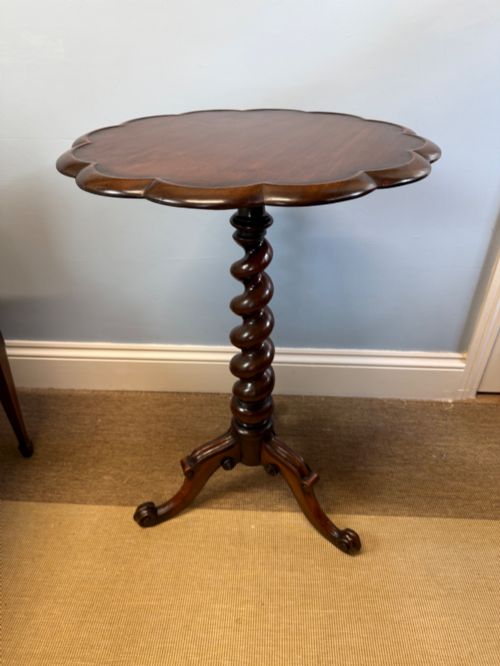
Most examples encountered on this page date from the nineteenth century, spanning eras from William IV through the high Victorian period to the end of the eighteen hundreds. Mahogany and burr walnut dominate the surviving selection, frequently shaped into circular or scalloped tops.
Materials and Construction
Cabinet-makers utilised dense hardwoods such as mahogany, rosewood and walnut, frequently selecting figured veneers like burr walnut or satinwood for the circular tops. Timber was seasoned carefully and joined using traditional methods, attaching the central pillar to the legs via dovetailed or tenoned blocks.
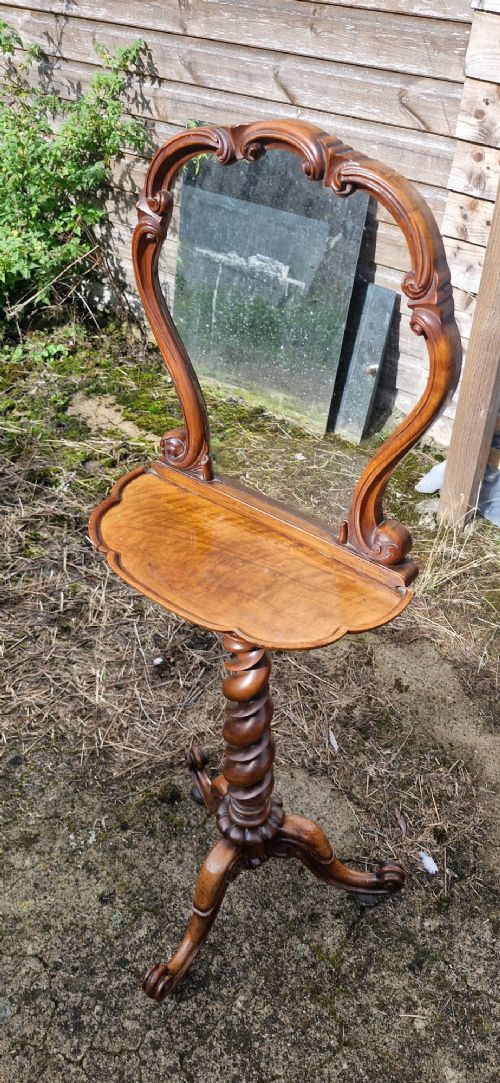
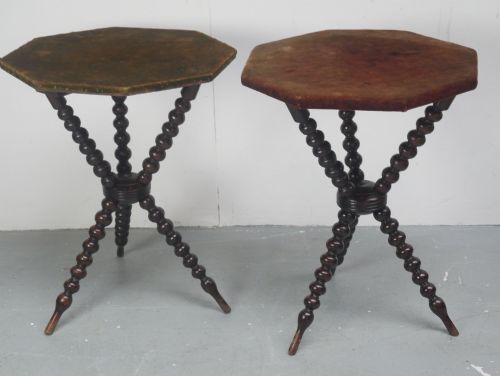
Turning lathes shaped the central pedestals into columns, barley twists or faceted shafts, while skilled joiners constructed tilting mechanisms using brass catches and wooden birdcage assemblies. Tops were occasionally decorated with marquetry inlay, boxwood stringing or carved piecrust edges.
Victorian Tripod Wine Table Retail Price Guide 2026
Typical asking prices for victorian tripod wine table among the pieces listed under this phrase on Sellingantiques today, from the lower quarter to the upper quarter. They describe what is for sale here now, not the wider market.
Assessing Craftsmanship
The distinction between ordinary utility pieces and finer examples lies in timber selection and the precision of the turning. Superior tables feature highly figured grain, crisp carving on the knees of the tripod legs, and well-fitted brass hardware that operates smoothly.
Stability and balance reveal much about original construction, as a well-made pedestal stands firmly on all three feet without rocking. The complexity of the top, from plain solid mahogany boards to intricate marquetry inlays or scalloped piecrust borders, marks the tier of the maker's workshop.
Gillows
The Victorian Tripod Wine Table Glossary
- Tilt-top
- A hinged table top that folds vertically, allowing the piece to stand flat against a wall when not in use. This clever space-saving mechanism became standard on nineteenth-century pedestal tables.
- Birdcage
- A revolving wooden framework beneath the table top that permits the surface both to rotate and to tilt. It is typically found on higher-quality nineteenth-century pedestals.
- Piecrust edge
- A decorative raised rim carved into a circular wooden table top with undulating curves resembling pastry work. This technique requires considerable skill from the woodcarver.
- Marquetry
- The art of applying decorative veneer pieces in various woods to create pictorial or geometric patterns on a surface. It appears frequently on burr walnut table tops.
- Tripod base
- A support structure consisting of three curved legs radiating from a central pillar. The design ensures stability on uneven domestic flooring.
Victorian Tripod Wine Table: Frequently Asked Questions
What was a tripod wine table used for?
These small tables served as movable surfaces in nineteenth-century sitting rooms for holding wine glasses, decanters or reading lamps. Their light weight allowed servants or family members to place them easily beside chairs or sofas.
Because they occupied minimal floor space, they became essential items for entertaining during the Victorian era. Many versions featured tilting tops so they could be stored against walls when the room was cleared.
How do I identify a Victorian wine table?
Victorian examples typically display characteristic nineteenth-century timber choices such as richly figured mahogany, burr walnut or rosewood. The central pillars often feature turned columns, barley twists or carved tripod leg supports.
Examining the underside reveals period construction methods, including hand-cut screws, timber shrinkage patterns and traditional joinery. Makers of this period frequently incorporated tilt mechanisms or delicate marquetry inlay.
Why do some tables have tilting tops?
The tilting mechanism was a practical design choice for nineteenth-century domestic interiors where rooms served multiple functions throughout the day. By releasing a wooden catch or pin, the top folded flat against the pedestal.
This allowed the furniture to be pushed compactly against a perimeter wall, clearing floor space for dancing, games or general circulation. It represents the period's emphasis on adaptable household furnishings.
Where should I place one in a modern home?
A pedestal table works well beside an armchair or sofa as a convenient surface for a cup, glass or small lamp. Their modest proportions make them ideal for filling awkward corners or narrow hallway spaces.
Pairing a dark wood antique with contemporary seating creates a striking contrast that highlights the grain of the timber. Keeping them away from direct heat sources helps preserve the polished nineteenth-century veneer.