




Victorian Travel Timekeeper
A victorian travel timekeeper combines dependable mechanics with robust portability, making it a satisfying choice for desktop or bedside placement.

Victorian Travel Timekeeper
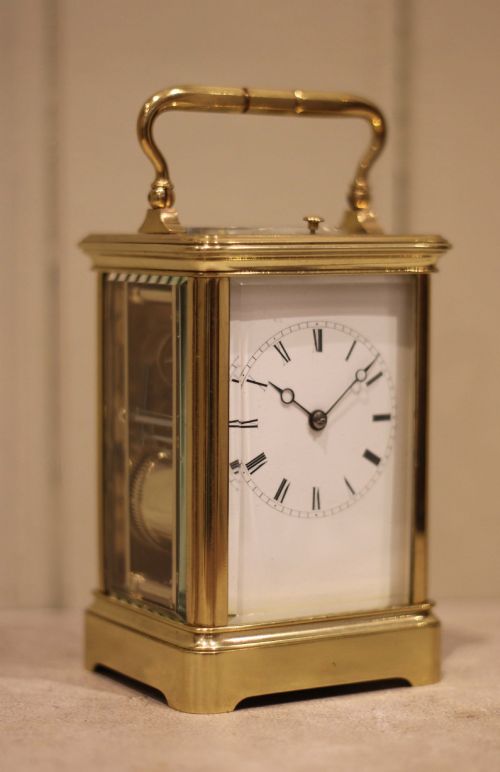
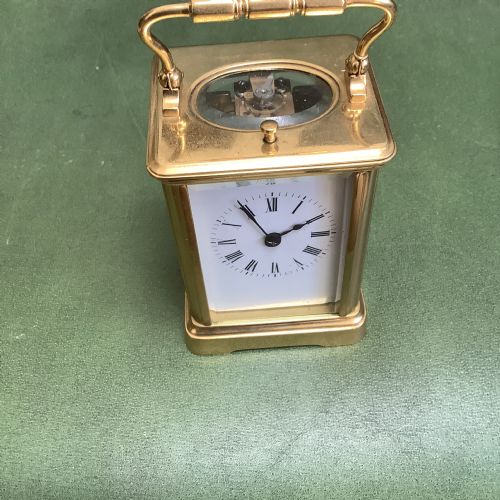
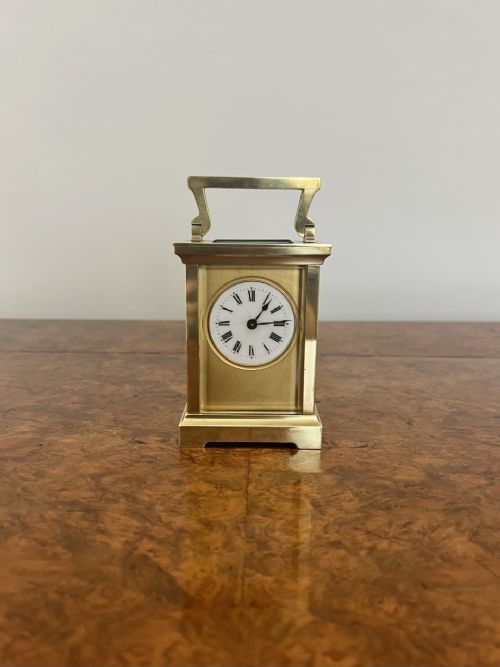
A victorian travel timekeeper typically takes the form of a carriage clock, designed for portability during journeys in the nineteenth century. These portable pieces originate predominantly from French workshops in Paris alongside English makers, spanning periods from the 1860s through to the early decades of the twentieth century. Collectors encounter various formats here, from miniature specimens and standard corniche cases to giant silver gilt examples.
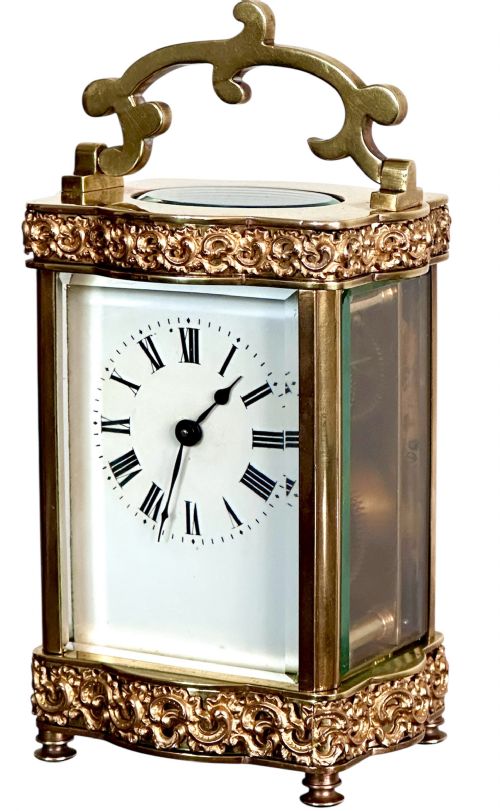
The objects serve primarily as mechanical clocks enclosed in sturdy metal frameworks with glass panels to protect the dial. Many incorporate striking and repeating mechanisms, allowing them to sound the hours and quarters on demand. Enamel panel decorations, intricate engravings, and leather travel cases frequently accompany the core timepiece structure.
Distinguishing Quality
The standard of engraving across the brass or gilt bronze case sets superior examples apart from plain counterparts, with profuse hand-chiselled decoration indicating greater workshop skill. The complexity of the movement also dictates quality, particularly the presence of striking and repeating functions alongside standard timekeeping.
Signed movements by known makers provide a clear indicator of higher grade output compared to unsigned workshop pieces. The inclusion of original matching leather travel cases enhances the integrity of the object.
Listings span the Victorian era into the early twentieth century, utilising brass, gilt bronze, glass, and enamel.
Pickford of London·Drocourt Paris·Margaine Of France·Brunelot·Duverdrey and Bloquel·J Batson and Son·Bishop Bournemouth·Goldsmiths·Richard and Co Paris
The Victorian Travel Timekeeper Glossary
- Carriage clock
- A small, spring-driven portable clock designed for travel during the nineteenth century. These items typically feature a rectangular brass case with glass panels.
- Corniche case
- A classic rectangular brass clock case style characterised by moulded pillars at the four corners and a flat top. It represents one of the most common housing shapes found in travel timekeepers.
- Gorge case
- A stepped case design featuring distinctive concave mouldings beneath the top handle. This architectural framing marks out finer French examples.
- Repeating movement
- A mechanism that chimes the last hour or quarters upon depressing a button on the case top. It allowed travellers to check the time in the dark.
- Striking mechanism
- An internal train that sounds the hours automatically on a bell or gong. Many travel timekeepers combine this function with a repeater.
Victorian Travel Timekeeper: Frequently Asked Questions
How do I wind a carriage clock?
Most pieces use a dedicated winding key inserted into arbors located on the backplate of the movement. Turn the key gently until resistance indicates the mainspring is fully tensioned.
Avoid over-winding to protect the internal components from unnecessary strain.
What is a repeating carriage clock?
A repeater includes extra mechanism that chimes the hours or quarters when the button on top of the case is pressed.
This function was originally designed for travellers wishing to know the time during the dark without striking a light.
How do I date a travel timekeeper?
Examine the style of the brass case, the complexity of the escapement, and any maker signatures or registration marks on the movement backplate. French makers often stamped their marks inside the movement plates.
Comparing the case profile, such as corniche or gorge styles, helps narrow down the decade of production.
Were these clocks actually used for travel?
Yes, these portable timekeepers were built specifically for use during journeys by train or carriage. Robust brass frames and thick glass panels protected the delicate gear trains from motion.
Many survived with fitted leather outer cases designed expressly for transit.