

Victorian Transferware
Victorian transferware brings printed narrative and botanical scenes to earthenware and ironstone for everyday dining.
Victorian Transferware
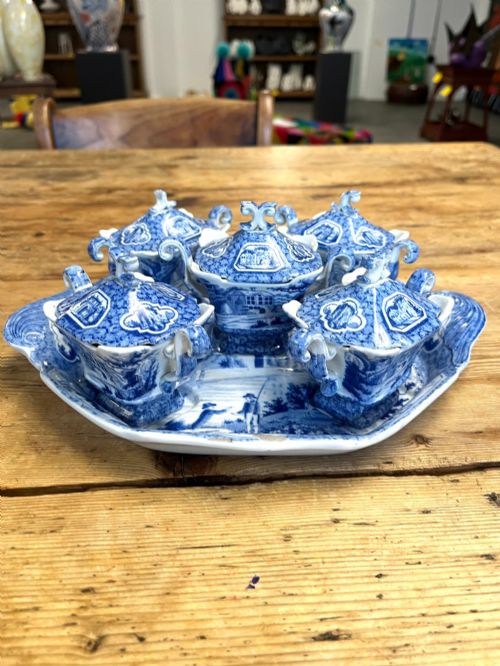
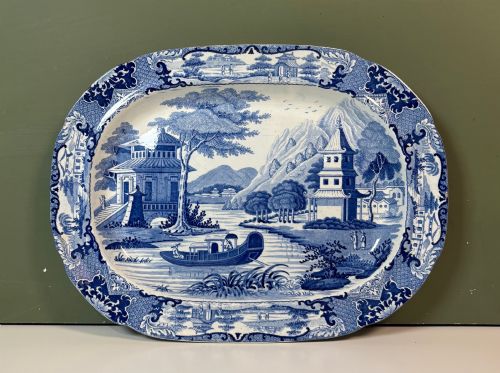
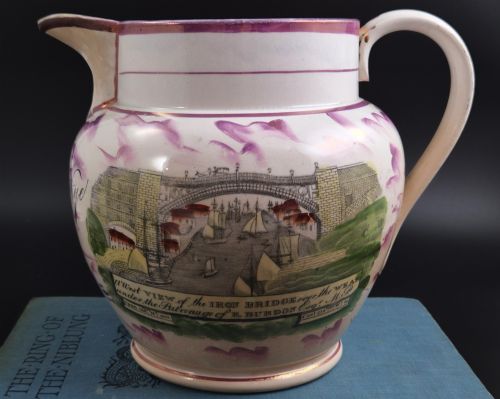
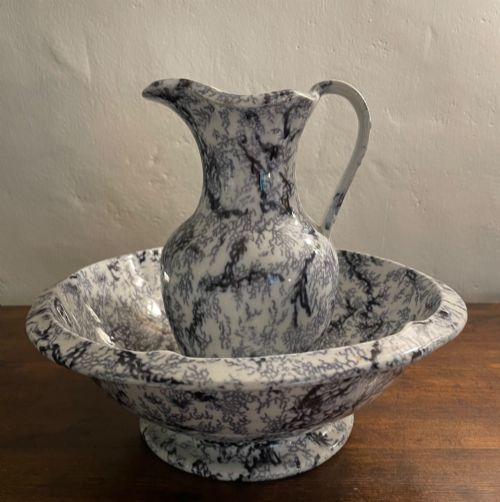
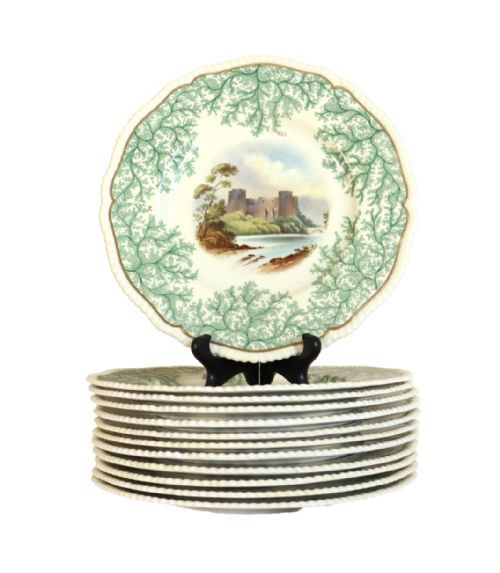
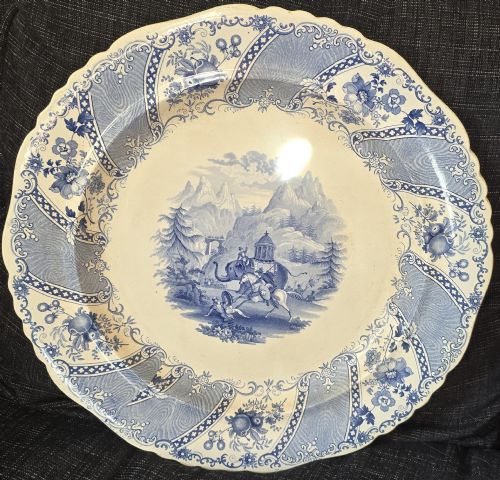
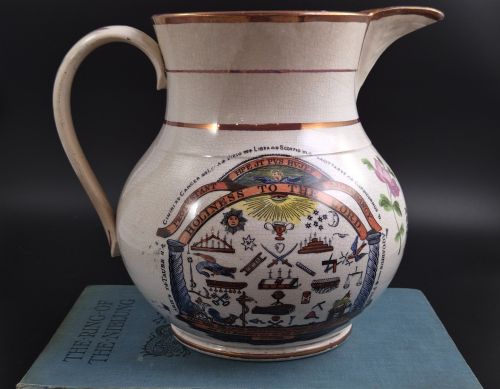
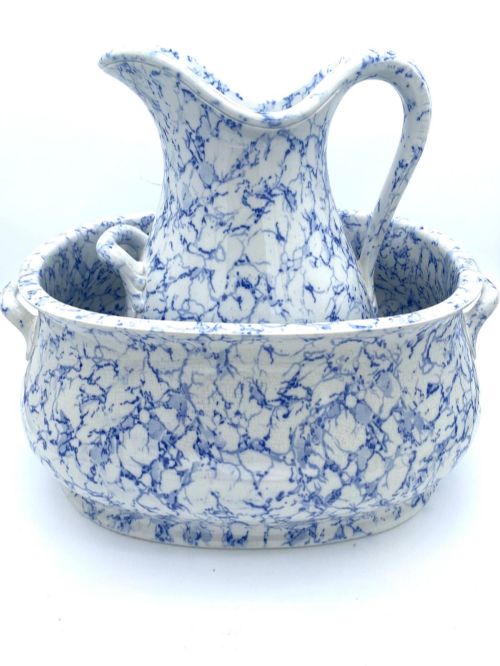
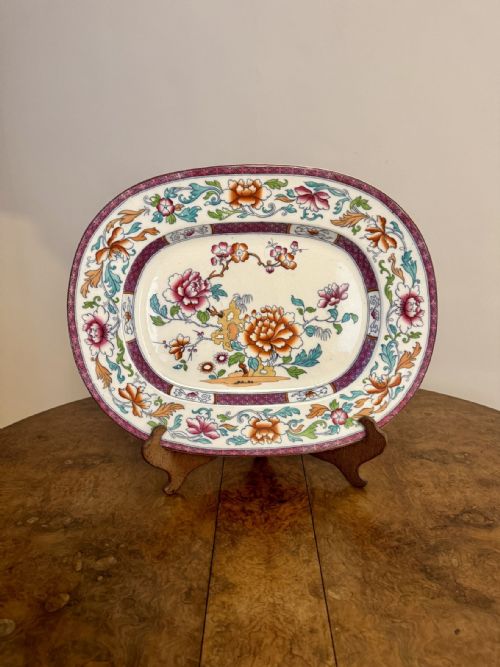
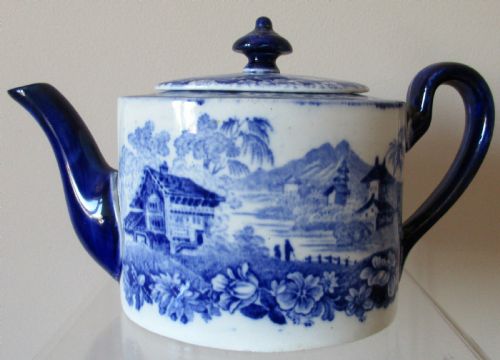
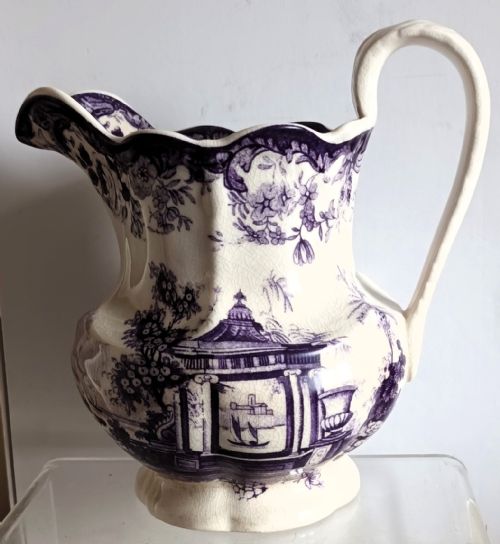
Victorian transferware covers domestic pottery decorated by applying a copperplate print onto the ceramic body before glazing and firing. You will most commonly encounter large meat platters, dinner services, and jugs bearing blue, magenta, or flow blue patterns.
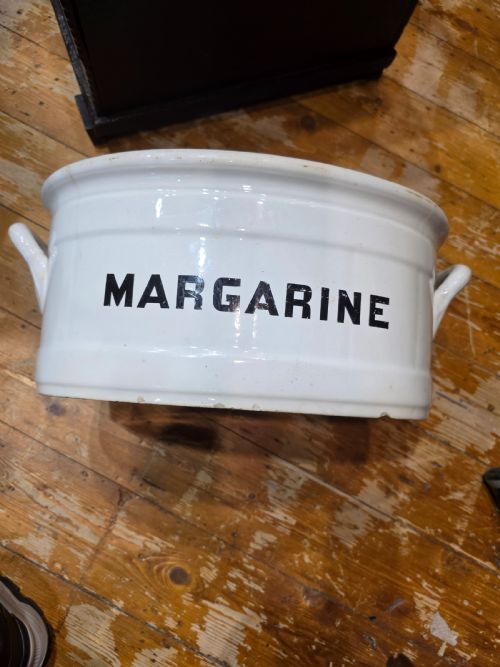
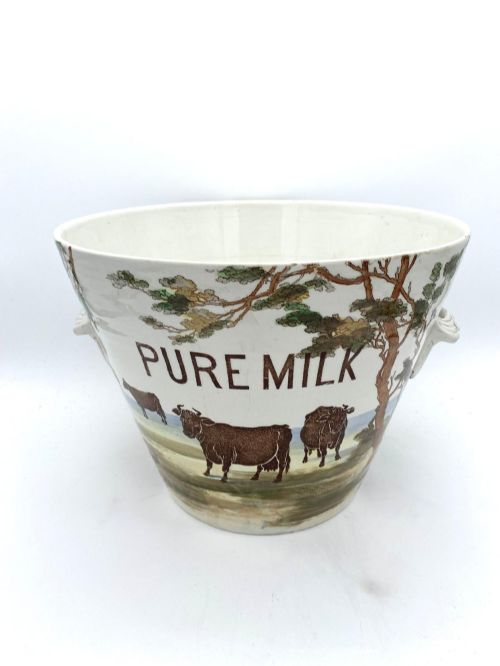
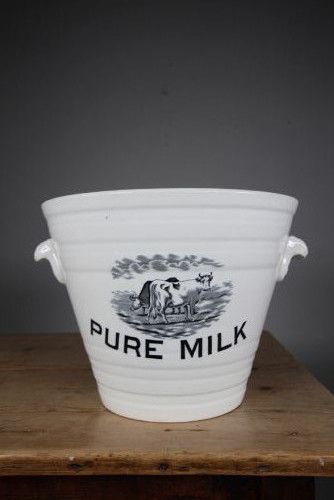
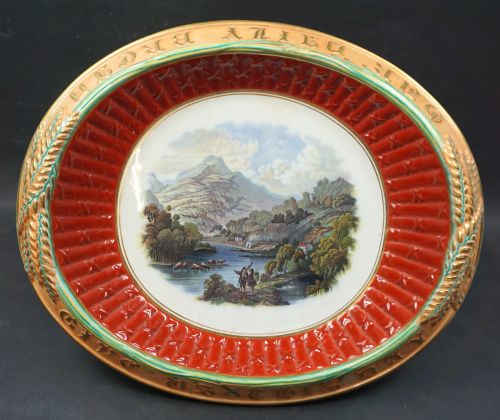
The objects range from utilitarian dairy pails and chamber pots to formal dinner plates, footbaths, and commemorative jugs. Styles span from traditional English country and Victorian Chinoiserie to architectural landscapes and historic narrative scenes.
Materials and Techniques
Potters formed these items primarily from earthenware, ironstone, and ceramic bodies, often layering a clear glaze over the applied ink. Specialised techniques such as flow blue allowed the cobalt pigment to blur deliberately into the surrounding glaze during firing.
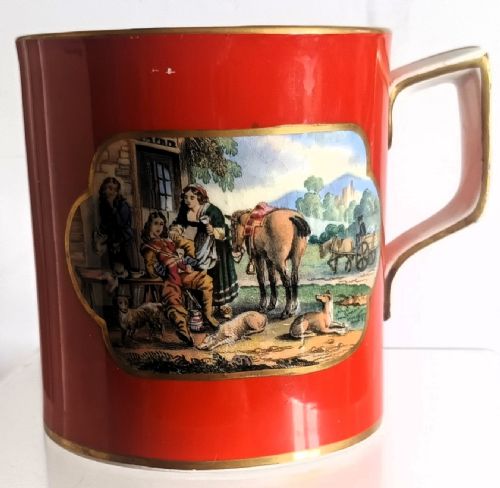
Makers integrated polychrome enamels and gilt highlights onto specific designs after the initial transfer print was set. The resulting pieces combined industrial copperplate printing efficiency with traditional ceramic shaping.
Victorian Transferware Retail Price Guide 2026
Typical asking prices for victorian transferware among the pieces listed under this phrase on Sellingantiques today, from the lower quarter to the upper quarter. They describe what is for sale here now, not the wider market.
Several drinking mugs conceal small ceramic frogs inside, ready to leap out at the drinker as the ale disappears.
Assessing Quality
Quality rests on the crispness of the copperplate transfer and the alignment of the printed design across complex ceramic contours. Finer examples display deep, even saturation of the pigment without smudging or fading in the glaze.
The weight and purity of the underlying ironstone or earthenware body further distinguish standard utility wares from exhibition-grade services. Potteries that controlled their kiln temperatures achieved a smoother, more durable surface finish.
William Smith And Co·Spode·Minton·Wedgwood·James Wallace And Co·Doulton Burslem
The Victorian Transferware Glossary
- Transferware
- Pottery decorated by transferring a printed design from an engraved copper plate to the ceramic surface using tissue paper and pigment.
- Flow Blue
- A nineteenth-century technique where lime or ammonia vapour was introduced into the kiln to deliberately blur the cobalt blue transfer print.
- Ironstone
- A heavy, durable type of earthenware patented to resemble porcelain while offering greater strength for domestic service pieces.
- Pratt Ware
- Multicoloured earthenware produced using specialised underglaze printing methods, often associated with narrative plaques and pot lids.
- Meat Drainer
- A perforated ceramic insert placed inside a large platter to separate juices from joint meats during carving.
Victorian Transferware: Frequently Asked Questions
How do I date Victorian transferware?
Dating relies on registration marks, backstamps, and the specific chemical hues of the transfer ink used during production. Blue tones changed from dark cobalt in early decades to softer shades later in the century.
Shape forms and stylistic motifs such as gothic revival or Chinoiserie also help narrow the manufacturing decade alongside factory marks.
Can I use these pieces for daily dining?
Most transferware withstands careful hand washing, though antique glazes can craze and absorb liquids over extended periods of heavy use. Ironstone items offer greater durability than softer earthenware bodies.
Displaying platters and tureens safely preserves the historical glaze and prevents modern detergent staining on fragile surfaces.
Why do some jugs have frogs inside?
Drinking vessels featuring ceramic frogs or newts served as humorous tavern pieces designed to surprise drinkers as the liquid receded. The animals were hand-moulded and fixed to the interior base before glazing.
These novelty mugs often featured hunting scenes or satirical verses appropriate for communal drinking gatherings.