


Victorian Tortoiseshell Box
A victorian tortoiseshell box brings warmth and rich amber depth to a desk, holding small treasures with understated nineteenth-century elegance.
Victorian Tortoiseshell Box
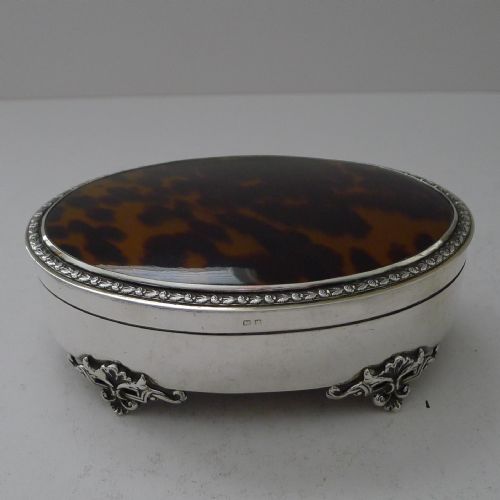
A victorian tortoiseshell box encompasses small storage containers created during the nineteenth century, ranging from pocket snuff boxes to large table top sewing boxes. The versions most commonly encountered on this page combine translucent natural shell with wood, brass, or sterling silver mounts.
The functional forms reflect the social habits of the period, including dedicated receptacles for calling cards, writing implements, jewellery, and tea. Many examples span related periods like the Regency and Edwardian eras, or adopt French Napoleon III styling alongside traditional English craftsmanship.
How they were made
Craftsmen built these pieces by applying thin plates of natural tortoiseshell over a rigid core of wood or papier-mâché, securing the delicate material with animal glue or tiny pins. The shell plates were often heated and pressed together to achieve sufficient size for larger tea caddies and desk stands.
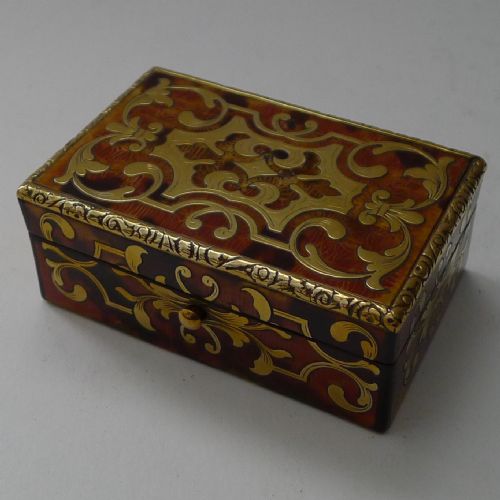
Decoration relied heavily on metal inlay techniques such as boullework, where brass and mother-of-pearl were cut into intricate scroll patterns and pressed flush into the shell surface. Sterling silver hinges, shields, and mounts were frequently added by silversmiths to reinforce corners and provide a secure closure.
Listings feature items spanning the eighteenth to early twentieth centuries, constructed from tortoiseshell combined with sterling silver, brass, wood, glass, and velvet.
What varies in quality
The overall standard depends largely on the depth of colour and figuring in the shell, where rich amber tones and strong dark mottling command greater visual appeal. Superior examples display seamless application of the material without visible warping or excessive patching at the corners.
Finishing details distinguish finer pieces, particularly the precision of inlaid brass work and the presence of fully fitted interior compartments lined in silk, velvet, or bone. Maker marks on silver mounts or fitted components also indicate a higher level of original workshop production.
Lund Of Cornhill·William Comyns·Charles Boyton
The Victorian Tortoiseshell Box Glossary
- Tortoiseshell
- A natural keratin material obtained from the shell of certain marine turtles, prized for its translucent amber and brown mottled appearance.
- Boullework
- An ornate technique of marquetry using brass and tortoise shell, popular in French-influenced decorative items and desk accessories.
- Piqué
- A method of decorating tortoiseshell by embedding tiny gold or silver pins and strips to form delicate geometric patterns or floral motifs.
- Tea caddy
- A container designed specifically to store dry tea leaves securely, often featuring internal lidded compartments and lockable lids.
- Treen
- Small handmade wooden objects of utility, occasionally incorporating decorative veneers such as tortoiseshell or amboyna.
Victorian Tortoiseshell Box: Frequently Asked Questions
How do I clean my box?
Maintenance requires only a soft, dry cloth to remove dust from the shell and metal mounts.
Moisture and harsh chemical cleaners must be avoided entirely to prevent damage to the delicate organic material and underlying wooden core.
Are these boxes made from real shell?
Genuine nineteenth-century examples utilise natural marine tortoiseshell applied over wooden or papier-mâché foundations.
Later replacement pieces or alternative twentieth-century variations occasionally substitute celluloid or synthetic faux materials.
What were these boxes used for originally?
Owners stored personal valuables, sewing implements, calling cards, or dry tea leaves inside these secure containers.
Larger table top versions sat prominently in parlours and boudoirs as both functional organisers and decorative display items.
How can I tell the period?
Stylistic clues like Napoleon III brass inlay or specific Victorian silver hallmarks help establish a reliable date range.
Construction methods, such as the type of interior lining and wood carcass, also provide clear indicators of age.