


Victorian Torcheres Pair
These victorian torcheres pair options are commanding stands and display columns designed to elevate lamps, urns, and plants.
Victorian Torcheres Pair
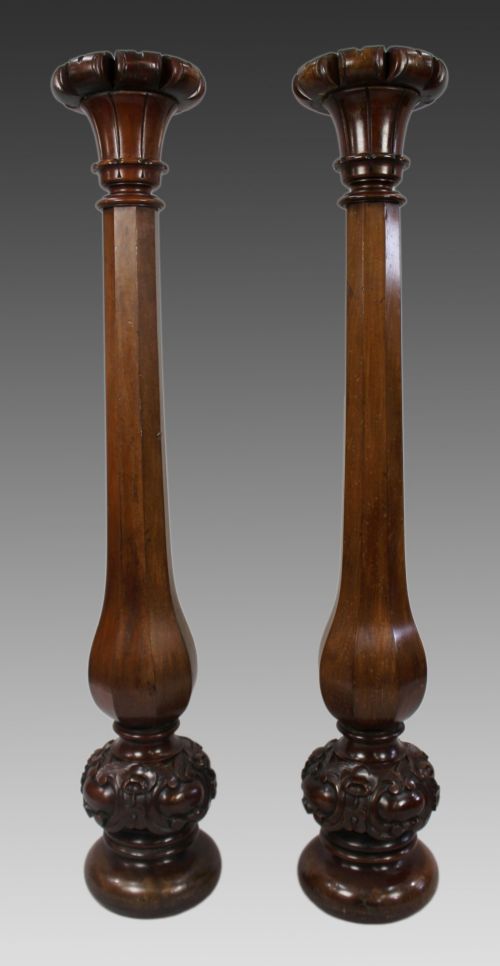
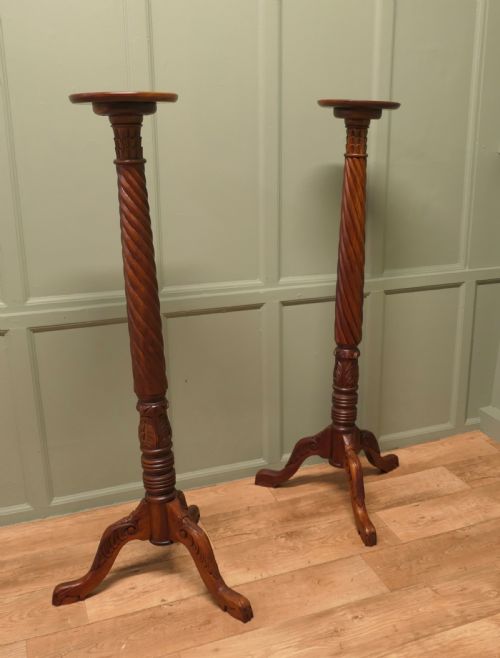
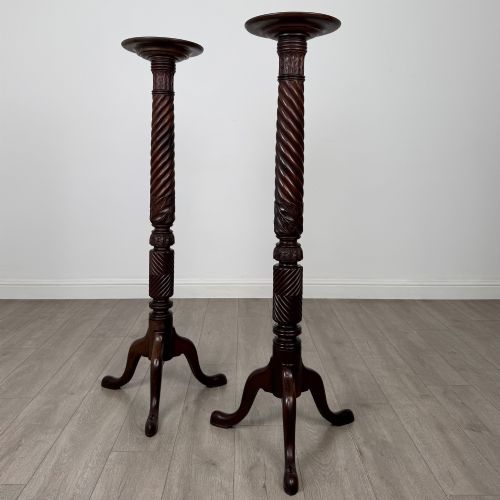
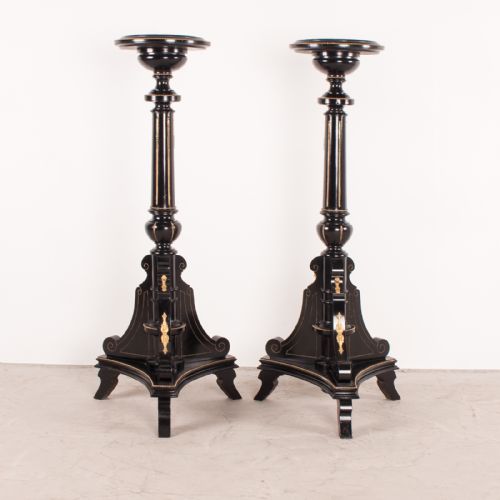
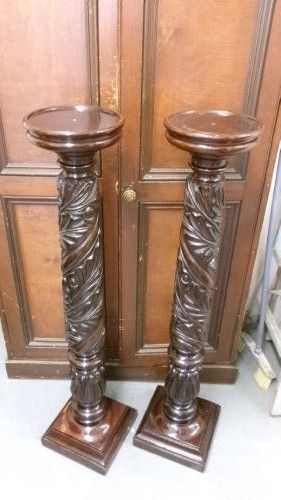
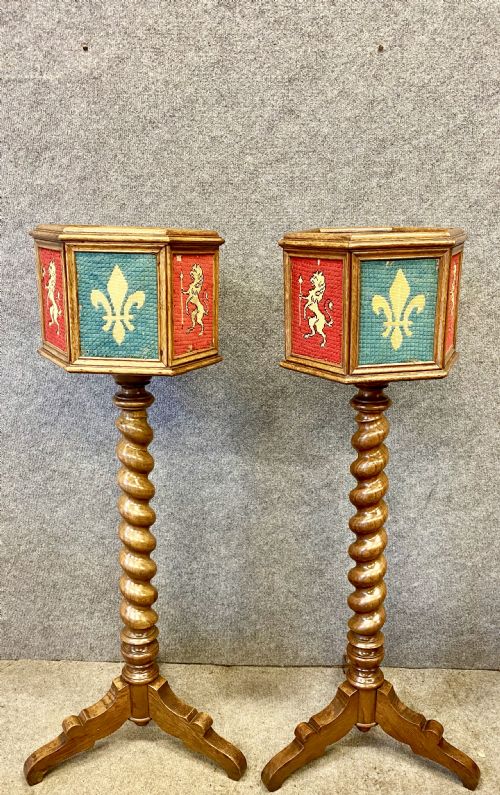
A victorian torcheres pair consists of tall, slender display stands originating primarily from the nineteenth century, built to hold lights, figures, or plants above floor level. Buyers searching for this phrase encounter various forms, including rope twist mahogany columns, ebonised wood stands, and architectural Gothic designs.
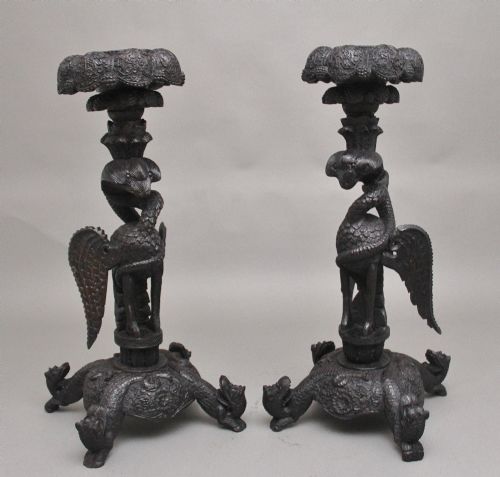
The selection on this page relies heavily on nineteenth-century craftsmanship, alongside related pieces spanning from the eighteenth century up to the early twentieth century. Makers and makers' workshops produced these pairs in diverse styles such as French Napoleon III, Anglo-Indian, and Gothic Revival.
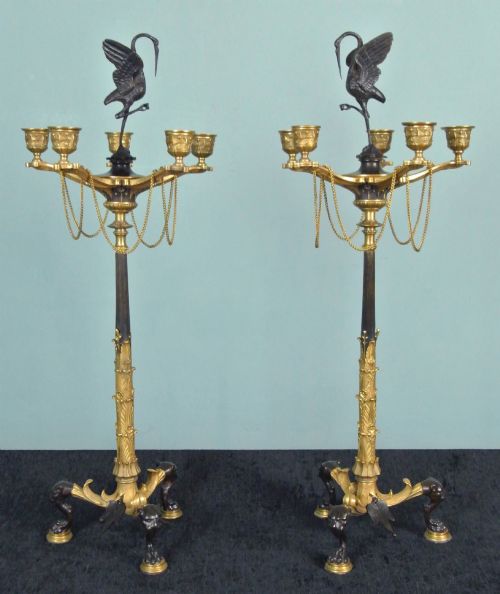
Beyond standard plant stands and torchere stands, the category incorporates pedestals, candelabra, and wall sconces fashioned from materials like bronze, brass, and carved hardwood. Most examples function as decorative furniture in entrance halls, drawing rooms, and country houses.
Materials and construction methods
Makers utilised dense timbers such as mahogany, oak, rosewood, and ebonised wood, shaping them through turning, joinery, and intricate hand carving. Certain pieces incorporate applied ormolu and bronze mounts, demonstrating the metalworking techniques of nineteenth-century foundries.
Stone and ceramic elements also appear within the construction, notably onyx columns and china bases paired with metal figures. Lacquered surfaces and polished finishes protect the timber while highlighting the natural grain and carved details.
Listings feature items spanning the 18th, 19th, and early 20th centuries, executed in mahogany, bronze, onyx, and oak.
Distinctions in quality and execution
Quality rests in the crispness of the carving, the stability of the column shaft, and the integrity of the joints connecting the top platform to the base. Superior examples exhibit balanced proportions and well-executed decorative motifs without superficial masking of the timber.
The refinement of cast metal mounts, such as bronze and ormolu details, separates standard production items from finer studio or foundry pieces. Matching within the pair remains critical, as subtle variations in height or turning indicate a mismatched marriage of individual stands.
Barbedienne
The Victorian Torcheres Pair Glossary
- Torchere
- A tall ornamental stand designed to hold a candelabrum, lamp, or decorative object. The form evolved from lighting supports to general display pedestals during the Victorian period.
- Ormolu
- Gilded bronze mounted onto furniture or decorative objects. This technique creates metallic highlights that complement dark woods like mahogany and ebonised finishes.
- Ebonised
- Timber treated with a dark stain or finish to imitate ebony. This process was popular for achieving a sleek, dramatic surface on decorative nineteenth-century stands.
- Gothic Revival
- An architectural and decorative style drawing inspiration from medieval forms. Pieces in this style often feature pointed arches, tracery, and heavy structural lines.
- Rope Twist
- A carved decorative pattern resembling intertwined rope cords. Craftsmen frequently applied this motif to the shafts of wooden pedestals and plant stands.
Victorian Torcheres Pair: Frequently Asked Questions
What were victorian torcheres used for originally?
These tall stands were positioned in grand rooms to elevate oil lamps, candles, or heavy floral arrangements above floor level.
Over time, their purpose expanded to include the display of art pottery, bronze busts, and decorative urns within domestic interiors.
How do I spot a matched pair?
Examine the height, turning patterns, and base dimensions closely to ensure both stands share identical proportions and decorative detailing.
Minor discrepancies in wood grain are natural, but structural measurements and carving depth should align precisely between the two pieces.
Where should I place a torchere in my home?
They suit entrance halls, drawing rooms, and empty corners where vertical height adds balance to lower furniture groupings.
Ensure the placement avoids heavy foot traffic to protect slender shafts and top platforms from accidental knocks.
Can these stands support heavy lamps?
Solid timber and cast metal versions possess the structural weight to support substantial table lamps or heavy decorative objects safely.
Check the stability of the base platform and the tightness of the central column joint before placing valuable items on top.