





Victorian Timber Relief Plaque
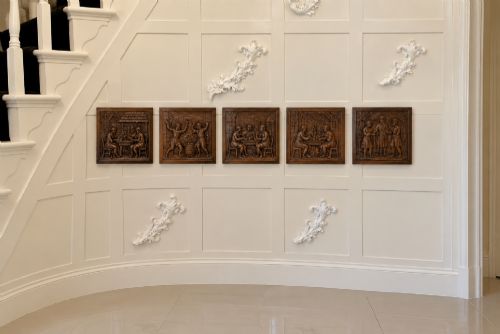
These Victorian timber relief plaque examples bring deep relief carving and naturalistic woods straight from nineteenth-century workshops to your walls.
Victorian Timber Relief Plaque
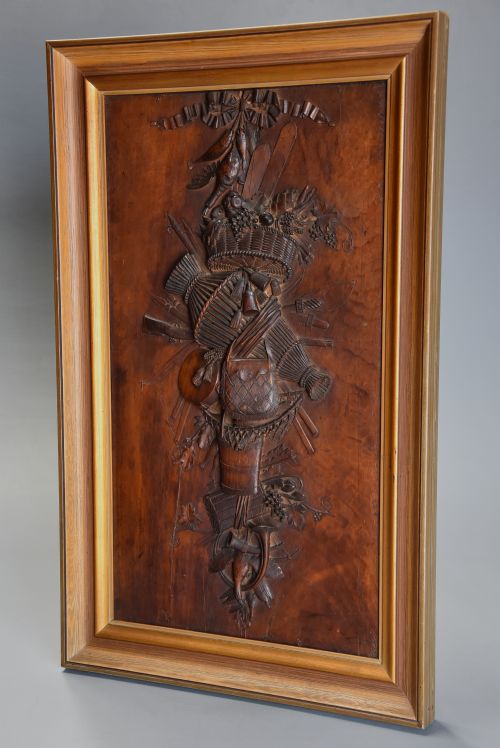
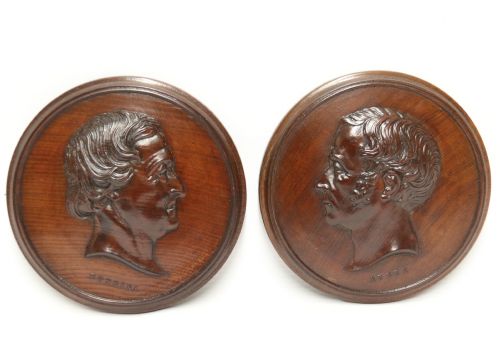
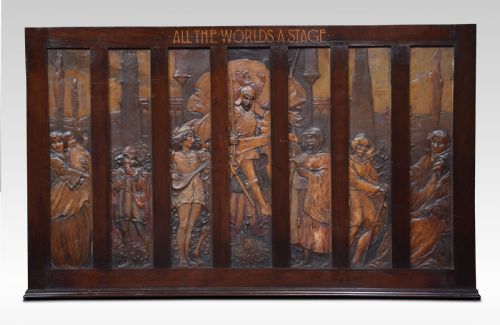
A victorian timber relief plaque brings sculptural depth to interior walls through intricate woodwork created during the nineteenth century. These pieces encompass portrait panels, hunting trophies, armorial designs, and architectural fragments.
The selections on this page draw heavily from stylistic traditions such as Black Forest, Gothic Revival, and Renaissance Revival. Oak, walnut, mahogany, and fruitwood form the primary foundations for these wall-hung carvings.
Makers shaped timber into framed art, door panels, and deep relief hunting scenes intended for domestic display. Pieces range from large pairs of wooden trophies to intimate portraits of historical figures.
Materials and carving methods
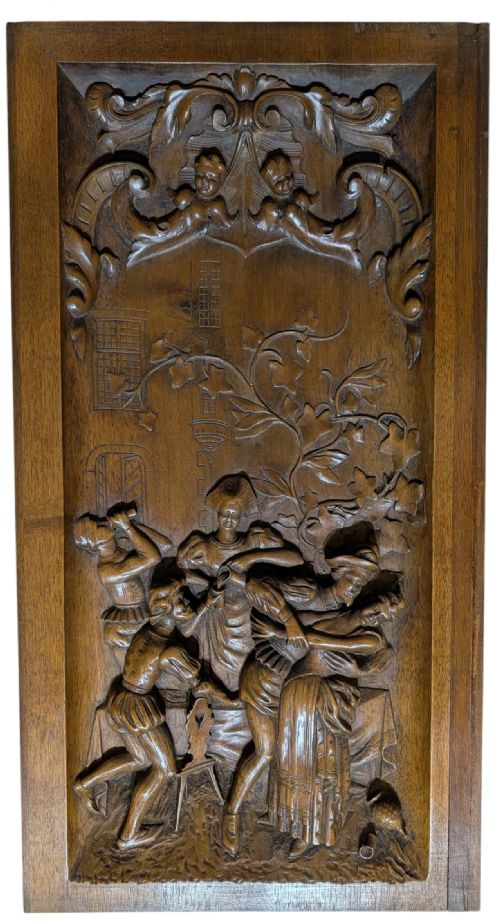
Relief carving techniques varied from shallow surface incisions to deep undercutting that made figures project dramatically from the background panel. Hand chisels and gouges left tactile tool marks across the timber grain.
Styles recorded in the inventory span Black Forest, Gothic Revival, Anglo-Indian, and Renaissance Revival.
Judging depth and execution
Quality rests in the anatomical correctness of carved figures, the crispness of surrounding foliage or scrollwork, and the preservation of the timber. Finer pieces display confident chisel work without sanded softness.
Integration between the carved subject and its timber frame separates standard production from exhibition pieces. Superior examples maintain structural integrity across joints while highlighting the natural figuring of the wood.
The Victorian Timber Relief Plaque Glossary
- Black Forest
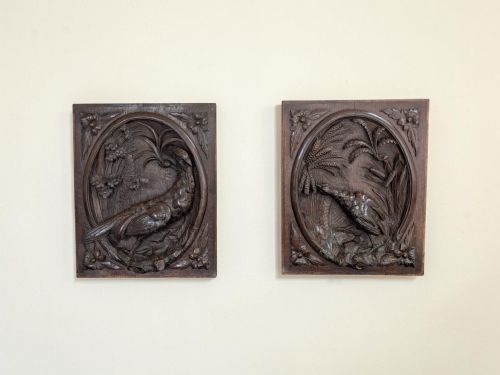
- A nineteenth-century style originating from Swiss and German woodcarvers. It is characterised by naturalistic depictions of animals, foliage, and hunting trophies.
- Gothic Revival
- An architectural and decorative style inspired by medieval design. It frequently incorporates pointed arches, tracery, and heavy oak timbers.
- Trophy carving
- An arrangement of game, weapons, or musical instruments grouped together in a decorative composition. These motifs were popular in hunting lodges and libraries.
- Armorial panel
- A carved wooden plaque displaying heraldic crests, coats of arms, or family lineages. These items often commemorated specific households or estates.
Victorian Timber Relief Plaque: Frequently Asked Questions
Where should I hang these wall plaques?
These carved panels suit reception rooms, studies, and hallways where their timber tones complement traditional interiors. Solid wall fixings are essential due to the weight of dense hardwoods like oak and walnut.
Positioning them at eye level allows the intricate relief work and grain to catch natural light from nearby windows.
How do I care for antique wood carvings?
Keep wooden plaques away from direct heat sources and strong sunlight to prevent the timber from drying out and splitting. Dust gently with a dry, soft brush rather than using wet cloths or polishes.
Stable indoor humidity preserves the structural integrity of both the panel and any applied framing.
What subjects appear in these carvings?
Common subjects include portraits of historical figures, hunting scenes with animals, and classical theatrical themes. Armorial crests and botanical trophies also feature prominently across nineteenth-century panels.
Each motif reflects the domestic tastes and decorative ideals of Victorian collectors.
How do I identify a Black Forest plaque?
Black Forest carvings typically depict realistic animals such as stags, dogs, or birds integrated with naturalistic oak leaves and branches. The timber is usually dark-stained linden wood or walnut with deep undercutting.
This distinct style emerged from nineteenth-century European workshops catering to tourists and hunting lodges.